
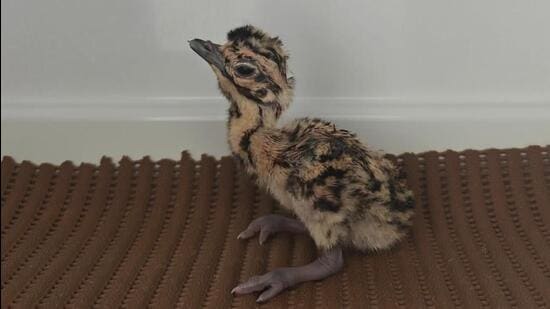
Rajasthan: 3 Great Indian Bustards born naturally; experts cite reduced stress| India News
# 3 Rare Bustards Born Naturally in Rajasthan
By Special Correspondent, National Wildlife Desk | April 12, 2026
In a monumental victory for global wildlife conservation, the Desert National Park (DNP) in Rajasthan has recorded the natural birth of three Great Indian Bustards (GIB) this week. Emerging on April 11, 2026, these births mark a critical shift from recent human-assisted breeding programs back to successful natural mating in the wild. Forest officials and avian experts attribute this extraordinary ecological milestone to drastically reduced environmental stress, meticulous habitat restoration, and stringent community-backed conservation measures. The natural emergence of these critically endangered chicks offers a tangible beacon of hope for a majestic species whose global population had perilously dwindled to fewer than 150 individuals in recent years. [Source: Hindustan Times]
## The Significance of Unassisted Reproduction
For the past decade, the survival of the Great Indian Bustard (*Ardeotis nigriceps*) has heavily relied on artificial incubation. The flagship conservation breeding centers at Sam and Ramdevra in Jaisalmer have traditionally operated by collecting wild eggs before they could be consumed by predators or trampled by feral livestock. These eggs were then artificially incubated, and the chicks were hand-reared by specialists. While this human-assisted approach successfully prevented immediate extinction, it raised long-term concerns regarding the loss of natural foraging instincts and wild survival skills.
The birth of three chicks entirely in the wild—without human intervention in the incubation or hatching process—signals that the local ecosystem within the Desert National Park is stabilizing. Natural breeding requires an intricate combination of favorable weather, abundant insect populations for chick nourishment, and, most crucially, profound physical and psychological security for the nesting females. Female bustards lay only one egg per year, exceptionally two, directly on the bare ground. For three separate natural hatchings to occur concurrently implies that multiple nesting sites remained undisturbed for the entire 25 to 27-day incubation period. [Source: Wildlife Institute of India data archives]
## Decoding the “Reduced Stress” Phenomenon
Avian experts have pointed to “reduced environmental stress” as the primary catalyst for this week’s natural breeding success. The Great Indian Bustard is a notoriously shy and sensitive bird. Historical data shows that minimal disturbances—such as the distant sound of off-road vehicles, the presence of free-ranging dogs, or the shadows of low-flying drones—can cause a brooding female to abandon her nest permanently.
To combat this, the Rajasthan Forest Department implemented severe restrictions across critical bustard habitats in late 2024 and 2025. “We established absolute zero-disturbance zones,” explains Dr. Arvind Rathore, a senior avian ecologist consulting with the state government. “By completely sealing off key breeding enclosures from tourist jeep safaris, restricting pastoral grazing during the breeding season, and aggressively relocating feral dog populations, we essentially lowered the collective cortisol levels of the wild flock. When the birds feel invisible to predators and humans, their natural reproductive behaviors resume.”
Furthermore, targeted habitat enrichment has provided optimal conditions for the birds. The promotion of native sewan grass (*Lasiurus scindicus*) has created perfect camouflage for the ground-nesting birds, shielding them from aerial predators like eagles and vultures.
## Navigating the Historical Plight of the Bustard
To fully appreciate the magnitude of this week’s natural births, one must understand the historical tragedy of the Great Indian Bustard. Once widespread across the Indian subcontinent and a strong contender for India’s national bird in the 1960s, the species experienced a catastrophic population collapse. The primary drivers of this decline were rampant hunting by British colonizers and local elites, followed by a severe loss of arid grassland habitats to intensive agriculture.
However, the most lethal modern threat has been the proliferation of overhead high-voltage power lines. The Thar Desert, the GIB’s last major stronghold, has simultaneously become India’s premier hub for renewable energy, hosting massive solar and wind farms. The Great Indian Bustard, weighing up to 15 kilograms, is one of the heaviest flying birds in the world. It possesses poor frontal vision, an evolutionary trait adapted for scanning the ground for insects and snakes. This biological blind spot has caused dozens of fatal collisions with power lines, a mortality rate the slow-breeding species simply could not endure. [Source: Ministry of Environment, Forest and Climate Change reports]
## The Supreme Court’s Protective Umbrella
The natural births in 2026 cannot be discussed without acknowledging the landmark legal and policy shifts that paved the way for a safer habitat. Following years of petitions from environmentalists, the Supreme Court of India intervened decisively. In a series of pivotal rulings leading up to 2024, the apex court recognized the right of citizens to be protected against climate change while simultaneously enforcing strict guidelines to balance renewable energy expansion with GIB conservation.
The court mandated the installation of bird diverters—reflective flaps that allow the birds to spot wires from a distance—on existing power lines and ordered the undergrounding of transmission cables in priority bustard habitats. While compliance was initially slow due to high costs, intensive pressure from a Supreme Court-appointed expert committee led to massive infrastructural retrofitting throughout 2025.
“The reduction in overhead wires in the core DNP zones directly correlates with a reduction in avian mortality and stress,” notes Meena Kumari, a legal advocate for wildlife protection. “This week’s natural hatchings are the ecological dividends of those intense courtroom battles. We are finally seeing the intersection of judicial will and biological resilience.”
## Collaborative Triumphs: Communities at the Core
Another vital component of this success story is the evolution of community-led conservation. The Rajasthan Forest Department recognized that policing a sprawling 3,162 square kilometer desert park was impossible without the support of the pastoral communities residing within and around its borders.
The “Bustard Mitra” (Friends of the Bustard) initiative, expanded greatly in recent years, transformed local herdsmen into the primary guardians of the species. These volunteers are financially incentivized to report nesting sites, keep their herds away from sensitive areas, and monitor for poachers or feral dogs.
During the incubation period of the three recently hatched chicks, local community members established a silent perimeter, ensuring that no stray cattle or sheep trampled the hidden nests. “The locals call the bird *Godaawan*. It is deeply tied to the cultural identity of the Thar,” stated a DNP field director. “When the community takes ownership, the protective net becomes impenetrable. These three chicks belong as much to the local villagers as they do to the wild ecosystem.”
## Scientific Monitoring and Future Survival
While the natural birth of three chicks is a monumental achievement, conservationists caution that the most dangerous phase of their lives has just begun. GIB chicks are precocial—meaning they leave the nest shortly after hatching to follow their mother—but they remain flightless and highly vulnerable to predators like desert foxes, monitor lizards, and feral dogs for several months.
To ensure their survival without imposing human stress, scientists are utilizing non-invasive monitoring techniques. Instead of physically tagging the vulnerable chicks, rangers are employing advanced thermal imaging from high-altitude, silent observational posts to track the mother-chick groups.
The focus now shifts to resource management. The forest department is artificially boosting insect populations—the primary diet of growing GIB chicks—by maintaining local micro-water catchments that attract grasshoppers and beetles. This ensures the mothers do not have to travel far into unprotected territories to find sufficient food for their offspring.
## Broader Implications for Avian Conservation
The successful natural breeding in Rajasthan sets a profound precedent for endangered species recovery globally. It effectively bridges the gap between ex-situ (captive) and in-situ (wild) conservation paradigms. For years, critics of heavily funded captive breeding programs argued that without securing the wild habitat, raising birds in incubators was merely delaying inevitable extinction.
The events in the Desert National Park validate a holistic, two-pronged approach. The human-assisted breeding program acted as an essential life-support system, holding the population steady while policy-makers, courts, and foresters worked to sanitize the wild habitat. Now that the habitat is demonstrating reduced stress levels and improved ecological health, the biological baton is being handed back to nature.
This success also offers a blueprint for other threatened bustard species worldwide, including the Houbara Bustard and the Lesser Florican, proving that localized zero-disturbance policies and community integration can reverse catastrophic population trends.
## Conclusion
The natural birth of three Great Indian Bustards in Rajasthan’s Desert National Park is a testament to the resilience of nature when given a fighting chance. It underscores the immense value of reducing human-induced environmental stress, legally protecting critical habitats, and empowering local communities as conservation stakeholders.
However, the war against extinction is far from over. The global population remains critically low, and the pressure from industrial expansion at the edges of the Thar Desert persists. Ensuring these three chicks reach adulthood and eventually contribute to the gene pool will require relentless vigilance. Yet, as the tiny, camouflaged chicks navigate the sewan grass under the watchful eyes of their wild mothers, they carry with them the renewed hope of an entire nation dedicated to preserving its natural heritage.





