
Courts often wary of removing arbitrators, need dedicated forum: Justice BV Nagarathna| India News
# Justice Nagarathna Urges New Arbitration Forum
**By Special Correspondent, Legal Affairs Desk | April 12, 2026**
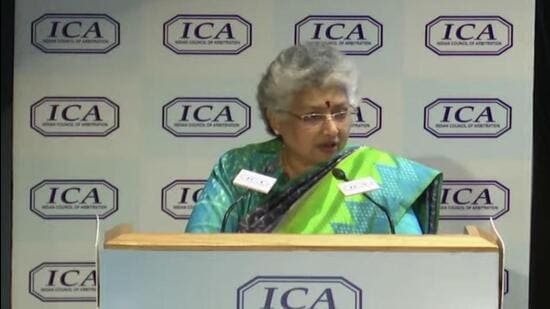
Supreme Court Justice B.V. Nagarathna has called for the establishment of a dedicated forum to handle disputes regarding the removal of arbitrators, highlighting that Indian courts remain highly hesitant to intervene in ongoing arbitration proceedings. Speaking at a prominent legal summit on Saturday, April 11, 2026, the senior judge emphasized that a mature legal system must support a diverse, complementary Alternative Dispute Resolution (ADR) framework. Her remarks underscore the urgent need for institutional reforms to deliver efficient, out-of-court resolutions and reduce the mounting backlog within India’s traditional judicial infrastructure. [Source: Hindustan Times].
## The Judicial Reluctance to Intervene in Arbitration
The foundational principle of arbitration is to provide a speedy, cost-effective, and private alternative to traditional litigation. To achieve this, the Arbitration and Conciliation Act, 1996, was drafted with the doctrine of “minimal judicial interference” at its core. Justice Nagarathna’s recent observations bring to light a persistent operational friction within this framework: the process of challenging and removing an appointed arbitrator.
Currently, if a party believes an arbitrator is biased, incapacitated, or failing to act without undue delay, they must navigate complex legal hurdles. **Section 14 and Section 15 of the Arbitration Act** outline the grounds for the termination of an arbitrator’s mandate. However, as Justice Nagarathna pointed out, courts are acutely wary of entertaining these petitions mid-proceeding.
This judicial reluctance is rooted in the fear of enabling “delaying tactics.” Often, parties foreseeing an unfavorable award will file frivolous petitions to remove the arbitrator, hoping to stall the proceedings indefinitely. Recognizing this, judges frequently dismiss these applications, directing parties to raise their grievances only after the final arbitral award has been passed, under Section 34 of the Act. While this upholds the sanctity of the arbitral process, it occasionally forces parties to endure a lengthy arbitration even when legitimate concerns regarding the arbitrator’s impartiality exist. [Source: Hindustan Times | Additional: Public Legal Records and Arbitration Act Statutory Guidelines].
## The Proposal for a Dedicated Arbitration Forum
To resolve the catch-22 of judicial non-interference versus the need for arbitrator accountability, Justice Nagarathna advocated for a dedicated forum specifically tasked with addressing arbitrator-related disputes.
Such a forum would exist independently of the traditional high courts and commercial courts. By shifting these specific disputes to a specialized body, the legal system could achieve several critical objectives simultaneously:
1. **Decongestion of Civil Courts:** Traditional judges, already burdened with massive caseloads, would be relieved of the time-consuming process of adjudicating complex arbitrator bias claims.
2. **Specialized Adjudication:** A dedicated forum would be staffed by experts well-versed in international arbitration standards, the IBA Guidelines on Conflicts of Interest, and the nuances of the Indian legal landscape.
3. **Expedited Resolutions:** With a singular focus on ADR administration, this body could fast-track decisions on whether an arbitrator should be removed, thereby preventing the main arbitration proceedings from languishing in indefinite suspension.
“The judge also advocated for a mature legal system that supports a diverse and complementary ADR framework to deliver efficient solutions,” the original report noted, highlighting a broader vision for India’s legal architecture. [Source: Hindustan Times].
## Navigating the Complexities of Arbitrator Bias
The issue of arbitrator neutrality has been heavily litigated in India over the past decade. Landmark Supreme Court judgments have repeatedly expanded upon the ineligibility criteria for arbitrators, particularly targeting situations where one party (often a powerful public sector undertaking or a large corporation) has unilateral power to appoint a sole arbitrator.
Despite these clear guidelines, disputes over the **Fifth and Seventh Schedules of the Arbitration Act**—which list the grounds giving rise to justifiable doubts regarding independence—remain frequent. Challenges often arise over alleged prior professional relationships, financial interests, or indirect affiliations between the arbitrator and one of the litigants.
A dedicated forum, as suggested by Justice Nagarathna, would provide a streamlined mechanism to interpret these schedules dynamically. Rather than requiring a High Court to pause its regular docket to examine an arbitrator’s disclosure statement, the specialized forum could render binding, rapid determinations. This would severely undercut the utility of challenging an arbitrator purely as a stall tactic, while simultaneously protecting vulnerable parties from genuinely biased tribunals.
## Fostering a Mature ADR Ecosystem
Justice Nagarathna’s remarks extended beyond the mechanics of arbitration, touching upon the necessity of a “complementary ADR framework.” As India’s economy continues to expand, commercial disputes have become more frequent and intricate. Relying solely on adversarial litigation, or even purely on arbitration, is no longer viable.
A mature legal system in 2026 integrates multiple tiers of dispute resolution:
* **Negotiation and Conciliation:** First-instance attempts to resolve differences without formal legal intervention.
* **Institutional Mediation:** Bolstered by the full implementation of the Mediation Act, allowing parties to find mutually agreeable solutions with the help of a neutral facilitator.
* **Online Dispute Resolution (ODR):** Leveraging digital platforms and AI-assisted triage to resolve low-value, high-volume consumer and e-commerce disputes efficiently.
* **Institutional Arbitration:** Moving away from ad-hoc arbitration (where parties manage the process themselves) toward established centers that have predefined rules for challenging arbitrators.
By treating these mechanisms not as separate silos but as an interconnected ecosystem, the judicial system can route disputes to the most appropriate forum from the outset. If mediation fails, arbitration takes over; if arbitration hits a procedural roadblock, a dedicated regulatory forum resolves it, keeping the traditional courts entirely out of the equation unless constitutional rights or severe public policy violations are at stake.
## Expert Perspectives on Institutional Reform
The legal community has responded positively to Justice Nagarathna’s proposition, noting that her insights align with the long-term goal of positioning India as a global arbitration hub.
“Justice Nagarathna has accurately diagnosed one of the most persistent bottlenecks in Indian arbitration,” noted Ramesh Vishwanathan, a senior advocate specializing in international commercial arbitration. “When an ad-hoc arbitrator goes rogue, or when a party baselessly accuses an arbitrator of bias to delay an award, the current system forces us to approach the High Court. That defeats the entire purpose of opting out of the court system in the first place. A dedicated arbitral tribunal or forum to police the process is exactly what we need.” [Source: Independent Legal Analysis].
Similarly, Dr. Anita Desai, director of an independent ADR research institute in New Delhi, emphasized the institutional shift required. “What the honorable judge is pointing toward is the necessity of institutional arbitration over ad-hoc setups. In globally recognized centers like the SIAC in Singapore or the LCIA in London, the institution itself handles challenges to arbitrators efficiently. India’s domestic ad-hoc framework lacks this safety valve, forcing the burden back onto the judiciary.” [Source: Independent Legal Analysis].
## Economic Implications of Efficient Arbitration
The call for a robust, dedicated ADR forum is deeply intertwined with India’s macroeconomic ambitions. Foreign Direct Investment (FDI) and international joint ventures rely heavily on the predictability of dispute resolution mechanisms.
When multinational corporations draft contracts, the dispute resolution clause is heavily scrutinized. If a country’s legal system is perceived as prone to endless delays—even within its arbitration processes—foreign investors will insist on seating their arbitrations in neutral, offshore jurisdictions. This not only results in an outflow of legal capital from India but also diminishes the country’s standing in the World Bank’s Ease of Doing Business metrics.
By implementing Justice Nagarathna’s vision, India can provide foreign and domestic investors with a massive confidence boost. Knowing that a specialized forum exists to quickly neutralize rogue arbitrators or dismiss bad-faith delay tactics ensures that capital is not trapped in legal limbo. **Efficient dispute resolution translates directly into lower risk premiums for infrastructure projects**, faster execution of commercial contracts, and a more vibrant corporate environment.
## The Path Forward and Legislative Action
Translating Justice Nagarathna’s vision into a working reality will require proactive steps from both the judiciary and the legislature.
The Indian Parliament has shown a willingness to amend the Arbitration and Conciliation Act repeatedly to align with global best practices. Moving forward, lawmakers may need to draft specific provisions that formally authorize the creation of the dedicated forum the Justice envisions. This could take the form of an empowered Arbitration Council of India, granted the statutory teeth to act as an appellate or supervisory body for ongoing arbitral disputes.
Furthermore, the legal fraternity must continue to promote a culture of institutional arbitration. Encouraging corporate entities to adopt standard clauses that subject them to the rules of established arbitration centers will organically solve many of the issues surrounding the removal of arbitrators, as these institutions already possess internal mechanisms to handle such challenges.
## Conclusion
Justice B.V. Nagarathna’s address serves as a timely catalyst for the next phase of India’s legal evolution. Her acute observation that courts are, and should be, wary of removing arbitrators highlights the fundamental conflict between judicial non-interference and procedural fairness.
The proposed solution—a dedicated forum specifically engineered for the ADR ecosystem—promises to break this deadlock. By relieving traditional courts of procedural arbitration disputes and fostering a diverse, complementary framework of mediation, conciliation, and institutional arbitration, India can ensure that its legal system is genuinely equipped for the demands of the 21st century. As the nation aims to establish itself as a premier destination for global commerce, bringing this vision of a mature, self-regulating ADR ecosystem to life will be of paramount importance.





