
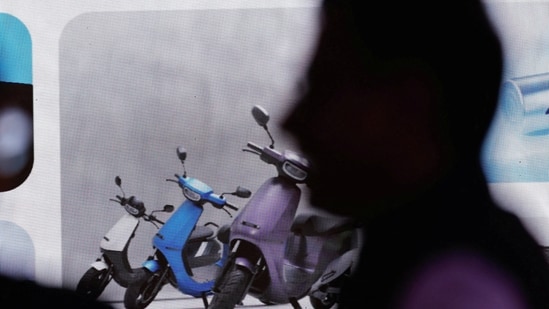
'Only electric two-wheelers from April 2028': Delhi's draft EV policy is in, suggestions sought| India News
# Delhi Plans 2028 Petrol Two-Wheeler Ban
By Vikram Chatterjee, Mobility India, April 12, 2026
In a sweeping move to combat chronic urban pollution, the Government of the National Capital Territory of Delhi released its draft Electric Vehicle (EV) Policy 2026-2030 on Saturday, April 11, 2026. The aggressive new framework proposes a complete halt to the sale and registration of internal combustion engine (ICE) two-wheelers starting April 2028. Currently open for public consultation, the policy aims to forcefully transition the city’s millions of scooters and motorcycles to zero-emission battery power. This unprecedented mandate positions Delhi at the absolute forefront of India’s climate action strategy, sending immediate shockwaves through the automotive manufacturing sector, fleet operators, and the gig economy. [Source: Hindustan Times | Additional: Delhi Transport Department Data].
## The Core of Delhi’s 2026-2030 EV Blueprint
The newly unveiled draft Electric Vehicle Policy 2026-2030 marks a fundamental shift in the capital’s approach to green mobility. Moving away from the purely incentive-driven model of the groundbreaking 2020 EV Policy, the new framework introduces strict, unyielding regulatory mandates. While the previous policy succeeded in pushing Delhi’s EV penetration well past the 15% mark by early 2025 through subsidies and road tax waivers, the new draft signals that the market has matured enough to withstand a hard phase-out of fossil-fuel vehicles.
The headline provision—the April 2028 deadline for all two-wheelers—targets the largest vehicular segment on Delhi’s roads. According to regional transport data, two-wheelers account for over 60% of the city’s active vehicular population. By cutting off the influx of new petrol scooters and motorcycles, the government hopes to naturally attrition the ICE fleet over the subsequent decade.
**Key Proposed Milestones in the Draft Policy:**
* **December 2026:** 50% of all new two-wheeler registrations must be electric (applicable to commercial fleets).
* **April 2027:** Subsidy structures for private EV two-wheeler purchases begin to taper off as price parity is achieved.
* **April 2028:** Complete ban on the registration of new petrol/diesel two-wheelers (both private and commercial).
* **January 2030:** Comprehensive restrictions on the entry of out-of-state ICE two-wheelers into the capital region during peak winter pollution months.
“This is the transition from the carrot to the stick,” notes Dr. Raghavendra Singh, a senior mobility analyst at the Center for Sustainable Transit. “Delhi has spent the last five years building the ecosystem. Now, the government is drawing a hard line in the sand to ensure the momentum doesn’t stall.” [Source: Independent Industry Analysis].
## Impact on Manufacturers and the Market
The April 2028 deadline leaves legacy automakers with exactly 24 months to completely overhaul their supply chains and dealership models in the National Capital Region (NCR). Traditional heavyweights like Honda, Hero MotoCorp, Bajaj, and TVS have already expanded their electric portfolios significantly over the last three years, but petrol vehicles still account for the lion’s share of their revenue.
For pure-play EV manufacturers such as Ola Electric, Ather Energy, and Vida, the draft policy is a massive legislative victory. The guaranteed elimination of ICE competition in one of India’s most lucrative consumer markets will likely trigger a rush of retail expansion and localized manufacturing investments.
However, industry bodies are expected to push back. The Society of Indian Automobile Manufacturers (SIAM) has historically advocated for a technology-agnostic approach, championing flex-fuel and ethanol blends alongside electrification. Mandating a single technology, they argue, could disrupt supply chains and lead to localized job losses in the traditional auto maintenance and parts sectors. Dealerships in Delhi that rely heavily on the high-margin servicing of petrol engines will have to urgently pivot their business models to EV diagnostics, battery health management, and software troubleshooting.
## Gig Economy and Delivery Fleets in the Crosshairs
Perhaps the most immediate demographic impacted by this draft policy is the sprawling gig economy workforce. Hundreds of thousands of delivery agents working for aggregators like Zomato, Swiggy, Amazon, and quick-commerce platforms like Zepto rely on reliable, cheap two-wheelers to earn their livelihood.
Under the Delhi Motor Vehicle Aggregator Scheme introduced a few years ago, commercial fleets were already mandated to transition to 100% EVs by 2030. The new draft policy accelerates this timeline implicitly by choking off the supply of new petrol vehicles by 2028.
“While the total cost of ownership (TCO) for an electric scooter is undeniably lower over a five-year period, the upfront acquisition cost remains a hurdle for a delivery partner earning daily wages,” explains Meera Deshmukh, an economist specializing in urban labor markets. “The government must ensure that accessible micro-financing and battery-as-a-service (BaaS) models are heavily promoted so that the working class is not priced out of their livelihoods.”
To mitigate this, the draft policy seeks suggestions on creating a dedicated “Gig Worker Green Fund” to subsidize the interest rates on EV loans specifically for registered delivery and ride-hailing partners.
## Charging Infrastructure: The Make-or-Break Factor
A mandate to sell exclusively electric two-wheelers by 2028 will dramatically amplify the demand for charging infrastructure. As of early 2026, Delhi boasts an impressive network of over 6,000 public charging and battery-swapping stations, making it the most EV-ready city in India. However, to support 100% electrification of two-wheeler sales, this network will need to scale exponentially.
The draft policy recognizes that charging speed and convenience are the primary bottlenecks. To address this, the government is proposing mandatory structural changes to urban planning:
* **Battery Swapping Hubs:** Recognizing that many Delhi residents live in multi-story apartments without dedicated parking, the policy heavily favors battery-swapping networks. Swapping allows a depleted scooter battery to be exchanged for a fully charged one in under two minutes.
* **Mandatory Building Codes:** All new residential and commercial buildings will be required to reserve 30% of their parking capacity for EV charging, up from the current 20%.
* **Discom Integration:** Power distribution companies (Discoms) will be incentivized to upgrade local transformers to handle the sudden surge in localized electricity demand, particularly during overnight charging hours.
## Environmental Imperative vs. Economic Reality
The driving force behind this draconian timeline is Delhi’s perennial battle with hazardous air quality. Winter months routinely see the Air Quality Index (AQI) spike into the “severe” category, prompting emergency measures such as the halting of construction and school closures. Tailpipe emissions from the city’s millions of ICE two-wheelers contribute significantly to particulate matter (PM2.5) and Nitrogen Oxide (NOx) levels.
According to preliminary environmental impact assessments cited in the draft, achieving 100% EV sales in the two-wheeler segment by 2028 could reduce vehicular emissions of PM2.5 by up to 22% by 2032, as older petrol models are scrapped.
Despite the environmental urgency, the economic realities of a developing nation cannot be ignored. Petrol two-wheelers currently start at roughly ₹70,000 to ₹80,000. While EV prices have dropped steadily thanks to falling lithium-ion battery costs and localized cell manufacturing, reliable high-speed electric scooters still command a premium. The government will have to expertly balance the environmental imperative with the economic burden placed on lower-middle-class families looking for affordable private transport. [Source: Delhi Government Draft Notification].
## Public Consultation and Next Steps
The release of the draft on April 11, 2026, marks the beginning of a crucial 30-day public consultation period. The Government of NCT of Delhi has actively sought suggestions, critiques, and counter-proposals from all stakeholders—citizens, auto manufacturers, charging infrastructure providers, and environmental NGOs.
Following the consultation period, a review committee will synthesize the feedback and likely publish the finalized Electric Vehicle Policy 2026-2030 by the third quarter of this year. Industry insiders expect intense lobbying from legacy automakers to push the 2028 deadline back by at least two years, setting the stage for a tense negotiation between industrial interests and environmental mandates.
## Conclusion: A High-Stakes Gamble for Clean Air
Delhi’s draft Electric Vehicle Policy 2026-2030 is a watershed moment in global urban mobility. By setting a hard, uncompromising deadline of April 2028 to outlaw the sale of petrol two-wheelers, the local government has issued a clear ultimatum to the automotive industry: adapt immediately or lose access to one of the world’s most dynamic markets.
If successful, this transition will drastically cut urban tailpipe emissions, serving as a replicable blueprint for other heavily polluted megacities across South Asia. However, the true test of the policy will lie in execution. Ensuring an equitable transition that does not economically disenfranchise the working class, while simultaneously rapidly scaling grid infrastructure, will require flawless coordination between state departments, private enterprise, and the public. As the feedback rolls in over the coming weeks, the eyes of the global automotive world remain firmly fixed on India’s capital.





