
Important to implement women's quota in 2029: PM writes to LS, RS floor leaders| India News
# PM Modi Urges Women’s Quota by 2029
**By Special Correspondent | April 12, 2026**
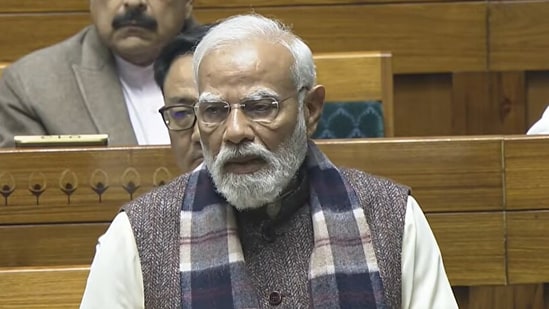
**New Delhi:** In a decisive move to reshape India’s political landscape, Prime Minister Narendra Modi wrote to the floor leaders of both the Lok Sabha and Rajya Sabha on Sunday, urging them to build a cross-party consensus to implement the 33% women’s reservation quota ahead of the 2029 general elections. Pointing to the critical need for gender parity in governance, the Prime Minister stressed that for India to realize its ambitious vision of becoming a developed nation (*Viksit Bharat*), it is absolutely essential that women play a greater and more active role in the legislative journey. [Source: Hindustan Times].
## The Prime Minister’s Strategic Pitch for 2029
The correspondence from the Prime Minister’s Office arrives at a critical juncture in Indian politics. With the constitutional freeze on the reallocation of Lok Sabha seats set to lift in 2026, the administrative machinery is gearing up for a mammoth census and delimitation exercise.
In his letter, PM Modi articulated a direct correlation between female political representation and national economic trajectory. He emphasized that the passage of the *Nari Shakti Vandan Adhiniyam* (Women’s Reservation Act) in September 2023 was only the first step. The real triumph, he noted, will be its seamless execution in the 19th Lok Sabha elections.
“The Prime Minister’s communication is a clear indicator that the government intends to make women’s reservation the cornerstone of its political agenda leading up to 2029,” says Dr. Meena Sharma, a New Delhi-based political scientist and author of *Gender and Governance in Modern India*. “By formally writing to the floor leaders now, he is initiating the complex parliamentary groundwork required to navigate the impending delimitation hurdles.” [Source: Independent Expert Analysis].
## The Delimitation and Census Hurdle
The implementation of the women’s quota is not merely a matter of political will; it is deeply entangled with India’s constitutional mechanics. According to the provisions of the 2023 Act, the 33% reservation for women in the lower house of Parliament and state legislative assemblies can only come into effect after an official census is conducted, followed by a nationwide delimitation exercise to redraw constituency boundaries.
Historically, the delimitation of parliamentary constituencies was frozen in 1976 (and later extended to 2026) to ensure that states which successfully controlled their populations were not penalized with a reduction in parliamentary seats.
**Key challenges in the immediate future include:**
* **Executing the Census:** Delayed since 2021, the digital census must be completed swiftly to provide the foundational data for delimitation.
* **The Delimitation Commission:** An independent body must be constituted to remap boundaries, a process that traditionally takes several years.
* **Southern Apprehensions:** Southern states have expressed persistent concerns that a post-2026 delimitation based on population might dilute their political representation compared to the more populous northern states.
“The Prime Minister’s letter is an attempt to preemptively soothe these anxieties,” explains Rajat Deshmukh, a constitutional law expert. “By focusing the narrative on women’s empowerment, the government is trying to build a unified, pan-India consensus that transcends regional disputes over seat allocations.” [Source: Constitutional Context].
## Political Consensus and Anticipated Roadblocks
While the Women’s Reservation Bill was passed with near-unanimity in 2023, the finer details of its implementation remain a highly debated topic among India’s political factions. The primary point of contention revolves around sub-categorization.
Several opposition parties and regional heavyweights have continuously demanded a “quota within a quota” for women belonging to Other Backward Classes (OBCs) and minority communities. They argue that without sub-categorization, the benefits of the 33% reservation will disproportionately favor women from privileged, urban, and upper-caste backgrounds.
The Prime Minister’s recent outreach to floor leaders is viewed as a strategic move to bring these dissenting voices to the negotiating table early. By initiating dialogue in 2026, the government aims to prevent legislative gridlock when the delimitation commission’s recommendations are eventually tabled in Parliament.
## A Century in the Making: The Historical Context
The push for female representation in Indian legislative bodies is a struggle that spans decades. Tracing the timeline provides essential context to the monumental nature of the 2029 target.
| Year | Milestone | Outcome |
| :— | :— | :— |
| **1992** | 73rd and 74th Constitutional Amendments | Reserved 33% seats for women in Panchayats (local rural councils) and Municipalities. |
| **1996** | First Introduction in Parliament | The Women’s Reservation Bill was introduced by the Deve Gowda government but lapsed. |
| **2010** | Passage in Rajya Sabha | The UPA government successfully passed the bill in the Upper House, but it failed to clear the Lok Sabha. |
| **2023** | *Nari Shakti Vandan Adhiniyam* | Passed overwhelmingly by both houses of Parliament, linking implementation to the next census and delimitation. |
| **2026** | PM’s Formal Outreach | Current push to finalize administrative logistics for 2029 implementation. |
[Source: Parliamentary Archives].
## Socio-Economic Impact of Female Representation
The assertion by PM Modi that women are essential to the *Viksit Bharat* vision is heavily backed by global and domestic socio-economic data. Evidence from India’s own Panchayati Raj system—where women have enjoyed reservation for over three decades—demonstrates profound shifts in governance priorities when women hold power.
Studies conducted by economists have shown that female village council leaders invest significantly more in public goods closely linked to women’s and children’s welfare, such as drinking water, sanitation facilities, and primary education.
“When you scale the Panchayat effect to the national level, the implications for policy are staggering,” notes Dr. Sharma. “A Lok Sabha with 33% women is likely to shift legislative focus toward human development indices—healthcare, maternal mortality, workforce participation, and environmental sustainability—which are the true markers of a developed nation.”
Currently, women make up roughly 15% of the Lok Sabha. Elevating this figure to 33% would mean an injection of over 180 female parliamentarians into the lower house, fundamentally altering the demographic and ideological makeup of Indian lawmaking.
## Global Perspectives on Gender Quotas
India’s trajectory toward implementing a national gender quota aligns with a broader global movement, albeit on a much larger scale given the country’s population of 1.4 billion. According to data from the Inter-Parliamentary Union (IPU), countries that have implemented statutory quotas have seen a rapid stabilization in gender-responsive governance.
For instance, Rwanda leads globally with over 60% female representation in its lower house, largely due to constitutional quotas established post-1994. Similarly, nations in Latin America, such as Mexico and Argentina, have utilized strict electoral quotas to achieve gender parity in their legislatures.
However, India’s approach—tying the quota to boundary delimitation—is unique and arguably more complex due to the country’s federal structure and staggering diversity. By succeeding in 2029, India would not only drastically improve its ranking on the global Gender Gap Index but also set a democratic precedent for other populous, developing nations. [Source: Inter-Parliamentary Union Data].
## Preparing the Groundwork: What Happens Next?
For the 2029 deadline to be met, the timeline between April 2026 and the general elections must be executed with precision.
1. **Notification of the Census:** The Home Ministry will need to roll out the digital census operations immediately. Data collection and tabulation must be finalized within an aggressive timeframe.
2. **Formation of the Delimitation Commission:** Once census data is published, the President will appoint a Delimitation Commission. This body will tour the country, hear public grievances, and redraw boundaries to ensure equal population representation per constituency.
3. **Seat Identification:** The Commission will also be tasked with identifying which specific constituencies will be reserved for women. The 2023 Act stipulates that these reserved seats will be rotated after each subsequent delimitation exercise.
4. **Parliamentary Ratification:** The final delimitation orders must be laid before the Lok Sabha and cannot be challenged in a court of law, ensuring finality ahead of the 2029 polls.
## Conclusion: A Paradigm Shift in Indian Democracy
Prime Minister Narendra Modi’s letter to the parliamentary floor leaders is a crucial catalyst in the timeline of India’s democratic evolution. By publicly anchoring the women’s reservation quota to the goal of becoming a developed nation by 2047, the government is framing gender equity not merely as a social justice issue, but as an indispensable macroeconomic and administrative imperative.
As India approaches the expiration of the 2026 delimitation freeze, the political maneuvering over the next three years will be intense. The successful execution of the census, the equitable redrawing of electoral maps, and the management of regional and caste-based political demands will test the resilience of India’s legislative framework.
However, if the consensus urged by the Prime Minister holds, the 2029 general elections will bear witness to the most significant transformation of the Indian Parliament since independence, finally giving women an equitable voice in the world’s largest democracy.





