
MK Stalin accuses centre of weaponizing women’s reservation against opposition| India News
# Stalin: Centre Weaponizing Women’s Quota
By Senior Political Correspondent, The India Desk | April 12, 2026
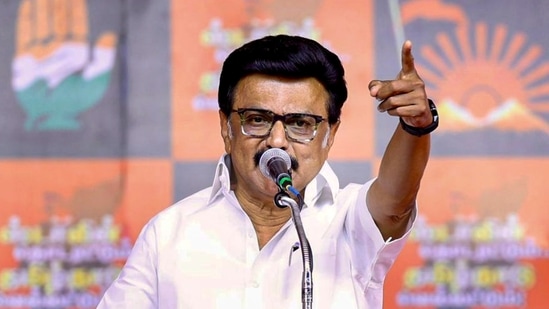
Tamil Nadu Chief Minister M.K. Stalin launched a fierce critique against the Union Government on Sunday, alleging that the delayed implementation of the Women’s Reservation Act is being systematically weaponised to marginalise political rivals. Addressing a public gathering in Chennai on April 12, 2026, the Dravida Munnetra Kazhagam (DMK) leader stated the Centre is deliberately tying parliamentary gender quotas to the highly controversial upcoming electoral delimitation exercise. This calculated move, Stalin argued, forces the southern opposition into an impossible corner: quietly accept a redrawn electoral map that severely diminishes South India’s political voice, or oppose the process and be strategically branded as anti-women by the ruling party. [Source: Hindustan Times]
## The Core of the Allegation
The crux of the DMK president’s argument centers on the political mechanisms surrounding the **Nari Shakti Vandan Adhiniyam** (Women’s Reservation Act), which was passed with near-unanimous parliamentary support in late 2023. The landmark legislation mandates a 33% reservation for women in the Lok Sabha and state legislative assemblies. However, the ruling National Democratic Alliance (NDA) government linked its actual implementation to the completion of the next decadal Census and the subsequent delimitation of constituencies.
According to Stalin, this linkage is not a matter of administrative necessity, but a carefully engineered political trap. By tethering an issue of universal gender justice to the contentious redrawing of electoral maps, the Union Government is allegedly using women’s empowerment as a “human shield” to push through demographic electoral reforms that heavily favor the densely populated Hindi heartland.
“The Union Government is holding the rights of Indian women hostage to force through a gerrymandering exercise,” Stalin asserted, echoing growing anxieties among opposition ranks. “They are weaponising a progressive quota to silence political opposition. If we question the deeply flawed delimitation process, their political machinery accuses us of opposing women’s rights. It is a strategic tool designed to crush regional autonomy.” [Source: Hindustan Times]
## Delimitation and the Southern Anxiety
To understand the gravity of Stalin’s accusations, one must examine the impending crisis of electoral delimitation. Under the **84th Amendment to the Indian Constitution**, the readjustment of Lok Sabha seats was frozen until the publication of the first Census taken after the year 2026. As the deadline arrives, southern states like Tamil Nadu, Kerala, Andhra Pradesh, Karnataka, and Telangana are facing a unique democratic penalty for their administrative success.
For decades, southern states have rigorously implemented the Centre’s family planning and population control initiatives. Consequently, their population growth has stabilized compared to northern states like Uttar Pradesh, Bihar, and Madhya Pradesh. If parliamentary seats are redistributed purely based on current population metrics, the southern states stand to lose a significant percentage of their representation in the Lok Sabha, while northern states will see their political dominance exponentially increase. [Additional: Public Electoral Data]
Stalin’s remarks highlight a deep-seated fear that the Centre will use the mandated allocation of reserved seats for women as the trojan horse to finalize this controversial delimitation. The southern opposition argues that women’s reservation could be easily implemented within the current 543-seat framework without waiting for the demographic redistribution of power.
## A Strategic Delay or Administrative Necessity?
The Union Government has consistently rebuffed these allegations, maintaining that the procedural timeline is dictated by constitutional and administrative logic, not political malice. Officials within the ruling coalition argue that implementing a 33% quota without a fresh Census and a scientifically conducted delimitation process would lead to immense legal and logistical chaos.
They assert that arbitrarily reserving one-third of existing constituencies without assessing the changing demographic realities of women voters across different regions would violate the principles of fair representation. The government’s stance is that the Delimitation Commission must objectively identify which seats should be reserved based on updated socio-economic and population data, ensuring that the benefits of the Nari Shakti Vandan Adhiniyam reach the grassroots level equitably.
However, opposition leaders remain unconvinced. The INDIA bloc has repeatedly pointed out that previous quotas, such as those for Scheduled Castes and Scheduled Tribes, have been adjusted dynamically in the past without requiring a complete overhaul of state-wise seat allocations.
## Impact on the National Opposition Strategy
Stalin’s public denunciation marks a pivotal shift in the opposition’s strategy heading into the crucial post-2026 electoral cycle. Until now, many regional parties walked a tightrope, expressing conditional support for the Women’s Reservation Act to avoid public backlash, while quietly negotiating the terms of delimitation behind closed doors.
By openly framing the Centre’s actions as “weaponization,” the Tamil Nadu Chief Minister is attempting to decouple the two issues in the public consciousness. The strategic goal is clear: build a national consensus that supports immediate women’s reservation within the existing parliamentary structure while fiercely opposing the upcoming demographic delimitation.
This creates a complex narrative battle. The ruling party leverages the delay to consolidate its image as the sole architect of women’s political empowerment, accusing the opposition of stalling progress through regional bickering. Conversely, regional parties are now actively educating their voter bases on how the implementation strategy could permanently dilute their state’s influence in federal decision-making.
## Voices from the Ground: Expert Analysis
Political scientists and constitutional experts suggest that Stalin’s remarks expose a critical fault line in India’s federal structure. The convergence of gender justice and regional representation has created an unprecedented constitutional puzzle.
Dr. Arundhati Menon, a Senior Fellow at the Institute for Democratic Reforms in New Delhi, notes that the weaponization claim holds weight in the context of electoral framing. “What the Chief Minister is articulating is the inherent danger of bundling legislation,” she explains. “When you tie an universally demanded right—like women’s representation—to a highly partisan demographic restructuring, you force the opposition into a Catch-22. If they fight the restructuring, they are portrayed as patriarchal roadblocks. It is a masterful, yet deeply polarizing, political strategy by the Centre.” [Additional: Independent Expert Commentary]
Similarly, Vikram Desai, a constitutional lawyer and author of *The Delimitation Dilemma*, points out the long-term federal risks. “The southern states have a legitimate grievance. Penalizing states for successful population management fundamentally breaks the federal compact. By making the Women’s Reservation Act the vehicle for this delimitation, the Centre has effectively shielded the exercise from localized protests. Opposing delimitation now requires opposing the immediate mechanisms of women’s empowerment, which is electoral suicide for any party.”
## The Genesis of the Crisis
The historical context of the Women’s Reservation Act makes the current standoff even more poignant. The bill languished in the legislative pipeline for nearly three decades, facing staunch opposition from various political factions over demands for sub-quotas and implementation mechanics. When it finally cleared both Houses of Parliament in 2023, it was heralded as a watershed moment for Indian democracy.
However, the fine print of the 106th Amendment specifically stipulated that the provisions would come into effect only after an exercise of delimitation is undertaken based on the relevant figures of the first Census taken after the commencement of the Act. With the 2021 Census heavily delayed and overlapping with the 2026 constitutional deadline for lifting the delimitation freeze, the timeline has become a political powder keg.
## Conclusion: Key Takeaways and Future Outlook
As the political machinery gears up for the eventual rollout of the Nari Shakti Vandan Adhiniyam, the battle lines between the Union Government and regional powerhouses like the DMK are firmly drawn. Stalin’s accusation that the Centre is weaponizing women’s reservation represents a defining moment in how the opposition will tackle the delimitation crisis.
**Key Implications Moving Forward:**
* **Federal Friction:** The divide between northern and southern states over political representation will intensify, threatening to overshadow the unifying intent of the gender quota.
* **Narrative Warfare:** The ruling party will likely double down on its messaging, framing opposition leaders as anti-women for delaying the delimitation process required to enact the quota.
* **Legal Challenges:** It is highly probable that the linkage between the Census, delimitation, and the Women’s Reservation Act will face constitutional challenges in the Supreme Court by southern states seeking to protect their proportional representation.
* **Policy Decoupling Demands:** Regional parties will increasingly demand a legislative amendment to implement the 33% women’s quota within the current 543-seat Lok Sabha framework immediately.
The coming months will test the resilience of India’s federal structure. Whether the Women’s Reservation Act serves as a bridge to greater democratic equity or a wedge that deepens regional divides will depend entirely on how the Union Government navigates the treacherous waters of the post-2026 delimitation mandate.





