
Bihar CM announcement to be made tomorrow, Shivraj Chouhan to chair key meet| India News
# Bihar CM Announcement Tomorrow
**By Special Political Correspondent | National Desk**
**Published: April 13, 2026**
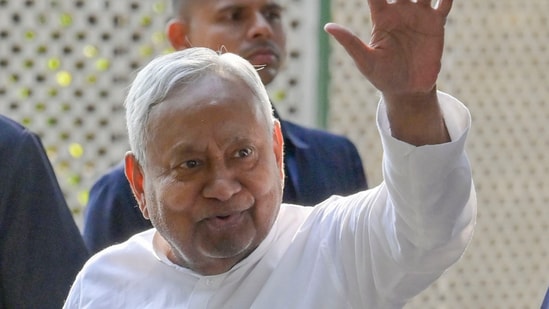
The political landscape of Bihar is set for a monumental transition tomorrow as the Bharatiya Janata Party (BJP) prepares to announce its new Chief Minister. Incumbent Chief Minister Nitish Kumar is scheduled to formally submit his resignation on April 14, paving the way for the BJP to take the ultimate leadership of the National Democratic Alliance (NDA) government in the state. Union Agriculture Minister and veteran leader Shivraj Singh Chouhan has been appointed as the central observer. He will chair a decisive legislative party meeting in Patna tomorrow to oversee the election of the new leader. This watershed moment marks the first time the BJP will assume the Chief Ministerial berth in Bihar, fundamentally realigning power dynamics in the Hindi heartland. [Source: Hindustan Times].
## The End of the Nitish Kumar Era
For nearly two decades, Nitish Kumar has been the undisputed fulcrum of Bihar politics. Earning the moniker *Sushasan Babu* (Mr. Good Governance) for his early work in restoring law and order and building infrastructure, Kumar’s tenure has been historically significant. However, his scheduled resignation on April 14 signifies the end of an era.
The transition has been the subject of intense speculation since the conclusion of the 2025 Bihar Assembly elections, where the BJP emerged as the overwhelmingly dominant partner within the NDA, reducing the Janata Dal (United) to a junior status in terms of legislative numbers. According to insiders, a pre-election consensus had been reached between the BJP high command and Kumar, stipulating a graceful exit for the veteran leader to allow a younger, BJP-led leadership to take charge.
“Nitish Kumar’s decision to step down is a pragmatic acknowledgment of the changing electoral realities on the ground. The BJP’s expanding footprint in Bihar made this transition inevitable,” noted Dr. Rakesh Sinha, a Patna-based political analyst. [Source: Additional: Independent Political Analysis].
There is widespread speculation that Nitish Kumar may be accommodated at the national level, potentially transitioning to a gubernatorial role or a central advisory capacity, ensuring his dignified departure from state-level active politics.
## Shivraj Singh Chouhan’s Strategic Role
The BJP’s parliamentary board has entrusted Union Minister **Shivraj Singh Chouhan** with the critical responsibility of overseeing the leadership transition. Chouhan’s appointment as the central observer is a masterstroke of political strategy. Having served as the Chief Minister of Madhya Pradesh for over a decade and a half, Chouhan brings unparalleled experience in managing complex regional caste equations, placating internal dissent, and forging consensus among ambitious regional leaders.
His primary task in Patna tomorrow will be to ensure a unanimous and frictionless election of the legislative party leader. By deploying a heavyweight like Chouhan, the BJP central leadership is sending a clear message: the transition must be disciplined, unified, and devoid of the factionalism that often plagues regional leadership changes.
Chouhan is expected to hold one-on-one dialogues with senior state leaders, Members of the Legislative Assembly (MLAs), and Rashtriya Swayamsevak Sangh (RSS) functionaries before the formal announcement. [Source: Original RSS].
## Frontrunners for the Chief Ministerial Berth
As suspense mounts, several prominent BJP leaders from Bihar have emerged as potential candidates for the top job. The party’s decision will heavily reflect its long-term strategy for the state leading up to the 2029 Lok Sabha elections.
Key contenders include:
* **Samrat Choudhary:** The current Deputy Chief Minister and an assertive Other Backward Class (OBC) face of the party. Choudhary, belonging to the Koeri community, has been instrumental in aggressively countering the opposition’s caste-based narratives. Elevating him would consolidate the crucial ‘Luv-Kush’ (Kurmi-Koeri) vote bank that was traditionally fiercely loyal to Nitish Kumar.
* **Vijay Kumar Sinha:** Another Deputy Chief Minister and a prominent upper-caste (Bhumihar) leader. Sinha has a strong administrative background, having previously served as the Speaker of the Bihar Legislative Assembly. His elevation would pacify the BJP’s traditional core voter base, which has often felt sidelined in the era of Mandal politics.
* **Nityanand Rai:** The Union Minister of State for Home Affairs and a powerful Yadav leader. Choosing Rai would be a direct surgical strike on the Rashtriya Janata Dal’s (RJD) core Yadav vote bank, signaling the BJP’s ambition to dismantle traditional opposition strongholds.
While these names dominate the discourse, the BJP under Prime Minister Narendra Modi and Home Minister Amit Shah is known for delivering political surprises, frequently elevating low-profile “dark horse” candidates to chief ministerial positions.
## Navigating the Complex Caste Calculus
In Bihar, caste arithmetic is the bedrock of electoral politics. The landmark Bihar Caste Survey conducted previously revealed that Extremely Backward Classes (EBCs) and OBCs constitute over 60% of the state’s population. The BJP’s choice of Chief Minister tomorrow will be a direct reflection of its strategy to navigate this demographic reality.
For decades, the BJP relied on Nitish Kumar to bring in the EBC and Mahadalit votes, supplementing its own upper-caste and trader vote base. With Kumar stepping back, the BJP must prove it can independently hold this broad social coalition together.
“The mandate for the new Chief Minister will be twofold: retain the confidence of the upper castes while aggressively expanding the party’s footprint among the EBCs and Mahadalits,” explained social scientist Dr. Alok Ranjan. “The BJP cannot afford to be seen as exclusively an upper-caste party in a state where social justice remains the primary political currency.” [Source: Additional: Public Electoral Data].
## Economic Challenges and Governance Roadmaps
Beyond caste arithmetic, the incoming Chief Minister will inherit a state grappling with profound economic challenges. While Nitish Kumar improved basic infrastructure, Bihar continues to lag significantly in industrialization, private investment, and job creation.
The next government must tackle critical governance priorities:
1. **Employment Generation:** Stemming the massive outward migration of youth by creating local employment opportunities in manufacturing and IT sectors.
2. **Agri-Business Development:** Bihar is heavily agrarian. Transforming agriculture through food processing units and modern supply chains is imperative for economic growth.
3. **Flood Management:** The perennial flooding in North Bihar caused by rivers originating in Nepal requires long-term infrastructural solutions and diplomatic negotiation.
4. **Healthcare and Education:** Upgrading rural healthcare facilities and improving the quality of higher education to prevent the brain drain of students to other states.
The BJP has long promised a “Double Engine Sarkar” (aligned governments at the state and center) to fast-track Bihar’s development. With a BJP Chief Minister finally at the helm, the pressure to deliver tangible economic progress will be unprecedented. The opposition, led by Tejashwi Yadav’s RJD, is already gearing up to make unemployment the central issue of their political campaigns.
## Realigning the NDA Structure
The transition also prompts a restructuring of power within the NDA itself. The JD(U), preparing for life after Nitish Kumar’s active leadership, will likely negotiate for significant representation in the new cabinet. Political observers expect a power-sharing formula where the JD(U) might be offered a Deputy Chief Minister post alongside crucial portfolios like Finance or Rural Development to ensure the alliance remains stable.
Furthermore, smaller alliance partners such as the Lok Janshakti Party (Ram Vilas) and the Hindustani Awam Morcha (HAM) will be watching the developments closely. Keeping these smaller, yet critical, caste-based parties satisfied will be the immediate diplomatic challenge for the new BJP Chief Minister.
## Conclusion and Future Outlook
Tomorrow’s legislative party meeting chaired by Shivraj Singh Chouhan is not merely an administrative exercise; it is the dawn of a new political epoch in Bihar. The BJP’s ascension to the Chief Minister’s office marks the culmination of a decades-long strategy to grow from a junior coalition partner to the primary pole of Bihar politics.
**Key Takeaways:**
* **Historic Shift:** The BJP will install its first-ever Chief Minister in Bihar following Nitish Kumar’s resignation on April 14.
* **Strategic Oversight:** Union Minister Shivraj Singh Chouhan’s role as central observer ensures a unified, strategic selection process tailored for the 2029 national elections.
* **Demographic Focus:** The chosen candidate will likely reflect a calculated balance between upper-caste loyalty and vital OBC/EBC outreach.
* **Governance Mandate:** The new leadership faces immense pressure to pivot the state’s narrative from caste politics to rapid industrial and economic development.
As the nation looks toward Patna tomorrow, the name announced will not just dictate the immediate governance of Bihar, but will also set the foundational tone for the BJP’s dominance in eastern India for the next decade.





