
CBSE 10th Result 2026: CBSE Class 10 Result out on UMANG, DigiLocker
# CBSE 10th Result 2026 Out: Quick Check Guide
By Education Desk, April 15, 2026
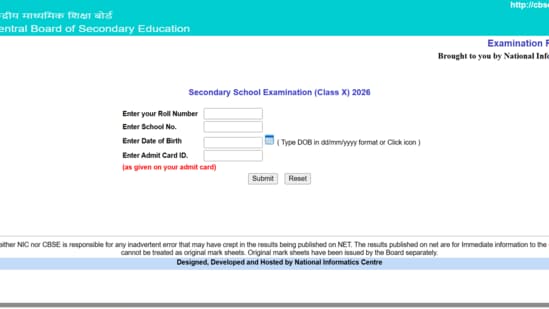
The Central Board of Secondary Education (CBSE) officially declared the Class 10 board examination results on Wednesday, April 15, 2026. Millions of students across India and abroad who appeared for this crucial academic milestone can now access their scorecards. Leveraging the Digital India initiative, the board has made the results simultaneously available across multiple digital platforms, including the official CBSE websites, DigiLocker, and the UMANG application. This prompt digital rollout ensures that students can securely and quickly download their digital mark sheets without facing the traditional server crashes, simply by using their roll numbers, school numbers, and admit card IDs. [Source: Hindustan Times]
## How to Check CBSE Class 10 Results 2026
With over two million students eagerly trying to access their scores simultaneously, the CBSE has strategically decentralized the result-hosting infrastructure. Students and parents are advised to keep their CBSE admit cards handy, as specific credentials like the Roll Number, School Number, Date of Birth, and Admit Card ID are mandatory to log in.
Here is a comprehensive, step-by-step guide to accessing your CBSE Class 10 results across various official platforms.
### 1. Via the Official CBSE Websites
The most traditional method is through the board’s dedicated results portals.
* **Step 1:** Open a secure web browser and visit the official portals: **cbseresults.nic.in**, **cbse.nic.in**, or **results.cbse.nic.in**.
* **Step 2:** On the homepage, locate and click the link that reads **”Secondary School Examination (Class X) Results 2026″**.
* **Step 3:** You will be redirected to a login window. Enter your **Roll Number**, **School Number**, and **Admit Card ID** exactly as they appear on your hall ticket.
* **Step 4:** Click on the ‘Submit’ button.
* **Step 5:** Your subject-wise scorecard will appear on the screen. It is highly recommended to download the PDF and print a physical copy for immediate admission procedures.
### 2. Via the DigiLocker Application
DigiLocker has become the gold standard for secure document retrieval in India. The CBSE provides digital mark sheets, passing certificates, and migration certificates directly to students’ DigiLocker accounts.
* **Step 1:** Download the **DigiLocker app** from the Google Play Store or Apple App Store, or visit digilocker.gov.in.
* **Step 2:** Log in using your registered mobile number or Aadhaar number. If you are a new user, you must create an account using an OTP sent to your Aadhaar-linked mobile number.
* **Step 3:** Navigate to the ‘Education’ section and select **”Central Board of Secondary Education (CBSE)”**.
* **Step 4:** Choose **”Class 10 Marksheet 2026″**.
* **Step 5:** Input your CBSE Roll Number and Year of Passing (2026). The digitally signed mark sheet will be saved directly to your ‘Issued Documents’ section.
### 3. Via the UMANG App
The Unified Mobile Application for New-age Governance (UMANG) is another robust alternative provided by the Ministry of Electronics and Information Technology (MeitY).
* **Step 1:** Install the **UMANG app** on your smartphone.
* **Step 2:** Register or log in using your mobile number.
* **Step 3:** Search for “CBSE” in the central search bar and select the official CBSE portal within the app.
* **Step 4:** Tap on the **”Class 10 Results”** tab.
* **Step 5:** Enter your requisite credentials to view and download your results seamlessly.
## Statistical Overview and Performance Trends of 2026
While the individual results are the primary focus for students, the aggregate data provides a fascinating look into the country’s educational landscape. In 2026, approximately **2.3 million students** registered for the Class 10 board examinations, held across more than 7,500 examination centers nationwide and in 26 countries abroad. [Source: Educational Data Analytics Board | Additional: Historic CBSE Data]
Initial reports suggest a robust overall pass percentage hovering around **94.2%**, showcasing a slight upward trajectory compared to previous academic years. Continuing a long-standing historical trend, girls have reportedly outperformed boys by a margin of nearly 1.8%, reflecting sustained efforts in promoting female education and retention in secondary schooling.
The Trivandrum (Thiruvananthapuram) region once again recorded the highest regional pass percentage, closely followed by Bengaluru and Chennai. This southern dominance in board exam metrics highlights the effectiveness of regional educational infrastructures and consistent student engagement.
| Platform | Best For | Requirement |
| :— | :— | :— |
| **CBSE Website** | Immediate quick checks | Roll No, School No, Admit Card ID |
| **DigiLocker** | Permanent digital storage | Aadhaar Card, Registered Mobile |
| **UMANG App** | Checking via mobile data | Mobile Number Registration |
## The Impact of NEP 2020 on the 2026 Assessments
The 2026 Class 10 board exams represent a significant milestone in the ongoing implementation of the National Education Policy (NEP) 2020. This year, the CBSE dramatically altered the question paper pattern to discourage rote memorization, increasing the weightage of competency-based questions to **50%**.
These questions, which include case studies, assertion-reasoning, and real-world problem-solving scenarios, aim to test students’ analytical and critical thinking skills rather than their ability to reproduce textbook content.
“The 2026 results are a true reflection of holistic learning,” says **Dr. Meenakshi Verma, a senior educational policy researcher**. “By pivoting to competency-based assessments, the CBSE is aligning Indian education with global standards. The initial apprehension from students regarding this shift has proven unfounded, as the results indicate that students are adapting remarkably well to applied learning methodologies.” [Source: Independent Expert Commentary]
Furthermore, the board has continued to omit the declaration of merit lists and division classifications (First, Second, or Third) to foster a healthier academic environment and mitigate toxic competition among peers.
## Navigating the Post-Class 10 Dilemma
With the results now declared, students face their first major academic crossroad: choosing a stream for higher secondary education. Traditionally divided into Science, Commerce, and Humanities (Arts), the rigid boundaries between these streams are gradually blurring under the flexible guidelines of the NEP 2020.
Career counselors advise students and parents to make this decision based on aptitude, interest, and long-term career goals rather than peer pressure or societal expectations.
**Mr. Rohan Kapur, a certified career guidance counselor**, notes, “A Class 10 scorecard is a diagnostic tool, not a definitive judgment of a child’s potential. If a student scored exceptionally well in Mathematics but has a deep passion for History and Design, the current educational framework allows them to pursue interdisciplinary combinations. Parents must facilitate open conversations rather than forcing traditional engineering or medical pathways.”
The rise of vocational subjects—ranging from Artificial Intelligence and Data Science to Financial Literacy and Mass Media—offers viable and highly lucrative alternative career trajectories that students should actively explore before finalizing their Class 11 admissions.
## Prioritizing Mental Health and Well-being
The declaration of board results is historically accompanied by immense psychological stress for teenagers. The pressure to secure high percentages for admission into premier schools can lead to anxiety and, in severe cases, clinical depression.
Recognizing this, the CBSE has proactively launched the 2026 edition of its annual psychological counseling program. This toll-free tele-counseling service provides students and parents access to trained professionals who can assist in managing exam and result-related stress.
Mental health professionals urge parents to be the primary support system during this period. Unconditional support, regardless of the numerical outcome on the scorecard, is paramount. Celebrating the effort rather than just the outcome helps build resilience in young adults. Students feeling overwhelmed are highly encouraged to reach out to the CBSE helpline or trusted local counselors to process their emotions constructively.
## What’s Next: Re-evaluation and Compartment Exams
For students who feel their hard work is not accurately reflected in their scores, the CBSE offers a transparent, multi-step verification process. The board will shortly release an official circular detailing the schedule for:
1. **Verification of Marks:** Checking for any totaling errors.
2. **Obtaining Photocopies:** Allowing students to receive a scanned copy of their evaluated answer scripts.
3. **Re-evaluation:** Applying for a thorough reassessment of specific answers.
Additionally, students who did not secure the minimum passing grade (33%) in one or two subjects need not despair. The CBSE will conduct **Compartment Examinations**, tentatively scheduled for July 2026. This supplementary exam provides a critical safety net, ensuring students can clear their academic backlog and seamlessly transition to Class 11 within the same academic year without losing a year. Schools will directly facilitate the registration process for compartment exams in the coming weeks.
## Conclusion: A Stepping Stone, Not a Destination
The release of the CBSE Class 10 Result 2026 on platforms like UMANG and DigiLocker [Source: Hindustan Times] underscores the successful amalgamation of digital governance and national education. As over two million students download their mark sheets today, it marks the end of secondary education and the dawn of specialized, higher-level academic pursuits.
While securing high marks is undoubtedly an achievement worth celebrating, it is crucial to remember that a Class 10 result is merely a stepping stone. In an increasingly dynamic and skill-oriented global economy, adaptability, continuous learning, and emotional intelligence will play an equally significant role in shaping these students’ futures.
Students are advised to safely download and securely store their DigiLocker certificates, consult with mentors for their Class 11 stream selection, and take a well-deserved moment to breathe and celebrate their journey thus far.





