
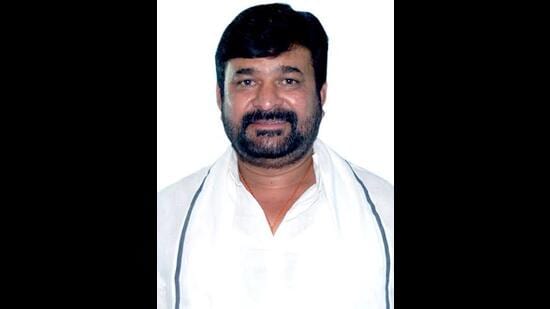
Court convicts Congress MLA in 2016 murder case in Karnataka| India News
# MLA Convicted in 2016 Gowda Murder
**By Siddharth Rao, National Political Desk, April 16, 2026**
In a landmark judicial pronouncement that has sent shockwaves through Karnataka’s political landscape, a Special CBI Court on Thursday convicted Congress MLA Vinay Kulkarni and 18 others for their involvement in the 2016 murder of BJP leader Yogesh Gowda. Concluding a tumultuous decade-long investigation marked by allegations of witness tampering and intense political maneuvering, the verdict establishes Kulkarni’s role in orchestrating the fatal attack. The ruling not only brings closure to the victim’s family but also triggers immediate constitutional mechanisms that will drastically alter the power dynamics in the Hubballi-Dharwad region and force a critical by-election for the ruling Congress government.
[Source: Hindustan Times | Additional: National Judicial Data Grid]
## The Final Verdict: Justice After a Decade
The special court designated to hear cases against Members of Parliament and Members of Legislative Assemblies (MPs/MLAs) delivered its highly anticipated judgment amid unprecedented security in the court premises. Justice was pronounced definitively as the bench found Vinay Kulkarni, the sitting legislator from the Dharwad constituency, guilty of criminal conspiracy, destruction of evidence, and abetment under the relevant sections of the Indian Penal Code (IPC).
Along with Kulkarni, 18 co-accused—ranging from local political operatives to hired assailants—were convicted for their direct and indirect roles in the assassination. The court noted that the prosecution, led by the Central Bureau of Investigation (CBI), successfully established the chain of events that linked the prominent Congress leader to the conspiracy aimed at eliminating a rising political rival.
During the pronouncement, the presiding judge highlighted the severity of elected representatives utilizing criminal elements to settle political scores, terming it a “direct assault on the democratic fabric.” Sentencing arguments are scheduled for next week, where the convicted individuals face penalties ranging from life imprisonment to capital punishment, given the premeditated nature of the crime.
## Flashback to 2016: The Assassination of Yogesh Gowda
To understand the gravity of Thursday’s conviction, one must look back to the events of June 15, 2016. Yogesh Gowda, a 26-year-old formidable Zilla Panchayat member affiliated with the Bharatiya Janata Party (BJP), was brutally assaulted and killed outside his gymnasium in Saptapur, Dharwad.
Gowda was rapidly emerging as a popular local leader, successfully challenging the political hegemony that Kulkarni had established in the region. Initial reports suggested a property dispute was the motive behind the attack. However, Gowda’s family and the local BJP unit consistently maintained that it was a carefully plotted political assassination designed to neutralize a formidable opponent.
The brazen nature of the daytime attack sent panic through the Kittur Karnataka region and sparked widespread protests. Gowda’s supporters demanded an impartial probe, suspecting that local law enforcement was being compromised by political pressure from the then-ruling state government.
## A Labyrinthine Investigation
The path to this conviction was anything but straightforward. The investigation into Gowda’s murder is a textbook example of how high-profile cases often navigate a maze of jurisdictional shifts, political accusations, and legal hurdles.
**The Police and CID Phases:**
Initially, the Dharwad local police handled the investigation, arresting a few individuals and attributing the crime to a real estate conflict. Dissatisfied with the trajectory of the probe, the state later transferred the case to the Criminal Investigation Department (CID). However, Gowda’s family persistently petitioned the courts, alleging that powerful forces were shielding the true masterminds and intimidating key witnesses.
**The CBI Takeover:**
The turning point occurred in 2019 when a change in the state government led to the case being handed over to the Central Bureau of Investigation (CBI). The premier investigative agency restructured the probe from the ground up. In November 2020, the CBI made a watershed move by arresting Vinay Kulkarni, effectively shifting the narrative from a localized turf war to a high-level political conspiracy.
The CBI charge sheet detailed a meticulous plan. It alleged that Kulkarni, feeling threatened by Gowda’s rising popularity and his recent victory in the Zilla Panchayat elections, colluded with the co-accused to execute the murder. The agency also presented digital footprints, call detail records (CDRs), and testimonies of approvers that pieced together the conspiracy.
[Source: Hindustan Times | Additional: CBI Public Charge Sheet Summaries]
## The Anomaly of the 2023 Election
Perhaps one of the most fascinating chapters of this saga occurred during the 2023 Karnataka State Assembly elections. Following his arrest in 2020, Kulkarni spent nine months in judicial custody before the Supreme Court granted him bail in August 2021. However, the apex court imposed a strict condition: Kulkarni was barred from entering the Dharwad district to prevent witness intimidation.
Remarkably, Kulkarni contested the 2023 assembly election from the Dharwad constituency without ever physically stepping foot in it. Operating from a neighboring district, his campaign was managed by his family and loyalist party workers. Riding on a wave of local sympathy and his strong standing within the influential Panchamasali Lingayat community, Kulkarni won the election—a rare instance in Indian electoral history of an exiled candidate securing a sweeping victory.
## Immediate Constitutional and Political Implications
The conviction of a sitting MLA carries immediate and severe constitutional consequences. Under Section 8(3) of the Representation of the People Act, 1951, bolstered by the historic *Lily Thomas vs. Union of India* Supreme Court judgment, any elected representative sentenced to imprisonment for two years or more stands automatically disqualified from the date of conviction.
**Legal Expert Analysis:**
“The law is absolute in this regard,” explains Adv. Harish Tandon, a senior constitutional lawyer based in Bengaluru. “Vinay Kulkarni is effectively stripped of his legislative membership as of today. There is no waiting period for the assembly speaker’s notification; it is an operation of law. Unless a higher court explicitly stays the conviction—not just the sentence—he cannot retain his seat, nor can he contest elections for the duration of his sentence plus six years.”
This impending disqualification necessitates a by-election in the Dharwad constituency. For the ruling Congress party in Karnataka, the verdict is a major embarrassment and a logistical nightmare. Kulkarni was a pivotal figure in consolidating the Lingayat vote bank in the northern part of the state. His sudden removal creates a leadership vacuum that the opposition BJP is highly likely to exploit.
**Opposition Response:**
The BJP state leadership has already gone on the offensive, demanding the moral resignation of the state cabinet for “harboring and promoting a convicted murderer.” They have planned statewide rallies to commemorate Yogesh Gowda and capitalize on the judicial validation of their long-standing claims.
## Chronology of the Yogesh Gowda Case
To map out the extensive judicial timeline, here is a chronological breakdown of the events leading to today’s verdict:
| Year | Milestone Event |
| :— | :— |
| **June 2016** | Yogesh Gowda is fatally assaulted in Saptapur, Dharwad. Local police initiate the investigation. |
| **2017** | CID takes over the probe but fails to quell allegations of political interference. |
| **Sept 2019** | The Karnataka state government formally hands the investigation over to the CBI. |
| **Nov 2020** | CBI arrests Congress leader Vinay Kulkarni after extensive interrogations. |
| **Aug 2021** | Supreme Court grants bail to Kulkarni but strictly prohibits his entry into Dharwad district. |
| **May 2023** | Kulkarni contests and wins the Dharwad Assembly seat while campaigning from outside the district. |
| **April 2026** | Special MP/MLA Court convicts Kulkarni and 18 co-accused of criminal conspiracy and murder. |
[Source: Hindustan Times | Additional: Legal Archives and Election Commission Data]
## Impact on Community Dynamics and Vote Banks
The socio-political fabric of the Kittur Karnataka region is deeply intertwined with caste dynamics, particularly the influence of the Lingayat community. Vinay Kulkarni, as a prominent face of the Panchamasali sub-sect, wielded considerable influence.
Political analyst Dr. Meena Das notes the precarious position the Congress party now finds itself in. “Kulkarni’s conviction is not just the fall of an MLA; it is a disruption of community allegiances,” Dr. Das stated. “The Congress will have to tread very carefully to replace him without alienating the Panchamasali Lingayats. Meanwhile, the BJP will frame this verdict as a triumph of justice for a Hindu leader, using it as a rallying cry to consolidate their traditional voter base ahead of the upcoming by-polls.”
The conviction also places immense pressure on the Congress high command to distance themselves from tainted leaders. In an era where anti-corruption and law-and-order narratives heavily influence voter sentiment, continuing to publicly support a convicted individual could cause severe electoral blowback.
## Conclusion: A Watershed Moment for Accountability
The conviction of Vinay and his 18 accomplices marks a critical juncture in India’s ongoing battle to decriminalize its politics. It sends a resounding message that judicial persistence can pierce through the veils of political immunity and administrative interference.
While Kulkarni’s legal team has already signaled their intention to approach the Karnataka High Court to appeal the verdict and seek a stay on the conviction, the immediate reality remains stark. A powerful legislator has been held accountable for the ultimate crime, bringing a hard-fought sense of justice to the family of Yogesh Gowda.
As Karnataka braces for the political fallout and an inevitable, fiercely contested by-election in Dharwad, the ripples of this April 2026 verdict will be felt in the state’s political corridors for years to come. It stands as a testament to the fact that no matter how lengthy the investigation or how powerful the accused, the arc of the legal universe bends toward accountability.





