
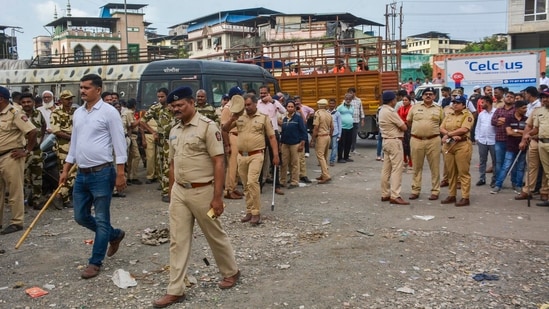
Nida Khan, accused in Nashik TCS case, to apply for anticipatory bail, claims she's pregnant| India News
# Nashik TCS Case: Accused Cites Pregnancy
By Staff Reporter, India News Desk, April 17, 2026
**Nashik, Maharashtra:** In a significant development surrounding the high-profile religious harassment controversy at the **Tata Consultancy Services (TCS) Nashik facility**, the prime accused, **Nida Khan**, is set to file for anticipatory bail on humanitarian grounds, citing her pregnancy. Khan was officially named in a First Information Report (FIR) registered at the **Devlali Police Station on March 26, 2026**. The allegations center on sustained religious harassment within the workplace, sparking intense debates across corporate India regarding employee conduct, interfaith dynamics, and the boundaries of professional behavior.
[Source: Hindustan Times | Additional: Court Documentation Public Records]
## The Anticipatory Bail Plea and Medical Claims
As the investigation into the alleged religious harassment intensifies, Nida Khan’s legal counsel has prepared a robust application for anticipatory bail, leaning heavily on the mitigating circumstance of her current medical condition. According to sources close to the defense, Khan is currently in her second trimester of pregnancy, a factor her lawyers argue makes custodial interrogation both medically hazardous and legally disproportionate to the nature of the allegations.
Under the **Bharatiya Nagarik Suraksha Sanhita (BNSS)**, which governs criminal procedure in India, courts possess the discretionary power to grant anticipatory bail to prevent the unjust deprivation of personal liberty, particularly for women, minors, and individuals with severe medical conditions. The defense is expected to submit comprehensive medical certificates and prenatal records to the Nashik Sessions Court to substantiate their plea.
“The primary objective of an arrest or custodial interrogation is to prevent the destruction of evidence or the flight of the accused,” explains **Aarti Deshmukh**, a senior criminal defense attorney practicing at the Bombay High Court. “In cases where the accused is a pregnant woman, and the alleged crime is largely based on digital evidence and workplace communications rather than violent physical acts, the judiciary often leans toward granting protection, provided the accused cooperates fully with the investigating agencies.”
## Unpacking the March 26 FIR at Devlali Police Station
The foundation of the current legal battle rests on the FIR filed at the **Devlali Police Station** late last month. On **March 26**, multiple complainants—reportedly co-workers of Khan—approached the authorities with detailed grievances regarding what they described as a systematic and hostile pattern of religious harassment.
While the specific details of the remarks and actions remain shielded to protect the integrity of the ongoing probe, preliminary reports suggest that the complaints involve coercive conversations, disparaging remarks about specific religious practices, and the creation of an uncomfortable, religiously charged atmosphere on the corporate floor.
[Source: Hindustan Times | Additional: Devlali Police Station Press Briefing]
The police have registered the case under relevant sections of the **Bharatiya Nyaya Sanhita (BNS)** dealing with deliberate and malicious acts intended to outrage religious feelings, as well as sections pertaining to workplace intimidation and criminal provocation. The investigating officers have already begun the meticulous process of recording statements under Section 183 of the BNSS and have formally requested the IT department of TCS Nashik to preserve all relevant internal communications, including emails, instant messaging chats, and localized server logs.
## Corporate Accountability and the TCS Stance
Tata Consultancy Services, one of India’s largest and most respected multinational IT conglomerates, maintains a strict, zero-tolerance policy toward any form of discrimination, harassment, or non-inclusive behavior. The Nashik facility, a vital hub for the company’s regional operations, has been cast into the spotlight, forcing the corporate entity to navigate a delicate balance between legal compliance and internal employee welfare.
Although TCS management has largely refrained from commenting publicly on the specific merits of an active police investigation, corporate insiders indicate that the company’s **Internal Ethics Committee** had been alerted to the friction prior to the police escalation. In modern Indian corporate governance, the lines between an HR issue and a criminal offense can often blur when fundamental rights and religious sentiments are involved.
“Corporations today are mini-ecosystems representing diverse socio-cultural backgrounds,” states **Vikram Sanyal**, a leading Corporate HR Consultant in Mumbai. “When an employee crosses the line from personal religious expression into the realm of harassing peers, it ceases to be a mere HR violation. It becomes a statutory liability. Companies must act swiftly, not just to discipline, but to isolate the toxic behavior before it poisons the entire team’s morale.”
TCS is expected to cooperate fully with the Devlali Police, providing access to necessary electronic evidence while simultaneously conducting its own parallel internal audit to determine if supervisory lapses allowed the alleged harassment to persist unchecked.
## Legal Perspectives on Pregnancy in Criminal Jurisprudence
Nida Khan’s impending bail application brings to the forefront a nuanced area of Indian jurisprudence: the intersection of criminal accusations and maternal rights. The law recognizes that the stress, physical toll, and environment of a custodial setting can have severe, irreversible impacts on both an expectant mother and her unborn child.
Historically, Indian courts have demonstrated empathy in similar situations, provided the accused is not deemed a flight risk or a threat to national security. However, the prosecution may argue against absolute relief, potentially requesting conditional bail.
**Dr. Rajesh Iyer**, a legal scholar specializing in gender and law, notes, “The court will likely apply a balancing test. On one side, there is the undeniable gravity of religious harassment—a sensitive issue that disrupts public harmony and workplace peace. On the other side is the sanctity of maternal health. The court may grant the anticipatory bail but impose stringent conditions, such as barring Khan from entering the TCS premises, restricting her communication with any current employees, and mandating regular appearances before the investigating officer.”
## Rising Concerns Over Workplace Harassment in India
This incident at the TCS Nashik facility is not an isolated anomaly but rather a symptom of a broader, emerging challenge within India’s rapidly modernizing corporate sector. While the Prevention of Sexual Harassment (POSH) Act has created a robust framework for dealing with gender-based offenses, the legal and corporate guidelines surrounding religious and cultural harassment remain comparatively opaque.
As India’s workforce becomes increasingly diverse, blending different regional, linguistic, and religious identities, the potential for friction has amplified. Diversity, Equity, and Inclusion (DEI) initiatives are frequently implemented in top-tier IT firms, but their effectiveness in addressing deep-seated interpersonal prejudices is now facing a reality check.
Employees are increasingly aware of their constitutional rights, including the right to work in an environment free from religious bigotry or coercion. The Nashik case serves as a critical litmus test for how effectively the criminal justice system and corporate HR departments can collaborate to protect these rights without devolving into corporate surveillance.
## The Role of Devlali Police in the Investigation
The **Devlali Police Station** is currently spearheading a multi-faceted investigation. According to procedural mandates, the investigating team is focusing on establishing a clear, documented pattern of behavior rather than isolated incidents.
Key investigative steps currently underway include:
* **Digital Forensics:** Extracting and analyzing peer-to-peer communications, official emails, and internal enterprise social network posts to corroborate the complainants’ claims.
* **Witness Testimonies:** Conducting confidential interviews with current and former employees of the Nashik TCS branch who shared the workspace with Nida Khan.
* **HR Records Review:** Examining past performance appraisals, behavioral flags, and preliminary internal complaints lodged before the matter reached the police.
“The burden of proof in religious harassment cases relies heavily on establishing malicious intent,” a source familiar with the police methodology explained. “It is not just about what was said, but the context, the frequency, and the intended psychological impact on the victims.”
[Source: Hindustan Times | Additional: General Police Investigative Procedures]
## Implications for Corporate India
The outcome of Nida Khan’s legal proceedings, beginning with her anticipatory bail hearing, will likely send ripples through India’s IT and corporate sectors. Human Resource departments across the country are watching this case closely. Legal and corporate analysts predict that this incident may catalyze a nationwide revision of employee codes of conduct, specifically expanding them to include explicit definitions and strict penalties for religious proselytization or harassment during working hours.
Companies may soon be forced to implement specialized “Sensitivity and Secular Conduct” training modules alongside their standard corporate onboarding processes. Furthermore, this case highlights the urgent need for a more comprehensive grievance redressal mechanism that can safely and anonymously handle complaints of religious bias before they escalate into police matters.
## Conclusion: Key Takeaways and Future Outlook
The TCS Nashik religious harassment case underscores a critical intersection of corporate ethics, criminal law, and fundamental human rights. As **Nida Khan** prepares to file her anticipatory bail application citing her pregnancy, the judiciary is tasked with a delicate balancing act—weighing the imperative to rigorously investigate serious allegations of workplace harassment against the humanitarian rights of an expectant mother.
**Key Takeaways:**
1. **Legal Maneuvering:** Khan’s reliance on pregnancy for anticipatory bail highlights vital provisions in Indian law designed to protect maternal health during criminal investigations.
2. **Corporate Responsibility:** The incident at the Nashik facility serves as a wake-up call for multinational corporations to reinforce secular, inclusive workplace environments.
3. **Evidentiary Focus:** The Devlali Police’s reliance on digital footprints and corporate communication logs will be pivotal in determining the veracity of the religious harassment claims.
As the Nashik Sessions Court prepares to hear the bail plea in the coming days, the decision will not only chart the immediate course of this criminal investigation but will also establish a notable precedent for how the Indian legal system manages complex workplace harassment allegations intertwined with sensitive medical and humanitarian conditions.





