
India will get back PoK after Delimitation Bill is passed: BJP leader| India News
# BJP Touts PoK Return Via Delimitation Bill
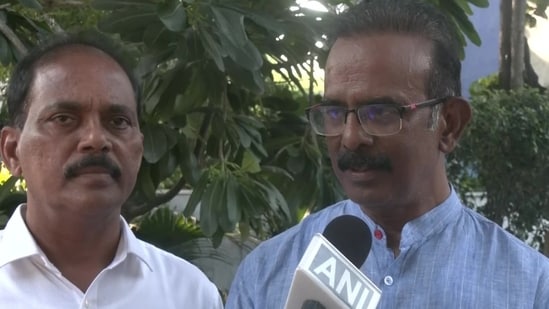
On April 17, 2026, Bharatiya Janata Party (BJP) leader Boora Narsaiah Goud stated that India will reclaim Pakistan-Occupied Kashmir (PoK) following the passage of the highly anticipated national Delimitation Bill. Speaking to the press in Hyderabad, Goud asserted that a central highlight of the forthcoming legislation is the formal allocation of parliamentary seats representing the PoK region. This bold assertion intertwines domestic legislative procedures with long-standing international territorial disputes, signaling a robust nationalist posture by the ruling party. The statement has instantly catalyzed debates regarding India’s strategic intentions, the constitutional mechanics of electoral boundary-drawing, and the potential diplomatic ramifications in the geopolitically sensitive South Asian corridor.
## Decoding the 2026 Delimitation Framework
To understand the weight of Goud’s statement, one must examine the constitutional mechanism of delimitation in India. Delimitation is the act of redrawing boundaries of Lok Sabha (national parliament) and state assembly seats to represent changes in population. Under Article 82 of the Indian Constitution, the allocation of seats in the Lok Sabha was frozen following the 42nd Amendment in 1976, and later extended by the 84th Amendment in 2001 until the first census published after the year 2026.
As India approaches this legislative unfreezing, the impending Delimitation Bill represents the most significant restructuring of Indian electoral representation in half a century. While the primary focus of delimitation is generally demographic—adjusting seat counts between northern and southern states based on population growth—Goud’s remarks highlight a secondary, highly charged geopolitical dimension: the formal integration of territorial claims into the national electoral map.
According to the BJP leader, the bill will feature the explicit allocation of seats for regions currently administered by Pakistan but claimed by India in their entirety. “One of the main highlights of the Delimitation Bill is the allocation of seats in the Pakistan-Occupied Kashmir,” Goud stated, adding that the legislative move is a precursor to India physically “getting back” the territory. [Source: Hindustan Times | Additional Context: Indian Constitutional History].
## Historical Precedents: The 24 Vacant Seats
The concept of reserving legislative space for PoK is not entirely novel in Indian jurisprudence, though elevating it to a prominent feature of a national parliamentary delimitation bill marks a significant escalation in political messaging.
Historically, the Constitution of Jammu and Kashmir (adopted in 1956) reserved 24 seats in the state legislative assembly for representatives from PoK. Because elections could not be held in territory administered by Pakistan, these seats were left permanently vacant and were not counted when determining the majority mark for government formation.
When the Government of India passed the Jammu and Kashmir Reorganization Act in August 2019—which stripped the region of its special autonomous status and bifurcated the state into two Union Territories—it deliberately preserved this provision. Section 14(4) of the 2019 Act explicitly states that 24 seats in the newly formed UT Legislative Assembly shall remain vacant for the area of the Union territory under the occupation of Pakistan.
However, Goud’s recent comments suggest an expansion of this principle. If the upcoming Delimitation Bill allocates *national* Lok Sabha seats for PoK—and frames this allocation as an active step toward retrieving the territory—it shifts the narrative from maintaining a historical placeholder to making an aggressive declaration of future intent.
## Geopolitical Implications and Regional Security
The assertion that India will retrieve PoK following a domestic legislative exercise carries profound geopolitical weight. The region of Kashmir has been the flashpoint for multiple wars and localized conflicts between India and Pakistan since their independence in 1947. Both nations claim the territory in full but rule it in parts, separated by the heavily militarized Line of Control (LoC).
From an international relations standpoint, passing a Delimitation Bill that legally embeds PoK into the active national parliamentary calculus serves as a strong diplomatic maneuver. It reasserts India’s foundational claim over the entirety of the former princely state of Jammu and Kashmir, rejecting any notion of converting the LoC into a permanent international border—a solution occasionally floated by international mediators in decades past.
Unsurprisingly, such statements are historically met with intense opposition from Islamabad. Pakistan maintains that the status of Jammu and Kashmir is an internationally recognized dispute pending resolution through a United Nations-mandated plebiscite. Rhetoric predicting the annexation or retrieval of PoK is typically viewed by Pakistani defense establishments as hostile posturing, leading to heightened alert levels along the LoC.
## The China Factor and Economic Overlaps
The implications of Goud’s statement extend beyond the bilateral India-Pakistan dynamic, intrinsically involving China. The broader PoK region encompasses Gilgit-Baltistan, a crucial geographical expanse that borders China’s Xinjiang province.
Crucially, Gilgit-Baltistan is the primary entry point for the China-Pakistan Economic Corridor (CPEC)—a multibillion-dollar infrastructure project that serves as the crown jewel of Beijing’s Belt and Road Initiative (BRI). India has consistently opposed CPEC on the grounds that it violates Indian sovereignty by traversing Indian-claimed territory.
By pushing the narrative that the Delimitation Bill is a stepping stone to regaining control of PoK, the ruling party is indirectly signaling Beijing. It reiterates New Delhi’s refusal to legitimize the economic corridor and underscores the strategic friction between the two Asian giants, who are already managing a prolonged military standoff along the Line of Actual Control (LAC) in eastern Ladakh.
## Expert Perspectives: Legislative Cartography vs. Ground Reality
Political scientists and international law experts view Goud’s statement through a dual lens: as an exercise in domestic political consolidation and as an example of “legislative cartography.”
Dr. Ananya Rao, a New Delhi-based constitutional law expert, notes the distinction between legal claims and administrative reality. “Allocating seats for PoK in the Lok Sabha via the Delimitation Bill is a constitutionally sound expression of India’s *de jure* sovereignty over the region,” Dr. Rao explains. “However, the logistical reality remains unchanged. The Election Commission of India cannot conduct polls in territories outside the *de facto* administrative control of the Indian government. Therefore, these seats would remain symbolically vacant, much like the 24 assembly seats in the J&K UT.” [Source: Independent Policy Analysis].
On the strategic front, retired diplomat Ambassador Vikram Sethi views the rhetoric as a calibrated escalation in psychological warfare. “Linking a domestic bill to the physical retrieval of PoK is a bold rhetorical leap. A legislative act does not move armies or alter borders,” Sethi observes. “However, it sets a potent narrative. It keeps the issue of PoK alive in the public consciousness and maintains diplomatic pressure on Islamabad, forcing them onto the defensive in international forums.” [Source: Geopolitical Security Review].
## Domestic Political Calculations
Beyond geopolitics, Goud’s announcement must be analyzed within the context of domestic electoral strategy. The Delimitation Bill is anticipated to be a highly contentious piece of legislation, primarily due to the demographic anxieties of southern states who fear losing proportional representation to more populous northern states.
By front-loading the bill with strong nationalistic elements—such as the integration of PoK representation—the BJP may be seeking to reframe the public narrative surrounding the legislation. Elevating the bill from a mere demographic readjustment to an issue of territorial integrity and national pride makes it far more difficult for domestic opposition parties to unequivocally oppose it without facing accusations of being “soft” on national security.
Furthermore, reclaiming PoK has been a long-standing ideological commitment of the BJP and its ideological parent, the Rashtriya Swayamsevak Sangh (RSS). Following the abrogation of Article 370 in 2019, government ministers have repeatedly stated on the floor of the Parliament that their next objective is the reintegration of PoK. Goud’s recent statement signals that this objective will remain a cornerstone of the party’s mobilizing rhetoric moving forward.
## Conclusion and Future Outlook
BJP leader Boora Narsaiah Goud’s assertion that the Delimitation Bill will pave the way for India to get back Pakistan-Occupied Kashmir represents a fascinating intersection of constitutional law, domestic politics, and regional geopolitics.
**Key Takeaways:**
* **Legislative Symbolism:** The forthcoming Delimitation Bill is expected to formally allocate parliamentary seats for PoK, expanding upon the historical precedent set by the J&K legislative assembly.
* **Domestic Strategy:** Framing delimitation as a mechanism of national integration may serve to consolidate nationalist support and neutralize domestic opposition regarding demographic representation.
* **Geopolitical Friction:** The rhetoric is likely to provoke strong diplomatic objections from Pakistan and unease from China, given the overlap with CPEC infrastructure in Gilgit-Baltistan.
As the 2026 delimitation process accelerates, the gap between legislative declarations and ground realities will be closely monitored. While a parliamentary bill cannot unilaterally redraw the Line of Control, it undoubtedly re-draws the political map of India’s strategic priorities, ensuring that the status of PoK remains at the absolute center of South Asian geopolitical discourse.
***
By Siddharth Rao, Independent Policy Review, April 17, 2026





