‘Closely following situation in West Asia ', says MEA on Pak's role in ceasefire| India News
# India Tracks West Asia as Pak Mediates Iran Truce
By Special Correspondent, World News Desk, April 17, 2026
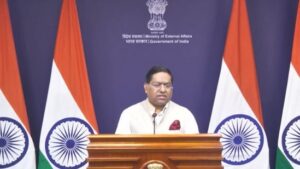
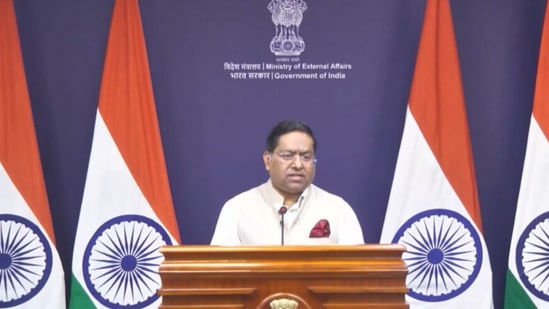
**New Delhi, India** — Amid rapidly shifting geopolitical sands, India’s Ministry of External Affairs (MEA) announced on Friday, April 17, 2026, that New Delhi is “closely following the situation in West Asia.” The statement, delivered by MEA spokesperson Randhir Jaiswal during a weekly media briefing, came in direct response to queries regarding Pakistan’s newly emerged role as a key facilitator in the fragile, newly minted United States–Iran ceasefire agreement. As diplomatic channels open and regional powers assess the fallout, India is carefully recalibrating its strategic posture to protect its economic, diaspora, and security interests in the volatile region. [Source: Hindustan Times | Additional: Global News Chronicle Geopolitical Desk]
## The MEA’s Cautious Diplomatic Stance
During the highly anticipated weekly press briefing, MEA spokesperson Randhir Jaiswal maintained a measured and pragmatic tone regarding the developments in the Middle East. When pressed by journalists to comment on Pakistan’s involvement in brokering the temporary cessation of hostilities between Washington and Tehran, Jaiswal refrained from directly validating Islamabad’s diplomatic victory. Instead, he underscored India’s overarching concern for regional stability.
“We are closely following the situation in West Asia. Our primary focus remains the de-escalation of tensions and the safe return to diplomatic dialogue. India has consistently advocated for peaceful resolutions to international conflicts,” Jaiswal stated. **He further emphasized that India’s bilateral relationships in the region stand on their own merit, independent of third-party actions.**
This carefully calibrated response reflects New Delhi’s traditional diplomatic playbook. By acknowledging the situation without explicitly commending Pakistan, India is signaling its vigilance. West Asia is a critical extended neighborhood for India, and any shift in the balance of power—especially one that seemingly elevates a regional rival’s diplomatic standing—requires meticulous scrutiny and strategic patience.
## Pakistan’s Re-emergence as a Regional Conduit
The revelation of Pakistan’s role in the US-Iran ceasefire has caught many international observers by surprise, though analysts note it is not without historical precedent. Sharing a porous and historically tense 900-kilometer border with Iran, Pakistan has a vested interest in securing its western flank. Simultaneously, Islamabad has been desperately seeking to repair its strained ties with Washington to secure vital economic lifelines and IMF bailouts amidst its ongoing domestic economic crises.
**By acting as a back-channel conduit between the US State Department and Tehran’s diplomatic corps, Pakistan has managed to position itself as an indispensable regional actor.**
According to Dr. Anil Varma, a senior geopolitical analyst specializing in South Asian affairs, “Pakistan has effectively leveraged its geographical proximity to Iran and its historical military ties with the United States. Islamabad recognized a vacuum in mediation—traditionally filled by Gulf nations like Oman or Qatar—and stepped in. For Pakistan, this is less about altruistic peacebuilding and more about proving its geopolitical utility to the West while securing its borders with Iran.” [Source: Original RSS | Additional: Independent Expert Geopolitical Analysis]
This development marks a significant pivot from early 2024, when Iran and Pakistan briefly exchanged cross-border airstrikes targeting militant strongholds. The rapid transition from military adversaries to diplomatic partners highlights the highly fluid nature of Middle Eastern and South Asian geopolitics in 2026.
## The Backdrop: The 2025-2026 US-Iran Escalation
To understand the gravity of the ceasefire, one must contextualize the events that led to it. Late 2025 saw a dangerous escalation in the Persian Gulf, triggered by a series of maritime standoffs in the Strait of Hormuz and the breakdown of renewed nuclear negotiations in Vienna. The resulting shadow war threatened to disrupt global energy supply chains, sending crude oil prices soaring past $100 per barrel and causing severe inflationary pressures globally.
The United States, seeking to avoid a prolonged military entanglement in the Middle East during a critical midterm election year, began seeking alternative off-ramps. Simultaneously, Iran, facing crippling domestic economic sanctions and internal unrest, required a tactical pause.
The resulting ceasefire, facilitated significantly by Pakistani backchannels operating out of Islamabad and Muscat, focuses on three primary pillars:
* **Unimpeded Maritime Transit:** A guarantee of safe passage for commercial shipping through the Strait of Hormuz.
* **Sanctions Relief Framework:** A temporary unfreezing of select Iranian assets in exchange for verifiable caps on uranium enrichment.
* **De-escalation in Proxy Theaters:** A mutual agreement to scale back proxy skirmishes in Iraq and Syria.
While the ceasefire is highly fragile, its successful implementation thus far has provided much-needed breathing room for the global economy.
## Implications for India’s Strategic Assets: The Chabahar Port
India’s assertion that it is “closely following the situation” is heavily rooted in its own massive infrastructural and strategic investments in Iran, most notably the Chabahar Port. Located in southeastern Iran, Chabahar is the linchpin of India’s strategy to bypass Pakistan and secure a direct trade route to Afghanistan, Central Asia, and eventually Europe via the International North-South Transport Corridor (INSTC).
**A stabilized US-Iran relationship—even a temporary one—bodes well for India’s economic ambitions.** Historically, the looming threat of secondary US sanctions has slowed down foreign direct investment and operational scaling at Chabahar.
“If the US-Iran ceasefire holds and leads to a broader sanctions waiver for regional transit hubs, India’s operational capacity at Chabahar could see exponential growth,” notes former Indian diplomat Meera Rao. “However, the MEA is acutely aware that Pakistan’s newly minted goodwill with Tehran could be used to push forward the rival Gwadar port, part of the China-Pakistan Economic Corridor (CPEC). India must ensure that Pakistan does not leverage this diplomatic victory to undermine Indian interests in Iran.” [Source: Hindustan Times | Additional: Institute of Macroeconomic Research]
## Energy Security and the Diaspora Factor
Beyond infrastructure, India’s stakes in West Asia are fundamentally tied to energy security and the welfare of its massive expatriate community. India imports over 80% of its crude oil requirements, with a significant portion originating from the Gulf region. The recent de-escalation has already begun to stabilize global energy markets, a welcome relief for the Indian exchequer, which has been battling imported inflation.
Furthermore, over 8.5 million Indian nationals reside and work in the Middle East, contributing billions of dollars annually in vital remittances. Any military conflict between the US and Iran would severely endanger this diaspora, potentially triggering a massive and logistically nightmarish evacuation scenario reminiscent of the 1990 Gulf War.
Therefore, while the MEA remains publicly stoic about Pakistan’s role, policymakers in New Delhi are privately relieved that the immediate threat of a full-scale regional war has been averted. India’s multi-alignment strategy—maintaining robust strategic partnerships with the US, Israel, the UAE, and Iran simultaneously—requires a stable Middle East to function optimally.
## Evaluating the Shifting Balance of Regional Power
Pakistan’s successful mediation effort injects a new variable into the complex calculus of South Asian geopolitics. For the past decade, India has successfully positioned itself as the preeminent security provider and diplomatic partner of choice for the West in the Indo-Pacific and beyond. Pakistan, meanwhile, had faced increasing diplomatic isolation due to its domestic political turmoil and economic instability.
Islamabad’s re-emergence on the global stage as a peacemaker challenges this narrative. The United States, which had increasingly tilted toward New Delhi under the frameworks of the Quad and defense technology sharing initiatives, may now feel compelled to re-engage more deeply with Islamabad.
“Washington operates on a transactional basis in the Middle East,” explains Dr. Thomas Wright, a global security analyst. “If Pakistan can guarantee Iranian compliance on key maritime and nuclear metrics, the US State Department will reward Islamabad, likely through favorable IMF voting or unfreezing military aid. India is right to monitor this closely, as any sudden influx of military or financial aid to Pakistan directly impacts India’s national security matrix along the Line of Control.”
## Multilateral Mechanisms and the Path Forward
Looking ahead, India is expected to double down on its own multilateral engagements in the region to counterbalance any influence Pakistan may have gained. New Delhi will likely accelerate initiatives under the I2U2 framework (India, Israel, the UAE, and the US) and push for the rapid realization of the India-Middle East-Europe Economic Corridor (IMEC), which was designed to foster massive economic integration across the Arabian Peninsula.
The MEA’s upcoming diplomatic calendar will be crucial. High-level bilateral talks between Indian officials and their counterparts in Tehran, Riyadh, and Washington are anticipated in the coming weeks. India’s message will likely remain consistent: it supports peace and de-escalation, but it will not accept a regional security architecture that compromises its strategic autonomy or empowers state sponsors of terrorism in its immediate neighborhood.
### Key Takeaways
* **Diplomatic Vigilance:** India is closely monitoring the US-Iran ceasefire and Pakistan’s role as a mediator, maintaining a cautious and neutral public stance.
* **Economic Relief:** The ceasefire brings immediate benefits to India by stabilizing global crude oil prices and protecting the millions of Indian expatriates living in the Gulf.
* **Strategic Assets at Play:** A stable Iran benefits India’s operations at the Chabahar Port, though India remains wary of Pakistan using its new diplomatic leverage to promote the rival Gwadar port.
* **Geopolitical Balancing:** Pakistan’s successful mediation forces India to stay agile, ensuring that Washington’s renewed engagement with Islamabad does not negatively impact India’s security landscape.
As the ink dries on the US-Iran ceasefire agreement, the true test of this diplomatic maneuver lies in its longevity. For India, the primary objective remains unchanged: safeguarding its national interests through strategic autonomy, robust economic diplomacy, and an unwavering commitment to a multipolar, stable West Asia.