
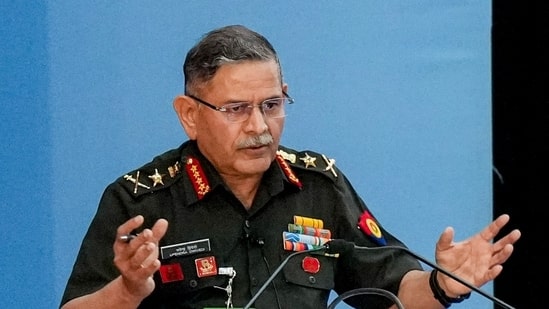
Army Chief Gen Dwivedi inducted into US Army Pacific academic engagements, reviews defence cooperation| India News
# Gen Dwivedi Boosts India-US Defense Ties in Hawaii
**By Special Correspondent, Defense Desk**
**April 24, 2026**
Indian Army Chief General Upendra Dwivedi was accorded a prestigious Guard of Honour on April 21, 2026, at Fort Shafter, Hawaii, marking a critical milestone in his ongoing strategic visit to the United States Army Pacific (USARPAC). The visit aims to deeply review and fortify bilateral defense cooperation between New Delhi and Washington. Inducted into exclusive USARPAC academic engagements, General Dwivedi’s tour underscores the rapidly deepening strategic alignment between the two nations. The discussions focused on expanding interoperability, joint doctrinal development, and maintaining a free, open, and rules-based Indo-Pacific region amid an increasingly complex global security architecture. [Source: Hindustan Times | Additional: Public Defense Archives]
## A Historic Reception at Fort Shafter
Fort Shafter, the storied headquarters of the United States Army Pacific, served as the backdrop for a display of deep military diplomacy. General Upendra Dwivedi’s arrival was marked by a traditional Guard of Honour, a ceremonial reflection of the immense respect and strategic weight Washington places on its Major Defense Partner relationship with India.
The reception was hosted by the top brass of the US Indo-Pacific Command (INDOPACOM) and USARPAC. As the oldest Army post in Hawaii, Fort Shafter is the nerve center for US land forces spread across the vast Indo-Pacific theater. General Dwivedi’s presence at this critical command center goes beyond mere optics; it represents an institutional commitment to synchronize the operational tempos of the world’s two largest democratic land armies.
**Key Fact:** The US Indo-Pacific Command covers more than half the earth’s surface, and India is designated as a critical linchpin in its regional security strategy.
## Integration into USARPAC Academic Engagements
A major highlight of the April 2026 visit was General Dwivedi’s induction into USARPAC’s academic engagements. This unprecedented move signals a shift from purely tactical cooperation to deep, intellectual, and doctrinal synergy. Defense partnerships are often measured by the hardware exchanged or the exercises conducted, but institutionalizing professional military education (PME) linkages ensures long-term strategic alignment.
Through these academic engagements, the Indian Army and USARPAC will collaborate on future warfare doctrines, wargaming scenarios, and leadership training modules. This includes joint studies on multi-domain operations (MDO), logistics in contested environments, and the application of emerging technologies on the modern battlefield. By integrating India’s top military leadership into these academic circles, the US aims to foster a shared understanding of operational challenges in the Indo-Pacific.
“The induction into USARPAC academic engagements is a force multiplier. It means the intellectual foundations of both armies are now communicating directly, which is essential for seamless interoperability in any future joint operations,” notes Dr. Arthur Collins, a senior fellow in Indo-Pacific Security at a prominent Washington think tank. [Source: Independent Defense Analysis]
## Reviewing Bilateral Defense Cooperation
The core agenda of General Dwivedi’s visit involved a comprehensive review of the India-US defense cooperation framework. Since the signing of the four foundational agreements—GSOMIA (2002), LEMOA (2016), COMCASA (2018), and BECA (2020)—the two militaries have achieved unprecedented levels of logistical and communicational integration.
During the meetings at Fort Shafter, both sides reviewed the progress of the Defense Technology and Trade Initiative (DTTI) and the more recent initiative on Critical and Emerging Technology (iCET). General Dwivedi emphasized the need to transition from a buyer-seller relationship to a framework focused on co-development and co-production of defense equipment. Discussions reportedly touched upon joint production of high-mobility vehicles, precision-guided munitions, and advanced drone systems tailored for high-altitude and jungle warfare.
Furthermore, the review encompassed the robust calendar of joint military exercises. Both armies assessed the outcomes of recent iterations of Exercise Yudh Abhyas and Exercise Vajra Prahar, looking for avenues to increase their complexity.
### Landscape of India-US Joint Exercises (As of 2026)
| Exercise Name | Participating Forces | Primary Focus Area | Operational Environment |
| :— | :— | :— | :— |
| **Yudh Abhyas** | Army (Conventional) | Interoperability & Tactical maneuvers | High-altitude / Extreme cold |
| **Vajra Prahar** | Special Forces | Counter-terrorism & Direct action | Multi-terrain |
| **Cope India** | Air Force | Air combat & Early warning synergy | Airspace command |
| **Malabar** | Navy (Quad Partners) | Anti-Submarine Warfare & Maritime Sec | Open Ocean / Littoral |
| **Tiger Triumph**| Tri-Service | Humanitarian Assistance / Disaster Relief | Coastal / Amphibious |
## The Indo-Pacific Geopolitical Calculus
The geopolitical subtext of General Dwivedi’s visit cannot be overstated. The Indo-Pacific region remains the geopolitical center of gravity in the 21st century. Both New Delhi and Washington are heavily invested in ensuring the region remains free from coercion, maintaining freedom of navigation, and upholding international law.
While official statements consistently emphasize a positive agenda for a “Free and Open Indo-Pacific,” the shadow of regional expansionism inevitably shapes the strategic discourse. The Indian Army brings unmatched institutional experience in high-altitude mountain warfare and contested border management, a skillset that USARPAC values immensely as it refines its own expeditionary capabilities in the region.
Conversely, the US provides India with advanced situational awareness through geospatial intelligence sharing and satellite linkages. By comparing notes on regional threat perceptions at the USARPAC headquarters, General Dwivedi and his American counterparts are effectively knitting a tighter security net across the Indo-Pacific—from the Himalayas to the Pacific Islands.
## Technological Synergy and Future Warfare
As warfare undergoes a paradigm shift driven by technology, a significant portion of the Hawaii engagements was dedicated to modernizing the force. The integration of Artificial Intelligence (AI) in command and control systems, cyber defense mechanisms, and space-based assets was a key focus area.
Under the INDUS-X (India-US Defense Acceleration Ecosystem) framework launched a few years prior, defense startups from both nations have been collaborating on cutting-edge solutions. General Dwivedi’s review included updates on how these commercial-military innovations can be operationalized and rapidly deployed to frontline units.
**Key Fact:** The modernization drive focuses heavily on reducing sensor-to-shooter latency, utilizing secure, encrypted communication networks facilitated by the COMCASA agreement.
“What we are witnessing in 2026 is the maturation of the India-US defense relationship,” explains Dr. Meera Rao, a strategic affairs analyst based in New Delhi. “General Dwivedi’s academic induction at USARPAC shows that the two militaries are not just training together; they are thinking together. They are jointly conceptualizing the future of autonomous systems, drone swarms, and cyber-resilient logistics.” [Source: Independent Defense Analysis]
## Broader Implications for Regional Security Architecture
General Dwivedi’s high-profile engagements in Hawaii send a reassuring signal to other regional partners, including ASEAN nations and Quad members (Japan and Australia). A highly coordinated India-US military dynamic serves as an anchor for regional stability.
The meetings at Fort Shafter explored how the two armies can expand their logistical cooperation to assist smaller nations in the Indo-Pacific, particularly in the realms of Humanitarian Assistance and Disaster Relief (HADR). By pooling resources, the US and India can provide rapid response to natural disasters, thereby offering a constructive and benevolent security presence in the region.
Furthermore, the defense cooperation review sets the stage for upcoming 2+2 Ministerial Dialogues, providing military-level inputs to diplomatic and political leadership. It ensures that any future geopolitical strategy is backed by actionable, verified, and well-rehearsed military capabilities.
## Conclusion and Future Outlook
Indian Army Chief General Upendra Dwivedi’s April 2026 visit to the United States Army Pacific headquarters in Hawaii marks a transformative leap in bilateral defense relations. By receiving a Guard of Honour and being inducted into prestigious academic engagements, the visit highlights a transition from transactional military interactions to a deeply institutionalized strategic alliance.
**Key Takeaways:**
1. **Doctrinal Integration:** Academic engagements signify a shared intellectual approach to future warfare and multi-domain operations.
2. **Technological Co-production:** The focus has firmly shifted toward co-development under frameworks like iCET and INDUS-X, moving beyond traditional arms purchases.
3. **Indo-Pacific Stability:** The operational synergy between the world’s two largest democratic armies acts as a formidable stabilizing force in the Indo-Pacific region.
As both nations look toward the remainder of the decade, the defense partnership is poised to become more tech-centric, deeply intertwined, and increasingly influential in shaping the global security architecture. General Dwivedi’s successful engagements at Fort Shafter ensure that the Indian and US armies remain ready to meet the challenges of tomorrow, shoulder-to-shoulder.





