‘Insult to Nari Shakti’: Amit Shah fumes at opposition as women's reservation amendment fails in Lok Sabha| India News
# Women’s Quota Amendment Fails: Shah Slams Oppn
**By Vikram Sen, National Political Desk | April 18, 2026**
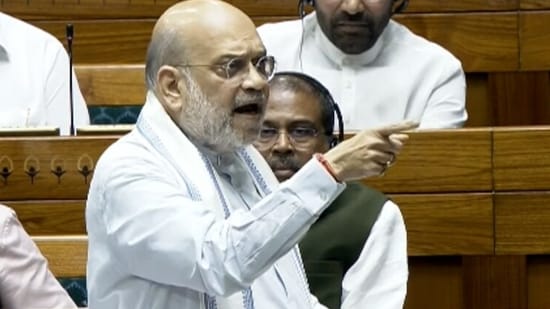
Union Home Minister Amit Shah vehemently criticized the Congress party and its political allies after a crucial constitutional amendment aimed at facilitating the 33% women’s reservation law failed to pass in the Lok Sabha on Friday. Falling short of the required two-thirds majority, the legislative blockade marks a significant political flashpoint. Shah termed the opposition’s resistance an “insult to Nari Shakti” (women’s power), accusing them of deliberately stalling female political empowerment. The failed vote reignites fierce debates over gender representation, electoral timing, and the contentious prerequisites of census data and constituency delimitation attached to the landmark quota initiative. [Source: Hindustan Times]
## The Floor Drama: Shah Decries ‘Insult to Nari Shakti’
The atmosphere in the Lok Sabha on Friday evening was highly charged as the electronic voting system tallied the ayes and noes for the crucial constitutional amendment bill. Because the legislation sought to amend the constitutional framework governing electoral reservations, it required a special majority: support from at least two-thirds of the members present and voting, alongside an absolute majority of the total strength of the House.
With the opposition INDIA bloc issuing a strict whip to its members to vote against the specific phrasing and provisions of the government’s amendment, the ruling National Democratic Alliance (NDA) found itself mathematically incapable of crossing the two-thirds threshold.
Speaking to the press outside Parliament shortly after the adjournment of the House, Union Home Minister Amit Shah minced no words in his assessment of the legislative failure. “Today is a dark day for our democratic ethos,” Shah remarked. “The Congress and its allies have unmasked their true anti-women face. By blocking the passage of this essential constitutional amendment, they have committed a grave insult to Nari Shakti. They speak of equality in their manifestos but vote for disenfranchisement on the floor of the House.”
Shah further accused the opposition benches of holding the political futures of millions of Indian women hostage to petty, partisan politics. He argued that the amendment was a purely administrative necessity to iron out the creases in the existing legislation, ensuring a smoother rollout of the 33% quota in state legislatures and Parliament. [Source: Hindustan Times | Additional: Parliamentary Archives]
## Anatomy of the Stalled Amendment
To understand the gravity of Friday’s legislative collapse, it is crucial to revisit the passage of the *Nari Shakti Vandan Adhiniyam* (128th Constitutional Amendment Act) in late 2023. That historic bill mandated a 33% reservation for women in the Lok Sabha and state legislative assemblies. However, its implementation was fundamentally tethered to two massive bureaucratic exercises: the completion of the next decennial Census and the subsequent delimitation (redrawing of constituency boundaries) exercise.
The amendment introduced by the government this week aimed to alter specific provisions related to this implementation timeline. While the exact technicalities of the drafting sparked intense debate, government sources indicated that the amendment was designed to create a transitional framework. This framework would have ostensibly allowed for partial or phased implementation of women’s quotas in upcoming state assembly elections, bypassing the strict dependency on the yet-to-be-completed delimitation process.
**Key Proposed Changes in the Failed Amendment:**
* **Decoupling from Delimitation:** A provision to allow state electoral commissions to identify transitional reserved seats without waiting for the nationwide delimitation freeze to lift.
* **Rotational Guidelines:** A streamlined legal mechanism for rotating reserved constituencies every election cycle, aimed at preventing political stagnation in reserved seats.
* **Administrative Expediency:** Granting enhanced powers to the Election Commission of India to notify reserved seats based on interim population projections.
By striking down this amendment, the legal architecture governing the women’s reservation reverts to the strict confines of the 2023 Act, effectively pushing the implementation of the quota further down the calendar, likely past the 2029 general elections.
## The Opposition’s Defense: Demand for Sub-Quotas
The opposition’s decision to block the amendment was not rooted in an ideological opposition to women’s representation, according to leaders from the Congress and the broader INDIA coalition. Instead, they framed their resistance as a fight for “intersectional justice,” arguing that the government’s amendment failed to address their core demand: a dedicated sub-quota for women belonging to Other Backward Classes (OBCs).
Opposition leaders argued that enacting a blanket 33% reservation without an OBC sub-quota would disproportionately benefit women from upper-caste, privileged backgrounds, thereby marginalizing women from socially and educationally backward communities.
Dr. Meenakshi Iyer, a political sociologist at the Center for Electoral Studies in New Delhi, explains the opposition’s rationale. “The INDIA bloc has made the caste census and OBC representation the cornerstone of their political strategy since the 2024 general elections,” Dr. Iyer notes. “For them to support a constitutional amendment on women’s reservation that explicitly ignores the OBC sub-quota would be political suicide. They view the NDA’s amendment not as an empowerment tool, but as a legislative trap designed to force them into either abandoning their OBC base or appearing anti-women.”
During the parliamentary debates leading up to the vote, opposition MPs repeatedly chanted demands for a national caste census. They argued that any transitional framework for women’s quotas must be based on empirical data regarding caste demographics, ensuring equitable distribution of reserved seats. [Source: Independent Political Analysis]
## The Long, Thorny Road of the Women’s Quota
The failure of Friday’s amendment is merely the latest chapter in the agonizingly slow and deeply fractured history of women’s political reservation in India. The journey spans nearly three decades of legislative starts and stops.
1. **1996:** The initial Women’s Reservation Bill was introduced by the H.D. Deve Gowda-led United Front government but lapsed due to intense opposition from regional parties demanding caste-based sub-quotas.
2. **2010:** The UPA government successfully passed the bill in the Rajya Sabha amidst chaotic scenes, but it was never brought to the Lok Sabha for a vote due to threats of coalition withdrawal by regional allies.
3. **2023:** The NDA government passed the *Nari Shakti Vandan Adhiniyam* with near-unanimous support, though the caveats tying it to delimitation and the census immediately drew skepticism regarding its actual implementation timeline.
The historical context highlights a persistent paradox in Indian politics: while virtually all major political parties publicly endorse the concept of women’s reservation in their manifestos, the mechanics of its implementation inevitably fall prey to deep-seated caste and regional anxieties.
## Electoral Ramifications for Upcoming Polls
The immediate political fallout of this failed amendment will resonate loudly in the upcoming cycle of state legislative assembly elections slated for late 2026 and early 2027. Women voters have increasingly emerged as an independent, decisive voting bloc—often referred to as the “silent constituency.” Both the ruling coalition and the opposition understand the immense electoral capital at stake.
The BJP is expected to weaponize Friday’s vote in its election rallies. By branding the opposition as obstructionist and anti-women, the ruling party will attempt to consolidate its support among female voters, pointing to its successful passage of the original 2023 bill as proof of its intent, while blaming the Congress for delaying its execution.
Conversely, the Congress and its regional allies will take this battle to the rural and marginalized heartlands. They will likely frame their “no” vote as a principled stand against a “flawed and discriminatory” BJP mechanism, reiterating to OBC voters that the opposition is safeguarding their constitutional rights against an upper-caste dominated legislative agenda.
“This is no longer a debate about gender; it is a complex triangulation of gender, caste, and electoral timing,” says R.K. Srivastava, a senior constitutional lawyer. “The optics are dual-edged. The BJP gets to say ‘we tried to speed it up, they stopped us.’ The opposition gets to say ‘we stopped a discriminatory bill to protect marginalized women.’ The true loser in this political theater is the Indian woman, whose representation remains in legislative limbo.”
## The Challenge of Constitutional Arithmetic
Friday’s events also underscore the shifting sands of constitutional arithmetic in the current Lok Sabha. Unlike the previous term where the ruling party enjoyed an overwhelming, near-brute majority capable of pushing through constitutional amendments with relative ease, the current parliamentary mathematics require genuine cross-aisle consensus.
Under Article 368 of the Indian Constitution, the amendment of certain provisions requires the special majority that eluded the government on Friday. This legislative gridlock sends a clear signal: any future modifications to electoral laws, reservations, or delimitation frameworks will require extensive back-channel negotiations and compromises with the opposition benches. Unilateral legislative maneuvers, regardless of their intent, are bound to face insurmountable numerical hurdles.
## Conclusion and Future Outlook
The failure of the constitutional amendment to expedite the women’s reservation law is a sobering reminder of the complex intersections of gender, caste, and partisan politics in India. Amit Shah’s denunciation of the opposition as having “insulted Nari Shakti” sets the stage for a bitter, highly polarized narrative battle in the months to come.
While the original 2023 Nari Shakti Vandan Adhiniyam remains law, its practical application remains trapped behind the bureaucratic walls of the census and delimitation. Until the ruling party and the opposition can bridge the chasm between administrative processes and demands for social justice sub-quotas, the promise of seeing 33% female representation in India’s legislative chambers remains a deferred dream, indefinitely waiting for political consensus to finally align with democratic ideals.