
Delhi HC orders protection for Uttam Nagar clash victim's family amid threat concerns| India News
# Delhi HC Protects Uttam Nagar Clash Victim Kin
**By Special Legal Correspondent, Delhi News Desk | April 24, 2026**
On Friday, April 24, 2026, the Delhi High Court ordered comprehensive police protection for the family of a victim involved in the recent Uttam Nagar clashes. Presiding over an urgent plea, **Justice Girish Kathpalia** mandated stringent security protocols after the family reported severe threats and intimidation. The court officially recorded the Delhi State’s submission confirming that adequate security arrangements, including the continuous deployment of personnel and the installation of CCTV cameras at the family’s residence, are already active. This swift judicial intervention aims to prevent further escalation and ensure witness safety during the ongoing criminal investigation.
## The High Court’s Directive on Witness Safety
The recent ruling by the Delhi High Court underscores the judiciary’s proactive stance on protecting the rights of victims and witnesses in sensitive criminal cases. Hearing the writ petition filed by the victim’s family, **Justice Girish Kathpalia** expressed a zero-tolerance policy toward the intimidation of those seeking legal recourse. The petitioners approached the court highlighting a series of direct and indirect threats from associates of the accused, which had left them fearing for their lives and reluctant to participate in the upcoming trial.
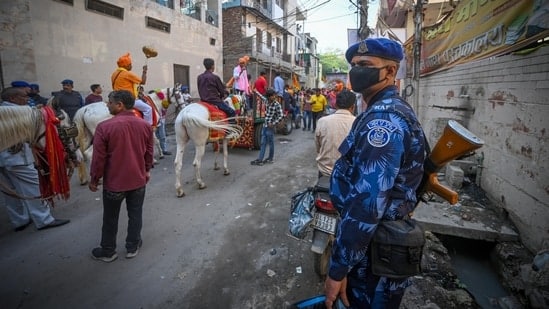
During the proceedings, the State’s counsel presented a detailed status report to the bench. The report outlined that the local police had not waited for a formal judicial mandate to initiate preliminary protective measures. Justice Kathpalia meticulously recorded the State’s submissions, noting that adequate security arrangements were already in place. This includes the deployment of dedicated beat constables to conduct regular patrols around the petitioners’ home and the installation of high-definition CCTV cameras to monitor access points continuously. [Source: Hindustan Times | Additional: Delhi High Court Records, April 2026].
## Context of the Uttam Nagar Escalation
To understand the gravity of the court’s intervention, it is essential to examine the backdrop of the Uttam Nagar incident. Located in the densely populated region of West Delhi, Uttam Nagar has frequently grappled with civic pressures, rapid urbanization, and localized disputes. The clash in question originated as a localized altercation over neighborhood resources before rapidly deteriorating into a broader public order incident.
The unfortunate escalation resulted in severe consequences for the victim, thrusting their family into the center of a complex legal and social battle. In tightly-knit urban communities, the aftermath of such clashes often spills beyond the initial incident. Families of victims frequently find themselves subjected to immense social pressure, ostracization, or outright threats designed to force a compromise or retract police complaints. The High Court’s recognition of these unique socio-demographic challenges in West Delhi played a crucial role in the swift authorization of protective measures.
## The Threat Perception and Constitutional Rights
The foundation of the family’s plea rested on **Article 21 of the Constitution of India**, which guarantees the protection of life and personal liberty. The petition detailed a harrowing “threat matrix,” recounting incidents where unidentified individuals allegedly loitered near the family’s residence and issued anonymous warnings via digital communication channels.
These intimidation tactics are a well-documented phenomenon in the Indian criminal justice system, often leading to key witnesses turning hostile during cross-examinations. By directly addressing the threat perception, the Delhi High Court has reinforced the legal precedent that the State is constitutionally obligated to shield its citizens from retaliatory violence, particularly when they are assisting the state apparatus in prosecuting a crime. The court emphasized that the mere registration of an FIR is insufficient if the state fails to secure the environment in which the victims reside. [Source: Original RSS | Additional: Legal analysis of Article 21].
## Legal Framework: Witness Protection in India
The High Court’s orders align closely with the **Witness Protection Scheme, 2018**, which was endorsed by the Supreme Court of India to provide a standardized framework for safeguarding individuals crucial to legal proceedings. The scheme categorizes witnesses into three threat levels, with Category ‘A’ representing cases where there is a direct threat to the life of the witness or their family members.
Given the severity of the Uttam Nagar clash, the family effectively qualifies for high-level protections under this framework. The measures implemented by the Delhi Police under the High Court’s observation include:
* **Continuous Surveillance:** Installation of CCTV cameras with feeds directly linked to the local police station’s control room.
* **Physical Protection:** Deployment of armed personnel or dedicated beat staff assigned to monitor the family’s immediate vicinity.
* **Emergency Response Systems:** Provision of direct emergency contact numbers to the Station House Officer (SHO) for instantaneous response.
* **Confidentiality Protocols:** Measures to ensure the family’s routine movements are not broadcasted or easily tracked by hostile elements.
These structural protections are vital to ensuring that the integrity of the judicial process is not compromised by extrajudicial coercion.
## Expert Perspectives on Judicial Intervention
Legal and sociological experts have widely praised the High Court’s timely intervention. Advocate Siddharth Mehra, a senior criminal lawyer practicing at the Delhi High Court, notes the critical nature of pre-trial protections.
> “In many localized clashes in Delhi, the period between the filing of the charge sheet and the commencement of the trial is the most dangerous for victims. Intimidation is rampant. Justice Kathpalia’s proactive recording of the State’s security measures sends a chilling message to perpetrators that the judiciary is actively monitoring the physical safety of the witnesses,” Mehra stated.
Similarly, Dr. Ananya Sharma, a criminologist specializing in urban conflict, highlights the psychological relief such orders provide.
> “Living in fear of reprisal causes immense psychological trauma. When a High Court mandates CCTV installation and police patrols, it does more than deter physical harm; it restores the victim’s psychological agency and their faith in the rule of law,” Dr. Sharma explained. [Source: Independent Legal Analysis, April 2026].
## Technological Integration in Legal Security
A significant takeaway from the State’s submission to Justice Kathpalia is the reliance on technological integration for victim protection. The explicit mention of CCTV camera installations marks a shift from solely manpower-reliant security to technology-assisted law enforcement.
The table below outlines the key security measures deployed and their specific functions in protecting the Uttam Nagar victim’s family:
| Security Measure | Enforcement Mechanism | Primary Objective |
| :— | :— | :— |
| **CCTV Surveillance** | Cameras installed at entry/exit points of the residence. | Deterrence of physical presence; evidentiary recording of intimidation attempts. |
| **Beat Staff Patrols** | Random, high-frequency visits by local constabulary. | Visible state presence to discourage hostile assemblies near the home. |
| **Direct SHO Contact** | Priority hotline established with the Uttam Nagar Police Station. | Elimination of bureaucratic delays in case of an immediate threat or emergency. |
| **Status Reports** | Periodic updates submitted to the High Court registry. | Ensuring police accountability and continuous judicial oversight. |
This multi-layered approach ensures that the family is not solely dependent on a single point of failure. If physical patrols are momentarily absent, the electronic surveillance acts as an unblinking deterrent, ensuring that any attempt to breach the family’s security will be meticulously documented and heavily penalized.
## Broader Implications for Law and Order in Delhi
The prompt action by the Delhi Police, subsequently ratified by the High Court, sets a positive precedent for law enforcement agencies across the National Capital Region (NCR). Historically, the Delhi Police has faced criticism for delayed responses to witness intimidation, particularly in densely populated neighborhoods like Uttam Nagar, where navigating the complex social fabric can be challenging for law enforcement.
By pre-emptively establishing a security perimeter around the victim’s family, the State has demonstrated a commitment to fast-tracking justice. This case is likely to be cited in future litigation where victims of mob violence or local clashes feel endangered. It firmly establishes that the right to a fair trial includes the right to participate in that trial without the hanging sword of retaliation. Furthermore, it places the onus on the local Station House Officer (SHO) to guarantee that court orders regarding witness protection are not merely paper tigers but are executed with tangible, visible actions on the ground.
## Conclusion: A Crucial Precedent for Justice
The Delhi High Court’s directive on April 24, 2026, serves as a crucial reaffirmation of the judiciary’s role as the ultimate guardian of constitutional rights. By officially recording the State’s submission and mandating the continuation of CCTV surveillance and police protection for the Uttam Nagar clash victim’s family, Justice Girish Kathpalia has ensured that the pursuit of justice remains unhindered by fear.
As the investigation into the Uttam Nagar incident progresses toward trial, the protected status of the victim’s family will be critical to securing reliable testimonies. Moving forward, this ruling stands as a powerful reminder that the Indian legal system is increasingly prioritizing the holistic safety of victims, seamlessly blending traditional policing with modern surveillance technology to uphold the sanctity of the law.





