
‘New CM will be BJP worker, born in Bengal’: Amit Shah after Mamata Banerjee's ‘outsider’ remark| India News
# Shah: Bengal’s Next CM Will Be Local BJP Worker
**By Senior Correspondent, India Politics Desk | April 24, 2026**
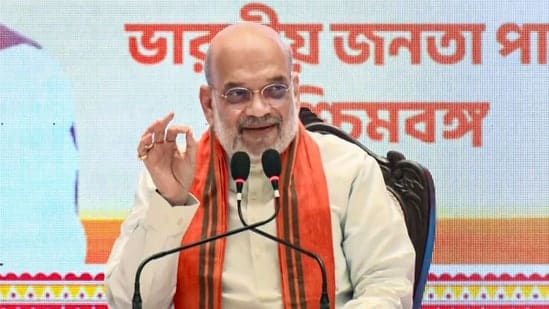
On April 24, 2026, Union Home Minister Amit Shah forcefully countered West Bengal Chief Minister Mamata Banerjee’s persistent “outsider” allegations, declaring that the state’s next chief minister will be a locally born worker of the Bharatiya Janata Party (BJP). Speaking at a high-stakes campaign rally ahead of the crucial West Bengal legislative assembly elections, Shah directly addressed the regional identity debate that has long dominated the state’s political discourse. Furthermore, Shah heavily criticized an alleged remark attributed to Banerjee suggesting women should not venture out after 7 p.m., leveraging the issue to promise comprehensive security reforms and uncompromising safety for women across the state if the BJP secures a mandate. [Source: Hindustan Times].
## Countering the “Bohiragoto” (Outsider) Narrative
The political battleground of West Bengal has long been defined by a fierce contest over linguistic and cultural identity. Since the prelude to the 2021 assembly elections, the ruling Trinamool Congress (TMC), spearheaded by Mamata Banerjee, has effectively deployed the “Bohiragoto” (outsider) tag against the BJP. The TMC’s strategy has historically framed the BJP as a party driven by North Indian, Hindi-speaking leaders who lack a fundamental understanding of Bengali culture, ethos, and linguistic pride.
Amit Shah’s latest declaration aims to dismantle this core TMC narrative. By explicitly guaranteeing that a victorious BJP would install a “bhoomiputra” (son of the soil) as Chief Minister, Shah is attempting to reassure the Bengali electorate that the state’s leadership will remain indigenous.
“The TMC has continuously misled the people of Bengal by claiming the BJP is a party of outsiders. Let me make it abundantly clear today: the new Chief Minister of West Bengal will be a dedicated BJP worker born in Bengal, someone who understands the heartbeat of this great land,” Shah told the massive gathering. [Source: Hindustan Times | Additional: Public Electoral Records].
This strategic pivot acknowledges the limitations the BJP faced in the previous assembly elections, where the lack of a definitive, local Chief Ministerial face arguably hampered their electoral momentum against Banerjee’s formidable local persona.
## The Critical Battleground of Women’s Safety
Beyond regional identity, Shah centered a significant portion of his address on the law-and-order situation in West Bengal, specifically focusing on women’s safety. He vehemently slammed a purported advisory or remark attributed to the TMC leadership which allegedly suggested that women should avoid leaving their homes after 7 p.m. to ensure their own safety.
“Is this the ‘poriborton’ (change) that was promised? That a woman Chief Minister tells the mothers and sisters of Bengal to lock themselves indoors after 7 p.m.?” Shah questioned from the dais. “The BJP promises you a Bengal where women can walk freely and fearlessly at midnight. We will establish the rule of law and dismantle the syndicates that harbor criminals.” [Source: Hindustan Times].
The issue of women’s safety is profoundly consequential in West Bengal’s electoral arithmetic. Mamata Banerjee has successfully consolidated a massive female voter base through targeted welfare schemes such as “Lakshmir Bhandar” and “Kanyashree.” By attacking the TMC administration on the fundamental premise of physical security, the BJP is attempting to fracture this loyal demographic. The political messaging is clear: financial welfare is insufficient if basic safety is compromised.
## Strategic Importance of the 2026 Assembly Elections
The 2026 West Bengal Legislative Assembly election is shaping up to be a watershed moment in Indian politics. For the Trinamool Congress, securing a fourth consecutive term would cement Mamata Banerjee’s legacy as one of the most successful regional leaders in modern Indian history. For the BJP, capturing Bengal remains the ultimate ideological and electoral frontier in the East.
In the 2021 elections, despite a highly aggressive campaign and an initial surge, the BJP secured 77 seats, falling well short of the 148 required for a majority, while the TMC swept back to power with 215 seats.
**West Bengal Assembly Election Trajectory:**
| Election Year | Trinamool Congress (Seats) | BJP (Seats) | Key Dominant Campaign Theme |
| :— | :— | :— | :— |
| 2016 | 211 | 3 | “Ma, Mati, Manush” (Mother, Earth, People) |
| 2021 | 215 | 77 | “Bangla Nijer Meyekei Chay” (Bengal Wants Its Own Daughter) |
| 2026 (Upcoming) | TBD | TBD | Identity, Women’s Safety, and Anti-Incumbency |
The BJP’s 2026 strategy appears to be a recalibrated approach. Instead of relying solely on the charisma of its central leadership, the party is attempting a decentralized campaign focusing on local grievances, systemic corruption allegations against TMC leaders, and hyper-local leadership promotion.
## Expert Perspectives on Regional Identity Politics
Political analysts suggest that Amit Shah’s recent remarks indicate a mature understanding of West Bengal’s unique political psychology. The state has historically resisted parties it perceives as lacking a deep-rooted Bengali cultural foundation, a sentiment that previously benefited the Left Front and currently bolsters the TMC.
Dr. Ayan Sengupta, a Kolkata-based political sociologist and independent election analyst, notes the significance of this strategic shift. “The BJP’s explicit promise of a ‘bhoomiputra’ Chief Minister is a direct tactical evolution from their 2021 campaign,” Dr. Sengupta observes. “In 2021, the TMC successfully weaponized Bengali sub-nationalism against the BJP’s nationalistic narrative. By neutralizing the ‘outsider’ tag early in the 2026 cycle, the BJP is attempting to force the electoral conversation back to tangible governance issues: anti-incumbency, economic growth, and law and order.” [Additional: Expert Analysis via Public Policy Forums].
Furthermore, Dr. Sengupta highlights that the controversy over the alleged “7 p.m. curfew” remark serves as a potent wedge issue. “Women outnumber men in voter turnout in several Bengali constituencies. If the BJP can convince even a fraction of this demographic that the state apparatus is failing to protect them, it could significantly alter the electoral calculus.”
## Trinamool Congress Rebuttal and the Campaign Environment
The Trinamool Congress has vehemently pushed back against Amit Shah’s assertions, maintaining that the BJP fundamentally misinterprets the socio-cultural fabric of West Bengal. TMC leaders have historically countered the BJP’s law-and-order accusations by pointing to the National Crime Records Bureau (NCRB) data, frequently citing Kolkata as one of the safest metropolitan cities in India.
In response to the controversy over women’s safety remarks, TMC spokespersons have previously accused the BJP of taking administrative advisories out of context to manufacture political outrage, asserting that the state government has instituted robust community policing and women’s helplines to ensure round-the-clock safety.
Furthermore, regarding the promise of a “local CM,” TMC leaders argue that the BJP’s Bengal unit remains deeply fractured and highly dependent on directives from New Delhi. The ruling party’s campaign emphasizes its track record of unbroken social welfare delivery, portraying Mamata Banerjee not just as a political leader, but as the quintessential guardian of the state’s welfare and cultural autonomy.
## Implications for the Broader National Landscape
The outcome of the West Bengal elections in 2026 holds profound implications extending far beyond the state’s borders. As India’s political landscape increasingly polarizes between the BJP-led National Democratic Alliance (NDA) and various regional opposition blocs, Bengal remains a crucial bastion of resistance for the opposition.
If the BJP successfully navigates the “outsider” trap and capitalizes on anti-incumbency to win Bengal, it would represent a monumental ideological victory, effectively proving that their brand of politics can triumph in culturally distinct, traditionally left-leaning or regionalist strongholds. Conversely, a victory for the TMC would solidify Mamata Banerjee’s role as a primary architect of anti-BJP opposition at the national level, demonstrating a sustainable blueprint for defeating the BJP’s electoral machinery.
## Conclusion: Key Takeaways and Future Outlook
Amit Shah’s April 2026 rally marks a definitive, aggressive commencement to the final leg of the West Bengal election campaign. The key takeaways from his address are clear indicators of the BJP’s refined strategy:
* **Defusing Regional Deficits:** By guaranteeing a locally born Chief Minister, the BJP is directly attacking the TMC’s most effective rhetorical weapon—the “outsider” label.
* **Targeting the Female Vote:** The stringent critique of women’s safety in the state is a calculated effort to erode Mamata Banerjee’s most reliable voter base.
* **Shifting the Narrative:** The BJP is attempting to pivot the public discourse from emotional identity politics to administrative competence and law enforcement.
As the election days draw nearer, the rhetoric from both the BJP and the TMC is guaranteed to escalate. The electorate of West Bengal will ultimately have to weigh the TMC’s formidable social welfare apparatus and emotional resonance against the BJP’s promises of enhanced security, industrial rejuvenation, and a leadership deeply integrated with the central government. Whether the promise of a “bhoomiputra” BJP Chief Minister is enough to sway the fiercely independent Bengali voter remains the defining question of 2026.





