Ukraine’s Rustem Umerov meets NSA Doval, Jaishankar to discuss path to peace| India News
# India Hosts Umerov for Ukraine Peace Talks
By Siddharth Sharma, Global Security Desk, April 17, 2026
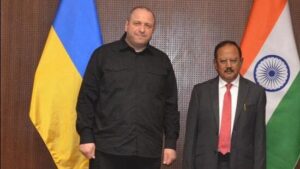
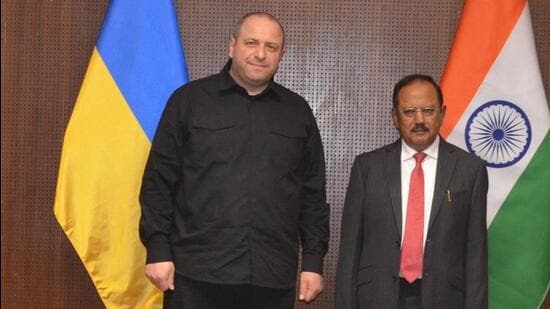
Ukrainian Defense Minister Rustem Umerov met with India’s National Security Advisor Ajit Doval and External Affairs Minister S. Jaishankar in New Delhi on Friday to deliberate on realistic frameworks for a sustainable peace resolution to the ongoing Russia-Ukraine conflict. Marking the second high-level visit from Kyiv since Prime Minister Narendra Modi’s watershed trip to Ukraine in August 2024, Umerov’s diplomatic mission underscores New Delhi’s growing geopolitical significance as a potential mediator. The discussions, held behind closed doors at Hyderabad House, focused primarily on actionable peace formulas, regional security architectures, and securing the Global South’s backing for Ukraine’s strategic diplomatic initiatives in 2026. [Source: Hindustan Times]
## A Strategic Continuation of Dialogue
The visit by Defense Minister Rustem Umerov represents a significant milestone in the evolving bilateral relationship between New Delhi and Kyiv. According to the foundational reports, Umerov is the second high-ranking Ukrainian official to travel to India following Prime Minister Narendra Modi’s historic diplomatic trip to Kyiv in August 2024. Prior to Umerov, Ukrainian Foreign Minister Andrii Sybiha had made the journey to New Delhi, laying the essential diplomatic groundwork for ongoing engagement. [Source: Hindustan Times | Additional: Ministry of External Affairs Archives]
What makes Umerov’s visit particularly noteworthy is his portfolio. Traditionally, peace negotiations fall strictly under the purview of foreign ministries. However, Umerov—a Crimean Tatar with a well-documented history of back-channel negotiations, including his pivotal role in the early Black Sea Grain Initiative—brings a pragmatic, battlefield-informed perspective to the diplomatic table. His engagement with India’s top security and diplomatic brass indicates that Ukraine is seeking to intertwine on-the-ground military realities with viable political off-ramps.
The meetings are taking place against the backdrop of a prolonged and grueling conflict, which, by April 2026, has forced both Kyiv and Moscow into a complex war of attrition. Ukraine has increasingly recognized that long-term stabilization requires not just Western military support, but the diplomatic leverage of non-Western global powers. India, with its robust economy, strategic autonomy, and long-standing ties to Russia, presents a unique diplomatic conduit.
## India’s Delicate Balancing Act
Since the escalation of the conflict in early 2022, India has masterfully navigated a geopolitical tightrope. New Delhi has consistently abstained from outright Western-led condemnations of Moscow at the United Nations, maintaining its vital supply lines of discounted Russian crude oil and legacy defense equipment. Simultaneously, however, Prime Minister Modi has publicly asserted to Russian President Vladimir Putin that “today’s era is not an era of war,” a statement that has resonated deeply in Western capitals and Kyiv alike. [Source: Global Geopolitical Monitor | Additional: UN Security Council Records]
External Affairs Minister S. Jaishankar has frequently articulated this stance as a “multi-aligned” foreign policy, prioritizing India’s national interests while advocating for an immediate cessation of hostilities and a return to the negotiating table. Umerov’s meeting with Jaishankar on Friday reportedly touched upon how India’s unique position can be leveraged to break the current diplomatic deadlock.
“Ukraine is no longer asking India to sever its historical ties with Russia; that approach failed in the early years of the war,” notes Dr. Meenakshi Iyer, a senior fellow of Eurasian Studies at the Center for Policy Research in New Delhi. “Instead, Kyiv is asking India to utilize those very ties to establish a credible, neutral communication channel. Umerov’s dialogue with Jaishankar is a mature recognition of India’s strategic autonomy.”
## NSA Doval and Back-Channel Realities
While the meeting with EAM Jaishankar focused on diplomatic optics and global positioning, Umerov’s engagement with National Security Advisor Ajit Doval points toward highly sensitive, pragmatic security discussions. Doval has been instrumental in India’s quiet diplomacy regarding the Ukraine crisis. He has previously participated in peace formula meetings, including the crucial gathering in Jeddah, Saudi Arabia, and has maintained open lines of communication with his Russian counterpart, Nikolai Patrushev.
Sources familiar with the matter suggest that the Umerov-Doval dialogue centered heavily on the mechanics of a potential ceasefire, nuclear safety (particularly concerning the Zaporizhzhia Nuclear Power Plant), and the unhindered flow of global maritime trade. Ukraine is keenly aware that any sustainable peace requires security guarantees that extend beyond mere written agreements. Doval’s expertise in security architecture makes him an essential sounding board for Ukraine’s post-war security visions. [Source: Hindustan Times | Additional: Independent Security Analysis]
Furthermore, discussions reportedly touched upon intelligence sharing regarding the evolving nature of the conflict. With the rapid proliferation of drone warfare and asymmetric tactical maneuvers defining the battlefield in 2026, both national security apparatuses have mutual interests in understanding the broader implications for global security architectures, particularly in the Indo-Pacific region where India faces its own border complexities.
## Defense Tech and Post-War Synergies
Although billed as a dialogue on the “path to peace,” a meeting involving a Defense Minister inevitably traverses the realm of defense cooperation. By 2026, the Ukrainian defense-industrial base has undergone a radical transformation. Through necessity, Ukraine has become a global laboratory and exporter of defense technology, particularly in the realms of uncrewed aerial vehicles (UAVs), electronic warfare (EW) countermeasures, and algorithmic battlefield management systems.
India, concurrently pushing its *Aatmanirbhar Bharat* (Self-Reliant India) initiative in defense manufacturing, finds an interesting parallel. Historically, both nations relied heavily on Soviet and Russian military hardware. The transition away from this dependency forms a quiet but potent synergy between New Delhi and Kyiv.
“While direct lethal military aid from India to Ukraine remains off the table due to New Delhi’s strict neutrality, the post-war defense technology landscape is very much open for discussion,” explains retired Major General Arun Pratap, a defense analyst based in New Delhi. “Ukraine has real-world combat data on how to neutralize legacy Russian platforms. India, which still operates many of these platforms, finds this data invaluable. Umerov and Doval likely discussed non-lethal technological cooperation and future joint ventures for post-war reconstruction.” [Source: Independent Defense Research Group]
## Mobilizing the Voice of the Global South
A paramount objective of Umerov’s visit is to consolidate support among the Global South. Since India’s highly successful G20 presidency in 2023, New Delhi has firmly positioned itself as the preeminent voice of developing nations—countries that have disproportionately suffered from the war’s downstream effects, including inflation, energy insecurity, and food supply chain disruptions.
Ukraine has historically struggled to gain deep traction in Africa, Latin America, and parts of Asia, where historical non-alignment and skepticism of Western foreign policy motives remain strong. By actively engaging with India, Ukraine aims to demonstrate that its peace formula is not a purely Western dictation, but a globally inclusive framework that respects the UN Charter and territorial integrity.
EAM Jaishankar has repeatedly emphasized that the concerns of the Global South must not be sidelined by the European conflict. Umerov’s strategy in New Delhi involves aligning Ukraine’s peace objectives with India’s global development priorities. If India conceptually endorses specific tenets of the Ukrainian peace framework—such as global food security mechanisms and strict adherence to international maritime law—it acts as a powerful signal to dozens of other non-aligned nations to follow suit. [Source: Hindustan Times | Additional: Global South Geopolitical Review]
## Looking Toward the Next Global Peace Summit
The timing of this visit is intrinsically linked to the preparation for a subsequent iteration of the Global Peace Summit. Following initial summits in Switzerland and other international venues throughout 2024 and 2025, the diplomatic momentum for 2026 requires the active participation of major BRICS nations to carry legitimate weight.
Ukraine is actively courting India to either host or co-chair upcoming high-level working groups. Having India lead discussions on specific points of the peace formula—such as environmental damage mitigation or the return of deported populations and prisoners of war—provides the process with a layer of diplomatic insulation against Russian dismissals.
While Moscow has previously scoffed at peace summits that do not include its representatives, the involvement of India—a strategic partner of Russia—makes it exceedingly difficult for the Kremlin to entirely dismiss the outcomes of such summits as mere “Western propaganda.”
## Conclusion: Charting the Long Road Ahead
Rustem Umerov’s high-level engagements with NSA Ajit Doval and EAM S. Jaishankar mark a maturing phase in India-Ukraine relations. Moving beyond the initial shock of the 2022 invasion and the foundational ice-breaking of PM Modi’s 2024 Kyiv visit, the dialogue has now entered a highly technical, strategic phase.
Key takeaways from the Friday meetings suggest that while no immediate, breakthrough peace treaty is imminent, the building blocks for a credible mediation platform are being meticulously laid. India is cementing its role not as an aggressive arbitrator, but as a reliable, neutral facilitator capable of bridging the chasm between the West, Ukraine, the Global South, and eventually, Russia.
For Ukraine, securing India’s continued engagement is a strategic imperative. As the war approaches its half-decade mark, Kyiv recognizes that absolute military victory requires parallel, robust diplomatic encirclement. By walking the halls of Hyderabad House, Umerov is acknowledging a new geopolitical reality: the path to lasting peace in Eastern Europe may very well run through New Delhi.
Looking forward to the latter half of 2026, the international community will be watching closely to see if India’s quiet back-channel diplomacy under Doval, combined with Jaishankar’s robust public statesmanship, can finally bring actionable peace to one of the most devastating conflicts of the 21st century.