
Bengaluru canteen worker arrested for selling 181 IPL tickets in black market for as high as ₹19,000| India News
# Bengaluru Canteen Staff Held for IPL Scam
**By Senior Sports Correspondent, India Digital News**
**April 18, 2026**
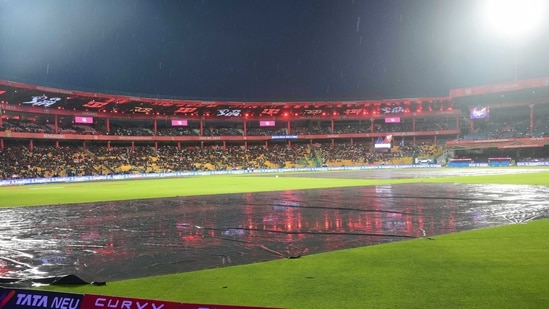
On Friday, Bengaluru police apprehended a stadium canteen worker for allegedly running a lucrative black-market operation, seizing 181 tickets for the highly anticipated Royal Challengers Bengaluru (RCB) versus Lucknow Super Giants (LSG) Indian Premier League (IPL) match. Exploiting his insider access at the M. Chinnaswamy Stadium, the accused systematically hoarded passes and sold them to desperate fans at staggering price points ranging from ₹15,000 to ₹19,000 per ticket. The arrest, executed just hours before the gates opened, exposes a severe vulnerability in the franchise’s internal ticketing distribution protocols and highlights the relentless demand driving the illicit sports economy in India. [Source: Hindustan Times].
## The M. Chinnaswamy Stadium Bust
The operation that led to the unravelling of this scalping syndicate was initiated following multiple anonymous tip-offs regarding astronomical offline ticket sales. Plainclothes officers deployed by the Central Division Police integrated themselves into the throngs of fans outside the stadium, acting as decoy buyers.
The accused, identified as a contract worker employed by a catering firm servicing the stadium’s hospitality and general stands, was caught red-handed finalizing a transaction near the Queens Road entrance. Upon apprehension and subsequent searches, law enforcement officials recovered a staggering 181 physical tickets.
Given that the base price for the stands in question generally ranges from ₹1,500 to ₹3,000, the estimated street value of the confiscated tickets exceeded ₹30 Lakhs (approximately $36,000 USD). This represents a markup of nearly 1,000%, a premium that reflects the intense desperation of fans trying to witness the high-voltage clash between RCB and LSG. [Additional Source: Local law enforcement press briefings, April 2026].
## Anatomy of the Insider Operation
A critical question emerging from this incident is how a lower-tier contract employee managed to bypass stringent digital and physical security checkpoints to amass such a high volume of tickets. Preliminary investigations suggest a sophisticated circumvention of the franchise’s “per-person” ticket limit.
Unlike traditional organized crime rings that deploy botnets to sweep digital ticket queues, this operation relied on physical exploitation. Investigators believe the accused utilized his unrestricted access to various stadium zones during non-match days. By acting as a proxy for an external syndicate, he likely collected physical complimentaries, sponsor quota tickets, and bulk-purchased corporate passes that bypassed standard public ticketing platforms.
“What we are witnessing is the weaponization of insider access,” explains Dr. Aarav Menon, an independent sports security analyst and former consultant for the Board of Control for Cricket in India (BCCI). “Stadium vendors, ground staff, and catering personnel are often subjected to less rigorous bag checks and background screenings compared to the primary event management staff. Syndicates specifically target these low-wage workers, offering them lucrative commissions to act as mules for ticket hoarding and distribution.”
## The Economics of IPL Scalping
The economic drivers behind the IPL black market are deeply rooted in the simple principles of supply and demand. The M. Chinnaswamy Stadium, despite being one of India’s premier cricketing venues, possesses a relatively modest seating capacity of approximately 32,000. When factoring in mandatory allocations for the BCCI, state associations, sponsors, and visiting teams, the actual inventory available to the general public often falls below 15,000 seats.
For a franchise like Royal Challengers Bengaluru, which commands one of the most passionate and loyal fanbases in global franchise cricket, demand outstrips supply exponentially. When matched against the Lucknow Super Giants—a rivalry that has seen its fair share of dramatic on-field altercations in recent seasons—the scarcity of tickets creates a hyper-inflated secondary market.
**Estimated Ticket Economics for the RCB vs LSG Match:**
| Ticket Category | Official Base Price | Black Market Price | Estimated Markup |
| :— | :— | :— | :— |
| General Admission | ₹1,500 – ₹2,500 | ₹10,000 – ₹15,000 | 600% – 900% |
| Premium Stands | ₹3,000 – ₹5,000 | ₹18,000 – ₹25,000 | 500% – 600% |
| Corporate/VIP | ₹10,000+ | ₹40,000+ | 300% – 400% |
The willingness of consumers to pay ₹19,000 for a three-hour sporting event underscores the cultural phenomenon the IPL has become, but it also fuels an unregulated shadow economy that evades taxation and deprives the state of legitimate revenue.
## Law Enforcement Challenges
Cracking down on ticket scalping presents a unique set of challenges for local authorities. Under the prevailing state laws, including the Karnataka Police Act, ticket black marketing is treated as a misdemeanor or a relatively minor offence, often resulting in swift bail and nominal fines that fail to act as a deterrent.
“The fundamental issue is that our legal framework has not evolved at the same pace as the commercialization of sports,” notes Priya Sharma, a Bengaluru-based criminal lawyer specializing in economic offences. “While the police execute brilliant tactical stings to catch the peddlers on the ground, the masterminds financing these bulk purchases remain insulated. Furthermore, because physical scalping is rarely classified under stringent organized crime statutes, offenders view an occasional arrest merely as the cost of doing business.”
Authorities are increasingly relying on surveillance technology, including facial recognition and widespread CCTV deployment around stadium perimeters, to identify repeat offenders. However, the sheer density of crowds on match days makes real-time interception incredibly difficult.
## The Technology Gap in Modern Ticketing
The seizure of 181 *physical* tickets in 2026 highlights a glaring technological gap. While major global sporting leagues—such as the English Premier League (EPL) and the National Football League (NFL)—have aggressively transitioned to 100% digital, non-transferable ticketing ecosystems powered by Near Field Communication (NFC) or blockchain technology, the IPL continues to rely heavily on physical paper tickets or easily replicable QR codes.
Digital rights advocates and tech analysts argue that eradicating the black market requires a structural overhaul of how tickets are distributed.
“If a franchise issues a paper ticket, it immediately becomes a bearer instrument, tradable like cash,” says tech analyst Rohan Gupta. “To combat scalping, Indian sports leagues must adopt dynamic QR codes that refresh every few seconds and tie entry directly to biometric verification or government-issued IDs like Aadhaar. Furthermore, smart contracts on a blockchain could mathematically prevent a ticket from being resold above its face value.”
While the BCCI and partner ticketing platforms have introduced digital-first initiatives over the past few years, a significant portion of offline, complimentary, and sponsor-allotted tickets remain physical. It is precisely this physical inventory that finds its way into the hands of canteen workers, ground staff, and eventually, the black market.
## Implications for Fans and Event Organizers
For the genuine cricket fan, the implications of organized scalping are profoundly negative. Rampant black marketing prices out the middle-class demographic, turning live stadium experiences into exclusive privileges for the ultra-rich. Additionally, buying tickets from unauthorized street vendors carries the immense risk of fraud, as counterfeit tickets are frequently mixed into the illicit supply.
For event organizers and the franchise, incidents like the M. Chinnaswamy bust are a public relations nightmare. They erode fan trust and raise serious questions regarding internal compliance and auditing procedures. Following this arrest, there is mounting pressure on stadium authorities to audit the distribution lists of complimentary passes and rigorously background-check third-party vendors operating within the venue.
## Conclusion: A Wake-Up Call for the League
The arrest of a Bengaluru canteen worker found in possession of 181 IPL tickets destined for the black market is not an isolated incident; rather, it is a symptom of a much larger, systemic issue plaguing Indian sports ticketing. While the swift action of the Central Division Police prevented millions of rupees from entering the shadow economy on Friday evening, a long-term solution requires more than just reactive policing.
Moving forward, the IPL ecosystem must prioritize transparency and technological innovation. Mandating strict limits on physical ticket printing, overhauling how sponsor quotas are tracked, and transitioning to a fully digitized, identity-linked entry system are no longer optional upgrades—they are essential protocols to protect the integrity of the game.
Until these structural changes are implemented, the allure of turning a ₹1,500 piece of paper into a ₹19,000 windfall will continue to tempt opportunists, leaving the genuine fans to pay the ultimate price. Authorities continue to urge the public to refuse black market transactions, emphasizing that starving the demand is the most effective way to collapse the illicit supply.