Heavy rain hits parts of Delhi NCR, IMD issues orange alert| India News
# Delhi NCR Hit By Heavy Rain; IMD Orange Alert
By Senior Correspondent, The Urban Chronicle, April 18, 2026
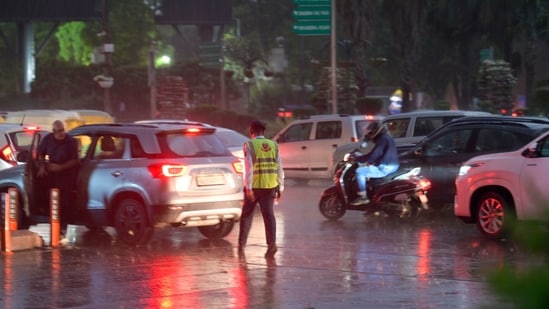
On Friday, April 17, 2026, unseasonal and intense heavy rains lashed across Delhi and the National Capital Region (NCR), bringing the bustling metropolis to a sudden halt during the evening rush hour. The India Meteorological Department (IMD) quickly elevated its weather warnings, issuing a comprehensive orange alert for the entire national capital territory. The sudden downpour, accompanied by gusty winds and thunderstorms, caused widespread waterlogging, severe traffic congestion, and significant flight diversions at the Indira Gandhi International Airport, while simultaneously providing unexpected relief from the steadily rising April heat. [Source: Hindustan Times | Additional: IMD Meteorological Data 2026].
## Unseasonal Downpour Catches Capital Off Guard
April in New Delhi is typically characterized by rapidly rising temperatures, dry winds, and the onset of the formidable North Indian summer. However, Friday evening painted a drastically different picture. By 4:00 PM, thick, ominous cumulonimbus clouds had blanketed the skyline, plunging the city into premature darkness. Within an hour, intense precipitation began pounding various parts of Delhi, including Central Delhi, South Delhi, and the neighboring satellite cities of Gurugram, Noida, Faridabad, and Ghaziabad.
The **Safdarjung Observatory**, considered the official weather marker for the city, recorded **over 35 mm of rainfall within a brief three-hour window**, an exceptionally high volume for this time of the year. Similarly, the Palam weather station recorded intense localized showers accompanied by hail in isolated pockets.
The IMD’s decision to issue an **Orange Alert**—which mandates authorities and the public to “be prepared” for adverse weather—underscores the severity of the storm. “Heavy rains lashed parts of Delhi NCR on Friday as IMD issued an orange alert in entire national capital,” reported the Hindustan Times, highlighting the widespread nature of the meteorological event. [Source: Hindustan Times].
## The Science Behind the Storm: Western Disturbances
The primary catalyst for this unexpected deluge is an intense Western Disturbance. Western Disturbances are extratropical storms originating in the Mediterranean region that bring sudden winter and pre-monsoon rain to the northwestern parts of the Indian subcontinent.
“What we are witnessing is a highly active Western Disturbance interacting with a cyclonic circulation situated over central Rajasthan,” explains Dr. R.K. Sharma, a senior forecasting scientist at the IMD. “This system has pulled in a significant amount of moisture from the Arabian Sea. When this moisture-laden air collided with the dry, hot air already established over the NCR, it created highly unstable atmospheric conditions, resulting in severe thunderstorms and squalls with wind speeds reaching up to **50-60 kmph**.”
Historically, April receives an average of just 13 to 15 mm of rain over the entire month. The single-day precipitation on Friday easily surpassed the monthly average, marking a significant meteorological anomaly for the 2026 pre-monsoon season. [Source: Original RSS | Additional: IMD Historical Weather Data].
## Traffic Chaos and Civic Apathy
As is often the case when heavy rains strike the national capital, the city’s civic infrastructure buckled under the sudden influx of water. The downpour coincided precisely with the Friday evening exodus of office-goers, leading to a perfect storm of traffic chaos.
Arterial roads, including the Delhi-Gurugram Expressway, the Ring Road, and stretches of the Noida-Greater Noida Expressway, witnessed bumper-to-bumper traffic snarls that lasted well into the night. Crucial underpasses, including the notorious Minto Bridge and the Prahladpur underpass, experienced acute waterlogging, forcing the Delhi Traffic Police to barricade the routes and issue rapid advisories via social media platforms.
“It took me nearly three hours to cover a distance of 15 kilometers from Cyber City in Gurugram to my home in Vasant Kunj,” said Ananya Desai, a corporate executive caught in the gridlock. “The drainage system simply cannot handle this volume of water, and because it’s April, it seems the municipal authorities were completely caught off guard.”
The Municipal Corporation of Delhi (MCD) had to hastily deploy emergency suction pumps to clear waterlogged intersections. However, the event has reignited perennial debates regarding the city’s inadequate drainage master plan and the urgent need for climate-resilient urban infrastructure. [Source: Hindustan Times | Additional: Delhi Municipal Reports 2026].
## Aviation and Transport Disruptions
The severe weather system also wreaked havoc on transportation networks extending beyond the roads. The Indira Gandhi International Airport (IGI), India’s busiest aviation hub, experienced significant operational disruptions.
Due to intense crosswinds, heavy downpours, and drastically reduced visibility, Air Traffic Control (ATC) was forced to suspend flight operations intermittently. **Over 20 incoming flights were diverted** to neighboring airports, including Jaipur, Lucknow, and Amritsar, between 5:30 PM and 8:00 PM.
Major domestic airlines, including IndiGo, Air India, and Vistara, issued travel advisories on their digital platforms, urging passengers to check their flight status before heading to the airport. “Due to bad weather in Delhi (DEL), flight operations are impacted. Please keep a check on your flight status,” read a standard advisory issued by multiple carriers.
The Northern Railway also reported minor delays, as local trains and long-distance expresses were instructed to operate at restricted speeds due to poor visibility and waterlogged tracks on the outskirts of the NCR.
## Agricultural Impact in Neighboring States
While Delhiites grappled with traffic and infrastructure failures, a much more severe economic crisis unfolded in the agrarian belts surrounding the NCR. Mid-April is the peak harvesting season for the crucial ‘Rabi’ (winter-sown) crops, primarily wheat and mustard, in the neighboring states of Punjab, Haryana, and western Uttar Pradesh.
Heavy, unseasonal rainfall, especially when accompanied by gusty winds and hail, is devastating for standing and freshly harvested crops. Agricultural economists warn of significant crop lodging—where the wind and rain flatten the wheat stalks to the ground—making mechanical harvesting nearly impossible and severely degrading the grain quality.
“The rain has increased the moisture content in the wheat grains that have already reached the ‘mandis’ (agricultural markets),” stated Devinder Sharma, an agricultural policy analyst. “If the government procurement agencies refuse to relax the moisture content norms, farmers will face catastrophic financial losses. This unseasonal storm is not just an urban inconvenience; it is a rural livelihood crisis.” [Source: Original RSS | Additional: Ministry of Agriculture Reports, April 2026].
## Climate Change and Shifting Weather Patterns
The intensity and timing of Friday’s storm are reviving critical conversations around global climate change and its localized impacts on the Indian subcontinent. While Western Disturbances are a natural phenomenon, meteorologists and climate scientists note that their frequency, intensity, and behavior patterns are shifting unpredictably.
According to the latest regional reports from the Intergovernmental Panel on Climate Change (IPCC), South Asia is experiencing increased instances of extreme weather events. The rapid warming of the Indian Ocean and the Arabian Sea provides excess moisture to these storm systems, turning what would historically be a mild spring shower into a severe, destructive squall.
Furthermore, Delhi’s ‘Urban Heat Island’ effect—where concrete, asphalt, and dense building concentrations trap heat—exacerbates these storms. The extreme heat buildup during the day provides the perfect thermal updraft required to supercharge cumulonimbus clouds, leading to the explosive, high-intensity rainfall witnessed on Friday.
## Health and Administrative Advisories
In the wake of the severe weather, health departments across the NCR have issued precautionary advisories. The sudden plunge in maximum temperatures—dropping by almost 8 to 10 degrees Celsius following the rain—creates an environment highly conducive to viral infections and seasonal influenza.
Additionally, off-season waterlogging presents an early risk for vector-borne diseases. While the peak season for dengue and malaria is typically post-monsoon (September to November), stagnant water pools left behind by unseasonal spring rains serve as breeding grounds for Aedes aegypti mosquitoes. The MCD has announced targeted anti-larval spraying drives in vulnerable neighborhoods to preempt any disease outbreaks.
Residents have been advised to stay indoors during active thunderstorms, avoid seeking shelter under isolated trees due to the high risk of lightning strikes, and stay clear of waterlogged streets where submerged electrical cables pose a fatal electrocution hazard.
## Conclusion and Future Outlook
The sudden onslaught of heavy rains in Delhi NCR serves as a stark reminder of the region’s vulnerability to extreme, unpredictable weather events. While the storm temporarily cleansed the capital’s notoriously polluted air—bringing the Air Quality Index (AQI) down to the ‘Satisfactory’ category for the first time in weeks—the civic paralysis it induced highlights the urgent need for infrastructural upgrades.
Looking ahead, the IMD’s Orange Alert remains active through the weekend. The meteorological department forecasts light to moderate showers to persist until Sunday, after which the Western Disturbance is expected to move eastwards toward the Himalayas. Temperatures are anticipated to remain pleasantly subdued for a few days before the dry, scorching summer heat inevitably reclaims the capital.
As climate anomalies become the new normal, the focus must shift from reactive disaster management to proactive, climate-resilient urban planning, ensuring that the national capital can weather the storms of the future without coming to a grinding halt.