Amid the din, a dare to reserve PM's post for women: TMC MP Kalyan Banerjee calls for 50% of current 543 seats| India News
# TMC Dares BJP: Reserve PM Post For Women
By Aditi Sharma, National Political Desk, April 18, 2026
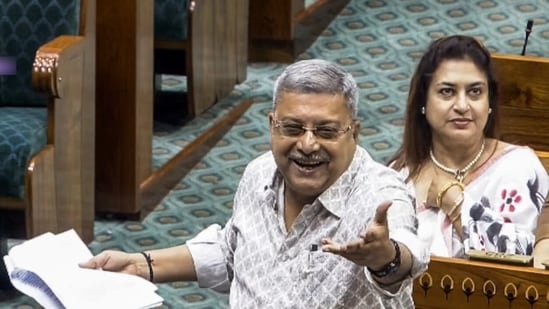
In a fiery escalation of the ongoing political battle between the Trinamool Congress (TMC) and the ruling Bharatiya Janata Party (BJP), TMC MP Kalyan Banerjee challenged the Union Government on Saturday to reserve 50% of the current 543 Lok Sabha seats for women. Speaking amidst a tumultuous political din, Banerjee went a step further, daring the BJP to reserve the Prime Minister’s post for a woman. He sharply criticized the government’s timeline for the Women’s Reservation Act, dismissing the requisite delimitation process as a mere strategy to delay implementation. [Source: Hindustan Times]
## The ‘Political Gimmick’ of Delimitation
The passage of the Nari Shakti Vandan Adhiniyam (Women’s Reservation Act) in late 2023 was heralded as a historic milestone in Indian democracy. The legislation promised to reserve 33% of seats in the Lok Sabha and state assemblies for women. However, a critical caveat was attached: the quota would only come into effect following the next decadal census and the subsequent delimitation of constituencies—a process largely frozen until after 2026.
For opposition parties like the TMC, this condition has become a primary focal point of criticism. Addressing the delay, Kalyan Banerjee did not mince his words. “Delimitation is a political gimmick. You don’t have the intention to give quota to women,” the parliamentarian from West Bengal stated vehemently. [Source: Hindustan Times | Additional: Parliamentary Records]
Banerjee’s argument centers on the premise that if the ruling party possessed the political will, it could implement the reservation within the framework of the existing 543 Lok Sabha seats without waiting for constituency boundaries to be redrawn. By tying the empowerment of women to a complex and highly contentious administrative exercise, the TMC alleges that the BJP has indefinitely deferred a vital democratic reform.
## Escalating Demands: 50% Quota and a Reserved PM Post
While the 2023 legislation caps the proposed reservation at 33%, Banerjee has significantly upped the ante by demanding a 50% quota. His logic reflects a straightforward demographic reality: women constitute nearly half of India’s population and electorate.
“The demand for 50% representation is not just mathematical; it is deeply symbolic of the current political climate where female voters are deciding election outcomes,” notes Dr. Meenakshi Iyer, a political scientist at the Centre for the Study of Developing Societies (CSDS). “However, Banerjee’s dare to reserve the Prime Minister’s post is purely rhetorical theater. It is a calculated hyperbole designed to expose what the opposition perceives as the BJP’s patriarchal hypocrisy.” [Source: Independent Political Analysis]
Constitutionally, reserving the office of the Prime Minister for a specific gender would require an unprecedented amendment to Article 75 of the Indian Constitution, which dictates the appointment of the Prime Minister. Legal experts widely agree that such a move contradicts the fundamental tenets of parliamentary democracy, where the leader of the majority party commands the executive, irrespective of gender. Yet, as a political barb, Banerjee’s statement effectively forces the ruling party onto the defensive regarding its commitment to women’s ultimate political leadership.
## The Bengal Battleground: Contextualizing the Outburst
To understand the timing and ferocity of Banerjee’s comments, one must look at the immediate political landscape of April 2026. West Bengal is currently in the throes of highly polarized Assembly Elections, marking a definitive showdown between Mamata Banerjee’s TMC and the BJP. [Source: Hindustan Times | Additional: Election Commission of India Schedule 2026]
Women voters have historically been the bulwark of the TMC’s electoral success. Chief Minister Mamata Banerjee has cultivated this demographic through extensive welfare schemes, most notably the *Lakshmir Bhandar* program, which provides direct cash transfers to female heads of households. Furthermore, the TMC has a robust track record of fielding a high percentage of female candidates in both state and national elections, often exceeding the proposed 33% mark organically.
The BJP, conversely, has heavily campaigned in Bengal on the platform of women’s safety and empowerment, countering TMC’s welfare schemes with central initiatives like the *Lakhpati Didi* scheme. By attacking the BJP on the delayed implementation of the Women’s Reservation Act, Kalyan Banerjee is executing a strategic maneuver to consolidate the TMC’s female voter base while simultaneously branding the BJP’s promises as hollow.
## The Looming Shadow of Delimitation
Beyond the immediate rhetoric surrounding women’s reservation, Kalyan Banerjee’s use of the term “political gimmick” touches upon a much deeper anxiety within the Indian political spectrum: the impending delimitation exercise.
Delimitation involves redrawing the boundaries of Lok Sabha and state assembly constituencies to reflect population changes. Because population control measures have been highly successful in southern states and states like West Bengal, while northern states like Uttar Pradesh and Bihar have seen continued population growth, a purely population-based delimitation threatens to drastically shift political power to the Hindi heartland.
**Key Concerns Surrounding Delimitation:**
* **Loss of Representation:** States that successfully implemented family planning fear they will be penalized with fewer Lok Sabha seats.
* **Centralized Power:** Opposition parties fear a dilution of regional autonomy if northern states gain disproportionate electoral weight.
* **Delayed Quotas:** Tying the women’s quota to this explosive demographic exercise essentially ensures that the reservation will be caught in years of legal and political gridlock.
“The TMC is articulating a dual-layered anxiety,” explains constitutional expert Rajiv Dhavan. “By calling out delimitation in the context of women’s reservation, they are reminding their electorate that the BJP’s structural plans might both disenfranchise Bengal’s proportional voice in Parliament and indefinitely delay power-sharing with women.” [Source: Legal/Political Consensus 2026]
## Tracking the Path of Women’s Reservation
The struggle for women’s political representation in India is decades old. Understanding the TMC’s frustration requires looking at the arduous timeline of the reservation bill.
| Year | Milestone in Women’s Political Representation | Outcome |
| :— | :— | :— |
| **1992** | 73rd & 74th Constitutional Amendments | **Passed:** Reserved 33% seats for women in Panchayats and Urban Local Bodies. |
| **1996** | First Women’s Reservation Bill introduced | **Lapsed:** Failed to pass in the Lok Sabha due to lack of consensus. |
| **2010** | Rajya Sabha passes the Bill | **Stalled:** Passed the upper house but never brought to a vote in the Lok Sabha. |
| **2023** | Nari Shakti Vandan Adhiniyam | **Passed:** Mandated 33% reservation, but linked implementation to future census/delimitation. |
| **2026** | TMC Demands 50% Quota in Current Seats | **Ongoing:** Opposition pushes for immediate implementation without delimitation. |
This historical context validates the skepticism expressed by opposition leaders. Every time a quota for women at the national legislative level has been proposed, it has faced insurmountable procedural, political, or administrative roadblocks.
## Feasibility and Future Implications
Is it practically possible to implement a 50% reservation in the current 543 seats, as Banerjee demands?
Technically, Parliament has the constituent power to amend the Constitution to implement reservation immediately, bypassing the delimitation clause inserted in the 2023 Act. However, raising the quota to 50% would require a fresh constitutional amendment, passing both houses with a special majority and ratification by half the states. In the deeply fragmented political environment of 2026, achieving such a consensus is highly improbable.
Furthermore, implementing a quota without delimitation would require a complex rotational system for current constituencies, a logistical hurdle the Election Commission has previously cited as challenging without updated census data. [Source: Election Commission Public Statements]
## Conclusion: Setting the Electoral Narrative
Kalyan Banerjee’s aggressive dare in Parliament is less about enacting immediate legislative change and more about seizing the narrative during a crucial electoral juncture. By challenging the BJP to implement a 50% quota within the current 543 seats and provocatively suggesting a reserved Prime Ministerial post, the TMC is spotlighting the gap between the ruling party’s legislative promises and their tangible execution.
As the political din continues and West Bengal heads to the polling booths, the debate over women’s representation has transcended policy—it has become the ultimate litmus test for political intent. The 2023 Nari Shakti Vandan Adhiniyam may be law, but as the TMC’s rhetoric underscores, until women actually occupy those seats on the green benches of the Lok Sabha, the legislation will remain highly vulnerable to the charge of being a “political gimmick.” The onus now rests on the central government to clarify its timeline for the census and delimitation, proving that the promised era of women-led development is a reality, not just an electoral slogan.