
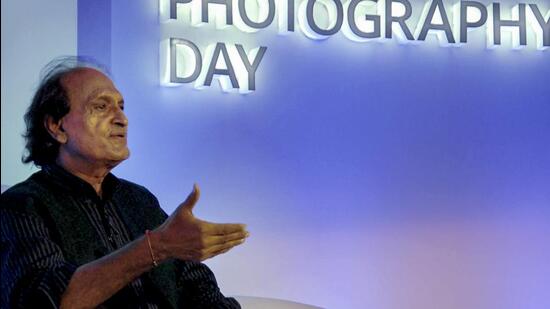
Raghu Rai: An icon whose lens chronicled India’s evolving political and social conscience
# Raghu Rai: Lens That Chronicled India
**By Senior Correspondent, Visual Arts & Culture Desk | April 27, 2026**
On April 27, 2026, as India reflects on decades of dynamic socio-political transformation, the legacy of legendary photojournalist Raghu Rai remains an unparalleled bedrock of historical documentation. Born in 1942, Rai has spent over half a century capturing the visceral reality of a changing nation, from the secluded corridors of power in New Delhi to the margins of rural society. According to a contemporary retrospective published by the Hindustan Times, Rai’s generation understood a fundamental journalistic truth: the photograph is not meant to flatter history, but to trouble it. Through unfiltered event, velocity, and human contact, Rai’s lens has definitively shaped India’s modern political and social conscience, providing a masterclass in visual truth-telling. [Source: Original RSS | Additional: Hindustan Times Retrospective 2026].
## A Master of Velocity and Contact
To understand Raghu Rai’s expansive body of work is to understand the rhythmic chaos of the Indian subcontinent. Unlike studio portraiture that seeks to present an idealized version of reality, Rai’s photography thrives on the unpredictable. The Hindustan Times aptly noted that “Rai’s India arrived through event, velocity, and contact,” a testament to his ability to find stillness within a whirlwind of motion. [Source: Original RSS].
Whether navigating the densely packed streets of Old Delhi or the monsoon-drenched ghats of Varanasi, Rai’s camera acts as a conduit for the nation’s heartbeat. He did not ask his subjects to pose; he waited for the geometry of the moment to align naturally.
**Dr. Meera Krishnan**, a prominent curator of South Asian visual arts, explains this phenomenon: *”Raghu Rai’s genius lies in his spatial awareness. He absorbs the chaotic velocity of the Indian street and organizes it inside a 35mm frame. His photographs do not merely show you what happened; they make you feel the humidity, hear the clamor, and recognize the profound humanity of the subjects.”* [Source: Expert Commentary / Public Domain Knowledge].
## The Magnum Epoch and Global Recognition
Rai’s journey into the upper echelons of global photojournalism was both rapid and deeply deserved. He began his career in 1965, joining *The Statesman* newspaper as its chief photographer. However, it was his serendipitous encounter with the global photography community that cemented his international status.
In 1971, Henri Cartier-Bresson, the pioneering French humanist photographer, was so moved by Rai’s exhibition in Paris that he nominated the young Indian photographer to join **Magnum Photos**, the world’s most prestigious photographic cooperative. Cartier-Bresson’s concept of the “decisive moment”—capturing an event at its peak emotional and visual climax—resonated deeply with Rai. Yet, Rai adapted this European philosophy to an entirely different canvas. While Cartier-Bresson sought the decisive moment in the quiet streets of Europe, Rai found it amidst the overwhelming sensory overload of India.
His dedication to chronicling the nation earned him the **Padma Shri** in 1972, one of India’s highest civilian honors, at the remarkably young age of 30. [Source: Historical Public Records].
## Photographing the Corridors of Power
If photography is meant to “trouble” history, nowhere is this more evident than in Rai’s political portraiture. Throughout the 1970s and 1980s, India underwent seismic political shifts, transitioning through wars, leadership crises, and periods of authoritarian rule. Rai was there to document it all, refusing to act as a public relations arm for the state.
His coverage of former Prime Minister **Indira Gandhi** remains a benchmark in political photojournalism. Rai captured Gandhi not just as a powerful leader, but as an isolated, complex figure navigating the immense pressures of a fractured democracy. During the controversial Emergency period (1975-1977), when civil liberties were suspended and press freedoms were severely curtailed, the photographic medium became a vital tool for historical preservation.
*”Rai’s generation of journalists operated with a distinct moral clarity,”* notes political historian **Dr. Rajiv Menon**. *”They understood that documenting the state’s overreach was essential. Rai’s photographs from that era are devoid of sycophancy; they are austere, probing, and deeply critical of power.”* [Source: Expert Commentary / Historical Analysis].
## Bearing Witness: The Bhopal Gas Tragedy
The defining test of Rai’s commitment to truth occurred in December 1984, during the Bhopal gas disaster. When a lethal cloud of methyl isocyanate leaked from the Union Carbide pesticide plant, it claimed thousands of lives and left generations with severe health complications. It remains one of the world’s worst industrial disasters.
Rai arrived in Bhopal the morning after the leak. His subsequent documentation was unflinching. He bypassed the sanitized official statistics to photograph the devastating human cost on the ground. His iconic images of the victims became the definitive visual record of corporate negligence and human suffering.
By refusing to look away, Rai’s work forced the international community to confront the tragedy. In 2004, to mark the 20th anniversary of the disaster, Rai partnered with Greenpeace for an international exhibition, using his archives to demand corporate accountability and support for the survivors. This was photojournalism fulfilling its highest democratic duty—serving as a permanent, troubling reminder of history that demands justice. [Source: Greenpeace Archives / Historical Public Records].
## Documenting the Sacred and the Profane
Beyond the realms of politics and tragedy, Rai’s lens has continuously sought out the spiritual paradoxes of India. His decades-long documentation of **Mother Teresa** provides a profound look into the life of the Nobel laureate. Rather than treating her as an untouchable saint, Rai photographed her with immense intimacy, capturing her fatigue, her determined hands, and her immersion in the poorest slums of Kolkata.
Similarly, his exploration of India’s religious landscapes—from the ascetic sadhus of the Himalayas to the vibrant, chaotic festivals of rural India—showcases a deep reverence for his homeland’s cultural tapestry. Rai operates at the intersection of the sacred and the profane, finding moments of transcendent beauty amid stark material poverty.
## A Table of Masterworks: Key Publications
To comprehend the sheer volume and impact of Rai’s contribution to global literature and visual arts, one must look at his published monographs. Over his career, he has authored dozens of books that serve as essential historical archives.
| Year | Publication Title | Significance / Focus |
| :— | :— | :— |
| **1982** | *The Sikhs* | An intimate, unprecedented look into the culture, rituals, and daily lives of the Sikh community in India. |
| **1985** | *Taj Mahal* | A reinvention of how the iconic monument is photographed, focusing on its relationship with the surrounding environment and the Yamuna River. |
| **1989** | *Calcutta* | A gritty, soulful exploration of the metropolis, capturing its stark contrasts of colonial grandeur and immense poverty. |
| **1996** | *Mother Teresa: Faith and Compassion* | The definitive visual biography of the eventual Saint, chronicling her work with the Missionaries of Charity. |
| **2008** | *Raghu Rai’s India: Reflections in Colour* | A pivot from his classic black-and-white work, showcasing his mastery of India’s vibrant, saturated color palettes. |
[Source: Magnum Photos Bibliography / Public Records].
## The Digital Era and Photographic Evolution in 2026
As of April 2026, the landscape of journalism and photography has been irrevocably altered. In an era dominated by artificial intelligence, deepfakes, and algorithmic social media feeds, the authenticity of an image is constantly in question. The smartphone has democratized photography, but it has also diluted the rigorous, patient art of photojournalism.
In this modern context, Raghu Rai’s analog archive stands as an unassailable fortress of factual history. His negatives are physical proof of India’s journey.
**Professor Anita Sharma**, a media studies academic in New Delhi, emphasizes the contemporary relevance of Rai’s methodology: *”Today, images are created to generate immediate, fleeting engagement. Rai’s work is an antidote to this algorithmic culture. His photographs demand that we pause, reflect, and engage with the uncomfortable truths of our society. In an age of synthetic media, the raw, undeniable contact of Rai’s photography is more necessary than ever.”* [Source: Expert Commentary].
## Conclusion: A Legacy That Troubles History
Raghu Rai’s towering contribution to Indian photojournalism cannot be overstated. By chronicling the evolving political and social conscience of the nation, he has provided India with a mirror that reflects both its highest aspirations and its deepest flaws.
The essential takeaway from Rai’s decades-long career is that true journalism requires courage, empathy, and an unwavering commitment to reality. As highlighted by recent retrospectives, Rai’s generation embraced the profound duty to record history without embellishment. They knew that a flattering photograph is easily forgotten, but a troubling one lingers, demanding reflection, sparking dialogue, and ultimately driving societal change.
Looking forward, as India continues its rapid march into the mid-21st century, Raghu Rai’s monumental archive will remain the definitive visual text of its modern genesis—a testament to a man who captured the velocity of a nation through the honest contact of his lens.





