
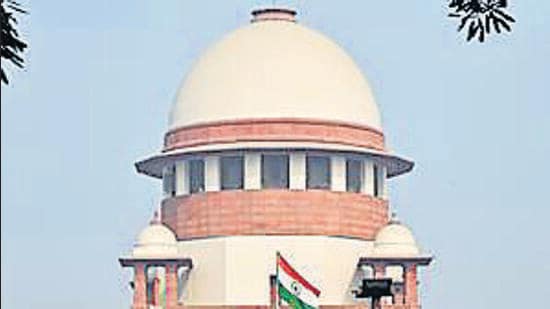
Supreme Court urges mediation in Sunjay Kapur estate dispute
# SC Urges Mediation in Kapur Dispute
**By Staff Correspondent, The National Ledger, April 28, 2026**
On Monday, the Supreme Court of India strongly advocated for mediation in the high-profile Sunjay Kapur estate dispute, signaling a definitive shift toward out-of-court settlements for complex family litigations. Highlighting the severe emotional and temporal costs of conventional trials, the apex court bench underscored that a prolonged courtroom battle—particularly one involving an 80-year-old litigant—would “serve little purpose” and ultimately undermine the pursuit of timely justice. This judicial intervention, delivered on April 27, 2026, illuminates the Indian judiciary’s growing reliance on Alternative Dispute Resolution (ADR) to untangle high-net-worth inheritance conflicts amicably, while simultaneously protecting vulnerable senior citizens from the attrition of endless legal wrangling. [Source: Hindustan Times].
## The Judicial Directive for Amicable Resolution
The Supreme Court’s observation in the Sunjay Kapur estate case is a testament to the evolving jurisprudence surrounding family law and estate distribution in India. As the bench reviewed the intricacies of the inheritance dispute, the justices expressed a profound reluctance to subject an octogenarian to the grueling demands of a protracted civil trial. The court’s remarks resonate with a broader humanitarian approach, emphasizing that “justice delayed is justice denied,” particularly when the lifespan of a primary litigant is a pressing reality.
During the proceedings, the court noted that familial disputes over legacy, wealth, and assets often devolve into bitter public spectacles that erode family ties beyond repair. By steering the parties toward a mediated settlement, the Supreme Court is actively attempting to preserve the dignity of the family unit. Legal experts view this not merely as a suggestion, but as a robust judicial philosophy aimed at streamlining India’s overburdened legal system.
“The Supreme Court’s observation is a watershed moment for family jurisprudence in India,” notes Dr. Rajesh Chari, a senior advocate specializing in corporate succession and family trusts. “By actively pushing the Kapur estate dispute toward mediation, the judiciary is sending an unequivocal message: courts are not arenas for endless familial attrition. When you have an 80-year-old stakeholder involved, the rigid, adversarial nature of a courtroom trial is practically punitive. Mediation offers a dignified exit.” [Additional: Legal Context on Indian Jurisprudence].
## Unpacking High-Net-Worth Estate Complexities
Disputes surrounding prominent business families, such as the Kapur estate, are rarely straightforward. They typically involve a labyrinthine structure of assets, including publicly traded equity, private holding companies, sprawling real estate portfolios, offshore trusts, and intricate intellectual property rights. When a patriarch or matriarch’s estate is contested, the friction often blurs the lines between personal grievances and corporate governance.
In this specific dispute, the involvement of an 80-year-old litigant adds a profound layer of urgency. In high-net-worth families, the elder generation often holds the keys to historical agreements, unwritten family pacts, and the emotional core of the legacy. However, navigating the legal distribution of these assets through traditional court systems requires intense cross-examinations, relentless documentation, and years of appeals.
The Supreme Court recognized that tearing through the fabric of the Kapur estate in a public forum could potentially harm the underlying value of the assets themselves. Corporate stakeholders, investors, and board members inherently loathe instability. By urging the parties to resolve their differences in a closed-door mediation setting, the court is indirectly protecting the economic viability of the estate’s underlying enterprises while shielding the family from the relentless glare of public scrutiny.
## The Emotional and Financial Toll of Judicial Pendency
To fully grasp the Supreme Court’s reasoning, one must examine the staggering reality of judicial pendency in India. Currently, millions of cases are backlogged across the country’s district courts, high courts, and the Supreme Court. A complex civil suit involving corporate assets and multiple legal heirs can easily languish in the system for 15 to 20 years.
For an 80-year-old litigant, a two-decade timeline is not just impractical; it is a denial of justice. The physical and emotional stamina required to endure endless hearings, adjournments, and interim injunctions is immense. “Litigation fatigue” is a well-documented phenomenon in Indian courts, where parties eventually settle not out of satisfaction, but out of sheer exhaustion.
The Supreme Court’s intervention in the Kapur case addresses this systemic flaw head-on. The bench essentially declared that the mechanics of the law should not overshadow its human impact. Subjecting a senior citizen to the adversarial machinery of the court system when a faster, more collaborative alternative exists is contrary to the spirit of equity. This directive aligns perfectly with recent initiatives by the Chief Justice of India to fast-track cases involving senior citizens and marginalized demographics. [Additional: Judicial Pendency Data 2025-2026].
## The Rise of Alternative Dispute Resolution in India
The Supreme Court’s push for mediation in the Kapur estate dispute does not exist in a vacuum. It is part of a sweeping, nationwide movement to institutionalize Alternative Dispute Resolution (ADR) in civil conflicts. With the enactment and subsequent strengthening of the Mediation Act, the Indian government and judiciary have established a formal, binding framework for out-of-court settlements.
Mediation provides a distinctly different environment from litigation. It is non-adversarial, focusing on collaboration and mutual compromise rather than establishing a binary “winner” and “loser.” A trained, neutral mediator facilitates the dialogue, allowing family members to express personal grievances that a strict legal framework might deem irrelevant but are crucial for emotional closure.
Furthermore, confidentiality is a paramount feature of ADR. High-profile families are fiercely protective of their privacy. A public trial exposes financial vulnerabilities, strategic corporate data, and intimate family secrets to competitors and the media.
Meera Sanyal, a certified institutional mediator based in New Delhi, explains the appeal: “Mediation allows families to craft bespoke solutions that rigid legal judgments simply cannot offer. A judge is bound by the strict letter of the law regarding succession. A mediator, however, can help a family redistribute assets in a creative manner that satisfies all parties emotionally and financially, preserving relationships that a courtroom would otherwise destroy.”
## Precedents in High-Profile Family Feuds
The trajectory of the Sunjay Kapur estate dispute mirrors several other monumental family feuds in Indian business history. In recent years, India has witnessed massive conglomerates—ranging from the Hinduja family to the Murugappa Group—navigate turbulent succession battles. In nearly all these instances, prolonged litigation resulted in plummeting stock prices, stalled corporate decision-making, and immense personal anguish.
However, the turning point in these historical disputes almost always arrived through mediated settlements. When family elders, respected business peers, or court-appointed mediators intervened, the deadlocks were broken. By referencing these historical precedents, the Supreme Court is applying a proven formula to the Kapur case.
The judiciary is keenly aware that when billionaires and tycoons fight, the collateral damage extends beyond the family. Thousands of employees, shareholders, and market ecosystems rely on the stability of these estates. Mediation acts as a vital firewall, preventing a private family dispute from triggering a broader corporate crisis.
## Implications for Corporate Succession Planning
The Supreme Court’s remarks have sent ripples through India’s elite business circles, serving as a loud wake-up call for proactive succession planning. The fact that the Kapur estate required apex court intervention underscores the fragility of traditional wills and verbal family agreements.
Modern Indian tycoons are increasingly looking toward sophisticated mechanisms to prevent such post-mortem disputes. This includes the establishment of stringent Family Constitutions, the formation of Family Offices, and the creation of irrevocable blind trusts that clearly delineate the transition of power and wealth.
Most importantly, contemporary succession planners are now embedding mandatory arbitration and mediation clauses directly into their trust deeds. By legally binding their heirs to seek ADR before they can approach a public court, patriarchs and matriarchs can ensure that their legacies are not dismantled by future litigation. The Kapur dispute will likely accelerate this trend, as high-net-worth individuals seek to immunize their families from the agonizing delays of the judicial system.
## Conclusion and Future Outlook
The Supreme Court of India’s directive in the Sunjay Kapur estate dispute marks a defining moment in the intersection of family law, corporate legacy, and elder rights. By unequivocally stating that a prolonged courtroom battle serves little purpose for an 80-year-old litigant, the judiciary has championed a pragmatic, deeply humane approach to conflict resolution. [Source: Hindustan Times].
As the parties are directed to explore an amicable settlement through a mutually appointed mediator, the legal community will be watching closely. If successful, the resolution of this estate will stand as a powerful testament to the efficacy of the Mediation Act and the broader ADR movement in India.
Ultimately, this case serves as a vital reminder that while the law is designed to arbitrate right from wrong, true justice—especially in the twilight years of one’s life—is often found in peace, privacy, and compromise. The Supreme Court has laid the groundwork; it is now up to the family to choose resolution over rivalry.





