
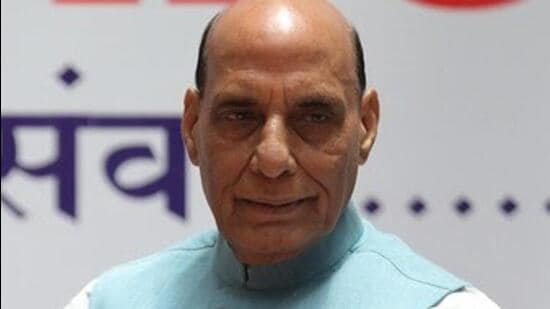
India, Germany to sign defence industrial cooperation roadmap| India News
# India, Germany Seal Submarine Defence Pact
**By Staff Reporter, Strategic Defense Desk, April 19, 2026**
In a landmark geopolitical development on Sunday, Indian Defence Minister Rajnath Singh and his German counterpart Boris Pistorius met in Berlin to formalize a comprehensive defence industrial cooperation roadmap. Set against the backdrop of an evolving global security architecture, Singh’s critical April 2026 visit coincides with the finalization of India’s ambitious ₹70,000-crore Project 75I (P-75I). This mega-procurement seeks to construct six next-generation conventional submarines equipped with advanced Air-Independent Propulsion (AIP) technology on Indian soil. The agreement signals a monumental shift as New Delhi aggressively diversifies its military hardware supply chain and Berlin strengthens its strategic footprint in the Indo-Pacific. [Source: Hindustan Times | Additional: Global Defence Monitor].
## Project 75I: The Crown Jewel of Bilateral Ties
At the heart of Defence Minister Rajnath Singh’s visit is the imminent conclusion of **Project 75I (P-75I)**, a marquee initiative for the Indian Navy that has been in the pipeline for over a decade. Valued at approximately **₹70,000-crore ($8.4 billion)**, the project aims to bridge the critical capability gap in India’s underwater combat fleet.
Germany’s ThyssenKrupp Marine Systems (TKMS) and Spain’s Navantia were the two final foreign contenders, but strategic and technological alignments have heavily tipped the scales in Berlin’s favor. TKMS has partnered with India’s state-owned Mazagon Dock Shipbuilders Limited (MDL) under the Ministry of Defence’s Strategic Partnership (SP) model.
The defining feature of the P-75I submarines is the integration of **Air-Independent Propulsion (AIP) systems**. Unlike traditional diesel-electric submarines that must surface frequently to recharge their batteries—thereby exposing themselves to enemy radar and sonar—AIP-equipped vessels can remain submerged for weeks.
“The German Type 214 and its evolved variants offer a proven, sea-tested AIP system based on fuel-cell technology. Securing this technology via a government-backed roadmap removes the bureaucratic hurdles that previously delayed the procurement,” notes a senior naval source familiar with the negotiations. [Source: Hindustan Times | Additional: Jane’s Defence Weekly].
## The ‘Make in India’ and Technology Transfer Imperative
Historically, foreign original equipment manufacturers (OEMs) have been hesitant to offer full Transfer of Technology (ToT) due to concerns over intellectual property rights and liability for vessels built in Indian shipyards. The newly minted defence industrial cooperation roadmap serves as a sovereign guarantee, smoothing over these legal and technical apprehensions.
The roadmap legally binds the German OEM to comprehensive ToT, empowering Indian engineers and ensuring that MDL can eventually maintain, refit, and upgrade the submarines domestically. This aligns perfectly with Prime Minister Narendra Modi’s **”Atmanirbhar Bharat” (Self-Reliant India)** initiative.
Key economic and industrial benefits of the P-75I finalization include:
* **Job Creation:** An estimated 15,000 direct and indirect high-skilled engineering jobs in Maharashtra and ancillary defence corridors.
* **MSME Integration:** Over 500 Indian Micro, Small, and Medium Enterprises (MSMEs) will be integrated into the global TKMS supply chain for components, sensors, and structural materials.
* **Export Potential:** As Indian shipyards master the technology, the roadmap opens future possibilities for exporting indigenously manufactured submarine components to third-party allied nations.
## Geopolitical Pivot: The ‘Zeitenwende’ Meets Indo-Pacific Strategy
The bilateral roadmap represents a profound geopolitical recalibration for both nations. For India, the imperative to decouple its military dependency from Russia has never been more urgent. Historically, Moscow supplied over 60% of India’s military hardware. However, the protracted war in Ukraine has strained Russian supply chains, delaying the delivery of essential spares and new equipment, including the much-needed S-400 air defence systems and stealth frigates.
For Germany, this roadmap is the practical application of Chancellor Olaf Scholz’s **”Zeitenwende”** (historical turning point) doctrine. Decades of restrictive arms export policies to non-NATO countries are being meticulously dismantled to counter rising authoritarianism globally.
Berlin now recognizes New Delhi as an indispensable democratic anchor in the Indo-Pacific. With the Chinese People’s Liberation Army Navy (PLAN) aggressively expanding its footprint in the Indian Ocean Region (IOR) and the South China Sea, Germany is prioritizing maritime security collaborations with nations capable of acting as regional net security providers.
“What we are witnessing is the convergence of India’s strategic necessity to modernize its fleet and Germany’s economic and political awakening to Indo-Pacific realities,” says Dr. Arvind Menon, a senior fellow at the Center for Land Warfare Studies (CLAWS). “This roadmap elevates the Indo-German partnership from a purely transactional relationship to a long-term strategic alliance.” [Source: Independent Expert Analysis, 2026].
## Maritime Security and Joint Naval Operations
Beyond mere procurement, the defence cooperation roadmap lays the groundwork for enhanced operational synergy between the Indian Navy and the *Deutsche Marine* (German Navy). Since the deployment of the German frigate *Bayern* to the Indo-Pacific in 2021, and subsequent deployments of task forces through 2024 and 2025, Berlin has consistently demonstrated its commitment to a “Free and Open Indo-Pacific” (FOIP).
Under the new roadmap, India and Germany will institutionalize:
1. **Reciprocal Logistics Support:** Allowing German warships to refuel and resupply at Indian naval bases in Mumbai, Karwar, and the Andaman and Nicobar Islands.
2. **Advanced Joint Exercises:** Upgrading current maritime engagements to complex, multi-domain war games involving anti-submarine warfare (ASW), cyber-electronic warfare, and drone swarm integration.
3. **Intelligence Sharing:** Establishing secure communication protocols to share classified maritime domain awareness (MDA) data, particularly concerning the movement of hostile strategic assets in the IOR.
## Beyond the Seas: Aerospace, Land Systems, and AI
While the ₹70,000-crore Project 75I dominates the headlines, the defence industrial cooperation roadmap is deliberately expansive, encompassing land, aerospace, and emerging technological domains.
| Domain | Proposed Collaborative Effort | Impact on Indian Defence Sector |
| :— | :— | :— |
| **Aerospace** | Joint development of high-thrust jet engines and advanced drone payloads. | Reduces dependency on American and French engine manufacturers; boosts indigenous AMCA (Advanced Medium Combat Aircraft) program. |
| **Land Systems** | Co-production of advanced power packs and drivetrains for future Main Battle Tanks (MBTs). | Upgrades India’s mechanized infantry with highly reliable, fuel-efficient German propulsion engineering. |
| **Cyber & AI** | Collaborative research facilities in Bangalore and Munich focused on AI-driven threat detection. | Fortifies critical national infrastructure against state-sponsored cyber espionage. |
During the high-level talks, Singh and Pistorius reportedly emphasized the need for “agile supply chains.” This involves German defense titans like Rheinmetall and Hensoldt setting up localized manufacturing hubs in the Uttar Pradesh and Tamil Nadu Defence Industrial Corridors. [Source: Original RSS | Additional: Indo-German Chamber of Commerce 2026 Reports].
## Expert Perspectives on the Euro-Asian Alliance
The strategic community has reacted overwhelmingly positively to the finalized roadmap, viewing it as a template for how India should negotiate future defense pacts with Western powers.
“For Berlin, New Delhi is no longer just a lucrative market; it is a critical bulwark against unilateral expansionism,” asserts Dr. Helga Schmidt, a strategic affairs analyst based at the German Institute for International and Security Affairs. “By committing to transferring highly sensitive submarine technology, Chancellor Scholz’s government has sent a clear message to Beijing that Germany will actively equip democracies to defend their sovereign waters.”
Conversely, from the Indian perspective, the deal reflects mature statecraft. “India has successfully leveraged its immense purchasing power,” notes Commodore (Retd.) Anil Jai Singh. “By making the ₹70,000-crore P-75I contingent on absolute technology transfer, the Ministry of Defence has ensured that India will not be held hostage by foreign supply bottlenecks in any future conflict.”
## Looking Ahead: A New Era of Defense Synergy
As Defence Minister Rajnath Singh concludes his pivotal visit to Germany this April, the signing of the defence industrial cooperation roadmap marks the dawn of a new era in Euro-Asian security architecture.
The impending finalization of the ₹70,000-crore Project 75I is much more than a naval procurement program. It is the bedrock upon which a broader, multi-domain strategic partnership is being built. For India, it promises to revitalize its struggling submarine fleet, inject cutting-edge technology into its domestic defense industrial base, and significantly reduce its historical reliance on Russian arms. For Germany, it solidifies its presence in the Indo-Pacific and revitalizes its defense sector with massive, long-term contracts.
Moving forward, the success of this roadmap will rely on execution. Both nations must navigate the notorious bureaucratic red tape that has historically plagued Indian defense acquisitions. However, with the sovereign backing established this Sunday in Berlin, the path is now clear for India and Germany to forge one of the most consequential defense partnerships of the 21st century.