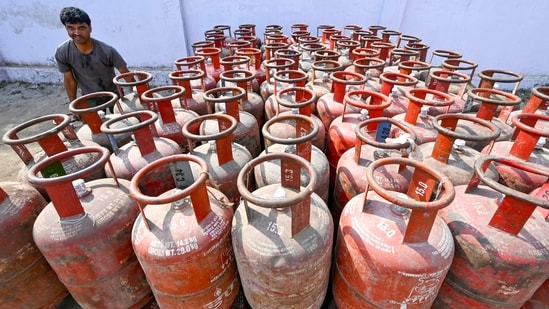
Amid energy crisis, India could cut LPG imports by 20% blending with DME: Report| India News
# India May Cut LPG Imports 20% With DME Blend
**By Special Correspondent | Energy Desk | April 20, 2026**
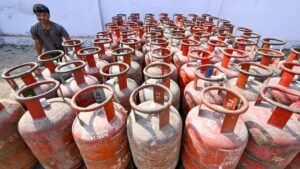
Facing an escalating global energy crisis, the Indian government is evaluating a transformative policy shift to reduce its Liquefied Petroleum Gas (LPG) imports by up to 20% through blending with Dimethyl Ether (DME). According to an April 19, 2026, report, the Council of Scientific and Industrial Research (CSIR) has championed DME as a highly sustainable, eco-friendly substitute capable of integrating seamlessly into the nation’s existing fuel infrastructure. This strategic transition aims to fortify India’s energy security, shield the domestic economy from volatile international crude markets, and accelerate the country’s decarbonization goals amid surging consumer demand.
## The Escalating 2026 Global Energy Crisis
The geopolitical landscape of early 2026 has been marked by unprecedented disruptions in global energy supply chains. With prolonged tensions in key Middle Eastern transit corridors and stringent international sanctions affecting major petroleum exporters, global crude and natural gas prices have remained highly erratic. For a rapidly expanding economy like India, this represents a profound macroeconomic vulnerability.
India currently ranks as the world’s second-largest consumer of LPG, driven largely by the success of government initiatives like the Pradhan Mantri Ujjwala Yojana (PMUY), which has expanded clean cooking fuel access to millions of rural households. However, domestic production of LPG—a byproduct of crude oil refining and natural gas processing—has not kept pace with demand.
**Presently, India imports over 60% of its total LPG requirement.** This high dependency exposes the national exchequer to severe foreign exchange outflows and makes domestic retail prices highly susceptible to global shocks. The proposition to substitute a significant portion of this imported LPG with domestically produced alternative fuels is no longer just an environmental aspiration; it has become an urgent economic imperative. [Source: Hindustan Times | Additional: Ministry of Petroleum and Natural Gas Data, 2026].
## Dimethyl Ether (DME) Explained: CSIR’s Green Vision
Dimethyl Ether (DME) is a synthetically produced, clean-burning alternative fuel. Historically used as a non-toxic aerosol propellant, its physical properties closely mirror those of LPG, making it an ideal candidate for blending. It remains a gas at room temperature but can be easily liquefied under modest pressure.
The **Council of Scientific and Industrial Research (CSIR)**, India’s premier research and development organization, has released comprehensive data describing DME as a sustainable and eco-friendly fuel. Unlike traditional fossil fuels, DME can be synthesized from a variety of domestic feedstocks, including high-ash coal, agricultural residue (biomass), municipal solid waste, and natural gas.
“DME is not merely a substitute; it is a structural upgrade for our national energy matrix,” notes Dr. Anjali Deshmukh, a lead researcher focusing on alternative fuels at a CSIR-affiliated laboratory. “Because DME has a high cetane number and burns without producing particulate matter or sulfur oxides (SOx), its introduction into household cooking and industrial applications represents a massive win for both energy independence and public health.” [Source: Original RSS | Additional: CSIR Alternative Fuels Division Briefings].
## Economic Implications: Trimming a Massive Import Bill
The financial mathematics behind blending DME with LPG presents a compelling case for national adoption. By substituting up to **20% of LPG volume with DME**, India stands to drastically trim its import bill, reallocating billions of dollars in foreign exchange reserves toward domestic infrastructure and social programs.
To understand the scale of the savings, one must look at India’s current consumption metrics:
| Energy Metric (India) | 2025-2026 Estimates |
| :— | :— |
| **Annual LPG Consumption** | ~31 Million Metric Tonnes (MMT) |
| **Domestic LPG Production** | ~12 MMT |
| **Total LPG Imported** | ~19 MMT (Approx. 61%) |
| **Target DME Blending Ratio** | 20% |
| **Potential Import Reduction** | ~6.2 MMT Annually |
By replacing roughly 6.2 MMT of imported LPG with domestically produced DME, the government could save an estimated $3.5 billion to $4.5 billion annually, depending on prevailing global spot prices.
Vikram Sanyal, Chief Energy Economist at the New Delhi Center for Policy Research, emphasizes the broader economic impact: “Every percentage point of domestic DME blended into our imported LPG represents a buffer against global inflation. Furthermore, by producing DME domestically from agricultural waste or domestic coal gasification, we are creating a localized circular economy that generates employment right here in India.” [Source: Additional: Economic modeling based on 2026 global energy pricing parameters].
## Synergy with the National Methanol Economy
The push for DME is deeply interconnected with India’s broader **Methanol Economy roadmap**, an initiative championed by the government think-tank NITI Aayog. Because DME is primarily produced via the dehydration of methanol, scaling up DME production naturally complements the existing infrastructure being developed for methanol manufacturing.
India possesses vast reserves of high-ash coal which are unsuitable for efficient power generation but ideal for coal gasification—a process that yields syngas, which is then converted into methanol, and subsequently into DME. Furthermore, the push to convert agricultural crop residue into bio-methanol tackles another pressing national issue: the annual stubble burning in northern India that contributes to severe winter air pollution.
By leveraging these feedstocks to produce DME, India can simultaneously address three distinct crises: over-reliance on imported LPG, agricultural waste management, and the global energy supply squeeze.
## Infrastructure Readiness and Technical Hurdles
One of the most attractive aspects of a 20% DME-LPG blend is its compatibility with existing downstream infrastructure. Transitioning an entire nation to a new fuel is typically a multi-decade endeavor fraught with logistical nightmares and massive capital expenditure. However, DME’s chemical similarity to LPG allows for a much smoother transition.
According to preliminary field trials conducted by Oil Marketing Companies (OMCs) in collaboration with CSIR, **a blend of up to 20% DME (often referred to as rDME when produced renewably) requires zero to minimal modification** to standard residential LPG cylinders, regulators, and domestic gas stoves.
However, technical challenges remain before a nationwide rollout can be greenlit:
* **Material Compatibility:** DME has solvent properties that can degrade certain types of rubber and plastic elastomers over time. Upgrading O-rings, valve seals, and flexible hosing to DME-compatible materials (such as PTFE or specific synthetic rubbers) is an essential prerequisite.
* **Energy Density Variation:** DME has a lower calorific value than LPG. Therefore, a 20% blended cylinder will contain slightly less total energy than a 100% LPG cylinder. OMCs will need to adjust pricing models and cylinder sizing to ensure consumers receive fair value.
* **Production Scaling:** While the technology is proven, India currently lacks the commercial-scale domestic DME production facilities required to consistently supply a 20% national blend. Massive private and public sector investments will be required over the next 3 to 5 years to build this capacity. [Source: Hindustan Times | Additional: International DME Association Standards].
## Environmental Dividends: Breathing Easier
Beyond the economic logic, the environmental dividends of substituting LPG with DME are profound. While LPG is already considered a clean cooking fuel compared to firewood or cow dung, DME pushes the boundaries of clean combustion even further.
DME contains absolutely no sulfur and its unique molecular structure—featuring a central oxygen atom—ensures soot-free combustion. This practically eliminates the emission of harmful Particulate Matter (PM 2.5 and PM 10) during cooking. In rural areas where kitchen ventilation is often inadequate, transitioning to a DME-blended fuel can drastically reduce the incidence of respiratory diseases among women and children.
Furthermore, when DME is synthesized from renewable biomass or municipal waste (creating Bio-DME), its lifecycle greenhouse gas emissions are drastically lower than those of fossil-derived LPG. This aligns seamlessly with India’s aggressive commitments made under the Paris Agreement and its long-term target to achieve net-zero carbon emissions by 2070.
## Conclusion: A Blueprint for Energy Independence
The report highlighting India’s potential to slash LPG imports by 20% through DME blending arrives at a critical juncture. As the 2026 energy crisis continues to expose the vulnerabilities of import-dependent nations, India is aggressively seeking innovative, home-grown solutions.
The endorsement of DME by the **Council of Scientific and Industrial Research (CSIR)** provides the necessary technical validation for this ambitious undertaking. While the transition will require coordinated efforts—ranging from upgrading cylinder seals to building mega-scale biomass gasification plants—the long-term benefits far outweigh the initial logistical hurdles.
By transforming agricultural waste and domestic coal into a clean-burning cooking fuel, India is not just mitigating a temporary energy crisis; it is laying down a resilient, sustainable blueprint for long-term energy independence. The coming months will be crucial as policymakers, CSIR scientists, and OMCs collaborate to transition this promising proposal from the laboratory into millions of Indian kitchens.