BJP using women’s reservation as ‘political shield’ for divisive motives: Supriya Shrinate| India News
# Congress: BJP Weaponizing Women’s Quota
**By Senior Political Correspondent, National Affairs Desk** | April 19, 2026
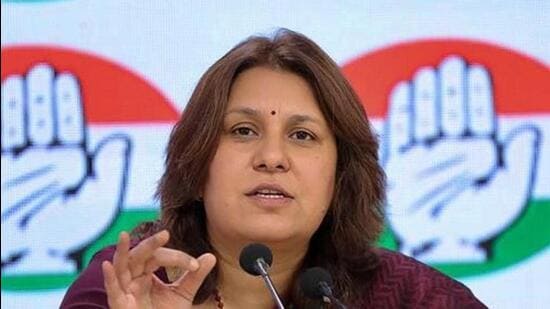
**NEW DELHI** — Escalating the political confrontation over India’s electoral future, Congress spokesperson Supriya Shrinate on Sunday accused the ruling Bharatiya Janata Party (BJP) of utilizing the much-anticipated Women’s Reservation Act as a “political shield” to covertly push through a highly controversial national delimitation exercise. Addressing the media in the national capital, Shrinate alleged that the ruling dispensation is intentionally intertwining women’s political empowerment with the redrawing of electoral constituencies to silence regional opposition and alter the nation’s political geography to its partisan advantage.
[Source: Hindustan Times | Additional Context: Indian Constitutional Law and Electoral Precedents]
## The Core Accusation: A Trojan Horse for Delimitation
The political temperature in New Delhi has surged as the 2026 deadline for the lifting of the freeze on the delimitation of Lok Sabha constituencies approaches. During a fiery press briefing, Supriya Shrinate launched a direct attack on the BJP’s electoral strategy, claiming that the government’s sudden urgency regarding the implementation of the women’s quota is masking a deeper, divisive motive.
“The BJP is using women’s reservation as a political shield for divisive motives,” Shrinate stated, highlighting the government’s stipulation that the reservation of seats for women in the lower house of Parliament and state legislative assemblies can only be enacted following a new census and subsequent delimitation. According to the Congress party, this prerequisite is not an administrative necessity but a calculated political maneuver.
By linking the universally popular cause of women’s representation to the deeply polarizing issue of delimitation, the Congress alleges that the BJP hopes to brand any political party that opposes the redrawing of constituencies as “anti-women.” Shrinate argued that the government is essentially holding the political rights of Indian women hostage to force through a systemic overhaul of electoral boundaries that heavily favors the Hindi heartland—a traditional BJP stronghold.
## The Delimitation Dilemma and the 2026 Deadline
To understand the gravity of Shrinate’s allegations, one must examine the constitutional history of India’s electoral boundaries. **Delimitation** is the act of redrawing boundaries of Lok Sabha and State Assembly seats to represent changes in population. However, under the **84th Amendment Act of 2001**, the number of Lok Sabha seats was frozen at 543 until the year 2026.
This freeze was originally implemented to encourage population control measures. States in southern India, such as Tamil Nadu, Kerala, Karnataka, and Andhra Pradesh, aggressively and successfully pursued family planning and stabilized their populations. Conversely, states in northern India, notably Uttar Pradesh and Bihar, experienced rapid population growth.
If a standard delimitation exercise were to occur purely based on current population data, the southern states would face a severe penalty for their socio-economic success: a drastic reduction in their share of parliamentary seats and, consequently, their political leverage in New Delhi. Meanwhile, the northern states would see a massive surge in representation.
Dr. Rajendra Desai, a political scientist and expert in federalism at the Institute of Electoral Studies, explains the friction: *”The 2026 deadline has been a ticking time bomb for Indian federalism. The South fears electoral marginalization, while the North demands proportional representation. By tying the Women’s Reservation Act to this demographic powder keg, the government has ensured that any debate on federal parity will be drowned out by accusations of misogyny.”*
[Source: Institutional research on Indian Demographics and the 84th Constitutional Amendment]
## Nari Shakti Vandan Adhiniyam: Empowerment or Instrument?
The **Nari Shakti Vandan Adhiniyam** (Women’s Reservation Bill), passed with near-unanimous bipartisan support in late 2023, mandates a 33% reservation for women in the Lok Sabha and state assemblies. However, a critical caveat within the legislation explicitly states that it shall come into effect only after an exercise of delimitation is undertaken based on the relevant figures of the first census taken after the commencement of the Act.
The Congress party is now spotlighting this specific clause. Shrinate pointed out that the government could have decoupled the women’s quota from the delimitation exercise, allowing the current 543 Lok Sabha seats to feature a 33% reservation immediately.
“If the Prime Minister truly wanted to empower women, the reservation could have been implemented for the 2024 elections itself,” Shrinate remarked during the briefing. “Instead, they delayed it, stapled it to a demographic restructuring that threatens to tear the fabric of our federal structure, and are now daring the opposition to speak against it.”
This strategic coupling, political analysts note, places the opposition bloc—especially regional powers in the South—in a precarious position. If they resist the delimitation process to protect their states’ parliamentary strength, the ruling party can easily weaponize the narrative, projecting them as hurdles to women’s empowerment.
## Threat to the Federal Structure: The North-South Divide
The implications of this political crossfire extend far beyond rhetoric. The demographic divergence between North and South India is stark. If the strength of the Lok Sabha is expanded to accommodate population growth—a possibility strongly hinted at by the construction of the new, larger Parliament building that can seat 888 Lok Sabha members—the political center of gravity will shift decisively northward.
Projections based on recent demographic trends indicate that states like **Uttar Pradesh, Bihar, Rajasthan, and Madhya Pradesh** could collectively gain dozens of new parliamentary seats. In contrast, southern states might see their proportional representation shrink significantly.
Regional leaders have repeatedly expressed alarm over this prospect. Chief Ministers from southern states have warned that penalizing states for successfully implementing national policies on population control goes against the very spirit of the Constitution.
Meenakshi Iyer, a constitutional lawyer and commentator, points out the complexities: *”The Congress is echoing a deep-seated anxiety of the southern electorate. The BJP’s strongholds are predominantly in the North and West. If delimitation proceeds unchecked under the guise of implementing women’s reservation, it structurally cements a long-term electoral advantage for the BJP while permanently diluting the political voice of the South.”*
## BJP’s Rebuttal: Constitutional Mandates and Empowerment
While the BJP has yet to issue a full, formal rebuttal to Shrinate’s Sunday press conference, the ruling party’s historical stance on the matter has been resolute. BJP leaders have consistently maintained that the linkage between the women’s quota, the census, and delimitation is not a political conspiracy but an administrative and constitutional necessity.
The ruling party argues that randomly assigning women’s reserved seats without a fresh, objective assessment of demographic data and constituency boundaries would be chaotic and legally vulnerable. By conducting a fresh census—delayed significantly since 2021 due to the pandemic—and a subsequent delimitation, the government claims it is ensuring a scientifically sound, equitable distribution of reserved constituencies.
Furthermore, BJP strategists dismiss the Congress’s allegations as sheer hypocrisy. They frequently highlight that the Congress-led UPA government failed to pass the Women’s Reservation Bill during its ten years in power, despite holding parliamentary majorities. The BJP’s official narrative positions the Modi administration as the sole champion of “Nari Shakti” (women’s power), framing the opposition’s procedural complaints as desperate attempts by an increasingly irrelevant opposition to stall progress.
## Electoral Calculus and the Road Ahead
As 2026 unfolds, the debate over delimitation and the women’s quota is set to become the defining battleground of Indian politics. The Congress’s decision to proactively attack the BJP’s motives, as spearheaded by Shrinate, indicates a calculated strategy to preemptively organize a united front—particularly aligning with southern regional parties—against the impending delimitation exercise.
The success of the Congress narrative will depend heavily on its ability to untangle the emotional appeal of women’s reservation from the highly technical, yet massively impactful, mechanics of constituency delimitation.
Key factors to watch in the coming months include:
* **The Census Announcement:** The timeline for the delayed decadal census will serve as the immediate trigger for the delimitation process.
* **Southern Mobilization:** How regional giants like the DMK, TDP, and left-aligned parties coordinate their resistance against demographic disenfranchisement.
* **Judicial Intervention:** Whether opposition parties will approach the Supreme Court of India to challenge the necessity of linking the women’s quota to the 2026 delimitation freeze expiration.
## Conclusion: A High-Stakes Political Chess Match
Supriya Shrinate’s accusation that the BJP is using the women’s reservation as a “political shield” exposes the intricate, high-stakes nature of India’s current democratic trajectory. The Nari Shakti Vandan Adhiniyam, initially celebrated as a historic milestone for gender equality, has inextricably become the focal point of a massive geopolitical tug-of-war within the subcontinent.
As the 2026 delimitation freeze nears its end, the friction between demographic representation and federal equity threatens to spark unprecedented political volatility. Whether the ruling BJP can successfully navigate these complex waters while championing its empowerment narrative, or whether the Congress can successfully expose what it deems a “divisive motive,” will fundamentally shape the structure of India’s Parliament—and the fate of its democracy—for decades to come.
***
*Disclaimer: This report analyzes ongoing political developments and statements made by public political figures as of April 2026. Demographic projections and constitutional interpretations are based on current legislative frameworks and expert analysis.*