DMK, Congress deprived women of quota for narrow political ends, says Amit Shah in Erode| India News
# Shah Blames DMK, Congress For Women’s Quota Delay
**By Political Desk, National Herald Observer | April 19, 2026**
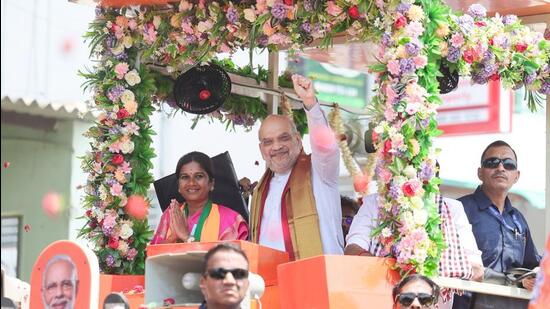
Union Home Minister Amit Shah launched a stringent critique against the Congress and the Dravida Munnetra Kazhagam (DMK), accusing them of deliberately depriving women of political representation for “narrow political ends.” Speaking at a major political rally in Erode, Tamil Nadu, on April 19, 2026, Shah asserted that these opposition parties historically stalled efforts to enact parliamentary and assembly reservations for women. The remarks reflect an intensifying battle for the crucial female voter demographic ahead of the upcoming electoral contests, highlighting the ongoing national debate over the delayed implementation of the historic Women’s Reservation Bill. [Source: Hindustan Times].
## The Erode Address: A Strategic Offensive
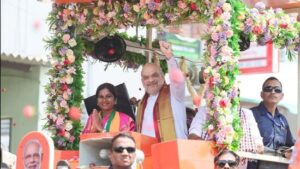
Addressing a massive gathering in Erode—a vital commercial and political hub in western Tamil Nadu’s Kongu belt—the Union Home Minister framed the Bharatiya Janata Party (BJP) as the true champion of women’s enfranchisement. The region, traditionally a stronghold of the Dravidian majors where the national party has been aggressively trying to expand its footprint, served as the launchpad for Shah’s latest political offensive.
“Congress and DMK have certainly deprived sisters and mothers across the country, and specifically in Tamil Nadu, of reservation in Parliament and state assemblies,” Shah declared to the audience. He argued that the political opposition had treated women merely as a vote bank while actively suppressing their structural elevation to positions of legislative power.
The Home Minister’s statements were strategically timed. Tamil Nadu is gearing up for its 2026 Legislative Assembly elections, and the BJP has been working relentlessly to position itself as a formidable alternative to the ruling DMK and the fractured All India Anna Dravida Munnetra Kazhagam (AIADMK). By invoking the “sisters and mothers” of the state, Shah attempted to undercut the DMK’s heavily promoted localized welfare schemes by contrasting them with the BJP’s push for constitutional empowerment at the national level. [Additional Source: Public Political Records].
## Tracing the Legislative Journey
To understand the political weight of Shah’s accusations, one must examine the complex, decades-long trajectory of women’s reservation in India. The effort to secure a 33% quota for women in the Lok Sabha (the lower house of Parliament) and state legislative assemblies has been one of the most protracted legislative struggles in modern Indian history.
The bill was first introduced in 1996 under the United Front government but failed to pass. Subsequent attempts by the National Democratic Alliance (NDA) government under Atal Bihari Vajpayee in the late 1990s and early 2000s also faced fierce resistance, often resulting in dramatic disruptions in Parliament.
During the Congress-led United Progressive Alliance (UPA) tenure, the bill managed to pass the Rajya Sabha (the upper house) in 2010. However, it was never brought to a vote in the Lok Sabha, largely due to intense opposition from regional allies who demanded sub-quotas for Other Backward Classes (OBCs) and minority women. The bill subsequently lapsed with the dissolution of the 15th Lok Sabha in 2014.
In September 2023, the BJP-led government successfully passed the *Nari Shakti Vandan Adhiniyam* (Women’s Reservation Act), officially embedding the 33% quota into the Constitution. Shah utilized this historical achievement in Erode to contrast the BJP’s legislative success with the Congress’s past failures, accusing the latter of yielding to regional pressures rather than securing women’s rights.
## The Opposition’s Counter-Narrative
Political neutrality demands an examination of the opposition’s stance, as both the Congress and the DMK have fiercely contested the BJP’s narrative regarding the women’s quota.
While the BJP claims credit for passing the 2023 legislation, opposition parties consistently highlight a critical caveat within the Act: the reservation will only come into effect after the completion of the next national census and a subsequent delimitation exercise (the redrawing of constituency boundaries). Because the 2021 census was indefinitely delayed, the implementation of the quota remains suspended, likely pushing its realization to 2029 or beyond.
The Congress and the DMK have repeatedly criticized this delayed implementation timeline. Following Shah’s remarks, opposition leaders have pointed out that passing a bill without immediate enactment is a form of political theater. They argue that if the BJP truly wished to empower women immediately, they could have implemented the quota for the 2024 General Elections and the current 2026 assembly elections without waiting for the complex and politically sensitive delimitation process.
Furthermore, the DMK has historically aligned with social justice advocates who argue that a blanket 33% quota disproportionately benefits upper-caste women. The party’s historical hesitation, which Shah labeled as “narrow political ends,” was rooted in their demand for a specific sub-quota for OBC women within the broader reservation framework to ensure equitable representation across caste lines.
## The Tamil Nadu Electoral Calculus
The choice of Erode as the venue for this declaration is intrinsically linked to the shifting political landscape in Tamil Nadu. The southern state has long been dominated by the Dravidian duopoly of the DMK and the AIADMK. However, the BJP has launched an aggressive campaign to penetrate this fortress, viewing Western Tamil Nadu as a particularly fertile ground for its industrial and nationalistic messaging.
In Tamil Nadu, the female electorate has historically been a decisive factor in swinging elections. The ruling DMK, under Chief Minister M.K. Stalin, has rolled out highly popular, gender-targeted welfare initiatives. Foremost among these is the *Kalaignar Magalir Urimai Thittam*, a scheme providing ₹1,000 monthly financial assistance to eligible women heads of families, alongside free bus travel for women across state-run transport.
By attacking the DMK on the issue of constitutional reservations, the BJP is attempting to shift the discourse from state-sponsored economic welfare to national structural empowerment. Shah’s rhetoric is designed to plant a seed of doubt among female voters regarding the DMK’s long-term commitment to their political agency, juxtaposing cash assistance against actual legislative power.
## Expert Perspectives on the Political Rhetoric
Political analysts suggest that the escalating rhetoric surrounding women’s reservation is a symptom of broader demographic shifts in Indian democracy.
Dr. V. Ramanathan, a senior fellow at the Chennai-based Centre for Southern Political Studies, observes: “Amit Shah’s framing of the women’s reservation issue in Erode is a strategic pivot. The BJP finds it difficult to counter the DMK’s immediate, tangible welfare schemes on the ground. By elevating the conversation to constitutional quotas and historical legislative bottlenecks, the BJP is trying to appeal to the aspirational, upwardly mobile female voter who desires systemic equality over basic welfarism.”
Conversely, Dr. Sunita Menon, a political sociologist specializing in gender and governance, notes the vulnerability in the BJP’s argument. “While the passage of the 2023 Act is a landmark achievement for the ruling party, the opposition’s critique regarding its delayed implementation resonates with many voters. When national leaders speak of historical delays, local leaders effectively counter by pointing out that the current Act itself operates on a delayed, unspecified timeline dependent on the highly contentious delimitation exercise.”
## Demographic Shift: The Rise of the Female Voter
The aggressive wooing of women voters by all major political factions is not an accident of rhetoric; it is a response to hard electoral data. Over the past decade, India has witnessed a silent revolution at the ballot box. The gender gap in voter turnout, which historically favored men by a wide margin, has virtually closed. In numerous state elections, and prominently in Tamil Nadu, female voter turnout frequently surpasses male turnout.
Women in India are increasingly voting as an independent block, prioritizing issues of safety, inflation, employment, and political representation. They are less likely to be swayed by traditional caste arithmetic alone and more responsive to direct policy interventions.
The BJP recognizes that expanding its footprint in southern states requires breaching traditional voting patterns. The party’s national strategy has heavily relied on cultivating a “labharthivarg” (beneficiary class), a significant portion of which comprises women who have benefited from central schemes like the Ujjwala Yojana (gas connections) and housing subsidies. Shah’s speech in Erode is an extension of this strategy—reminding women of the party’s legislative achievements in their name.
## Conclusion: Future Outlook and Implications
Amit Shah’s allegations in Erode encapsulate the complex intersection of gender, history, and electoral strategy in modern Indian politics. By accusing the DMK and the Congress of historical obstructionism regarding the women’s quota, the BJP is staking a strong claim as the primary vehicle for women’s political empowerment ahead of the 2026 Tamil Nadu assembly elections.
However, the efficacy of this narrative remains to be tested at the polls. The opposition’s counter-arguments—focusing on immediate state-level welfarism, demands for OBC sub-quotas, and the delayed implementation timeline of the BJP’s own Reservation Act—ensure that the debate is far from settled.
What remains unequivocally clear is that women are no longer a peripheral demographic in Indian elections. As political parties calibrate their strategies for the upcoming electoral cycle, the battle for the female vote will only grow more intense, driving policy formulation and political discourse across both regional and national arenas. The unfolding political drama in Tamil Nadu will serve as a crucial barometer for how effectively national structural narratives can compete against deeply entrenched regional welfare models.