TMC, DMK, SP top %age of women LS MPs: Where Cong, BJP, parties PM mentioned in his speech stand amid quota row| India News
# Women MPs: TMC, DMK Lead Amid Quota Row
By Special Correspondent, National Policy Desk, April 19, 2026
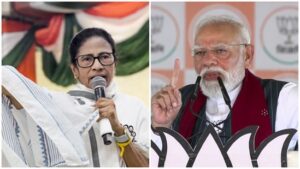
On April 19, 2026, amidst an intensifying national debate over the delayed implementation of the Women’s Reservation Act, regional powerhouses—specifically the Trinamool Congress (TMC), Dravida Munnetra Kazhagam (DMK), and Samajwadi Party (SP)—have demonstrably outpaced national parties in female parliamentary representation. Following Prime Minister Narendra Modi’s recent address to the nation, in which he named five opposition parties while alleging an “anti-women” political culture, West Bengal Chief Minister Mamata Banerjee fiercely retaliated. By highlighting the TMC’s overwhelmingly superior gender ratio in the Lok Sabha, Banerjee has shifted the spotlight onto a glaring disparity: while the ruling Bharatiya Janata Party (BJP) and principal opposition Congress champion gender quotas in rhetoric, actual electoral data reveals that regional parties are currently leading the charge for female political empowerment.
## The Prime Minister’s Address and the Opposition’s Rebuttal
The current political firestorm was ignited during a highly publicized nationwide address by Prime Minister Narendra Modi. Framing his government’s agenda around “Nari Shakti” (women’s empowerment), the Prime Minister took aim at the opposition bloc, specifically naming five regional and national parties. He accused them of systemic nepotism, tokenism, and harboring “anti-women” sentiments that stifle genuine grassroots female leadership.
The political blowback was instantaneous. West Bengal Chief Minister and TMC supremo Mamata Banerjee addressed a massive rally in Kolkata, fundamentally rejecting the Prime Minister’s allegations. Banerjee pivoted the narrative from rhetoric to hard statistical facts, pointing out that her party has voluntarily implemented what the central government has merely promised for the future.
“To call us anti-women is a gross distortion of parliamentary reality,” Banerjee asserted. “Look at the floors of the Lok Sabha. It is the Trinamool Congress that sends women to the highest legislative body, not as tokens, but as formidable lawmakers. The ruling dispensation passes bills for future elections, but we distribute tickets today.” [Source: Hindustan Times | Additional: Public Broadcast Records, April 2026].
## Decoding the Numbers: TMC, DMK, and SP Take the Lead
The core of the ongoing dispute lies in the empirical data of the current Lok Sabha. When examining the percentage of women Members of Parliament (MPs) relative to a party’s total seat share, regional parties dramatically outperform the national average.
**Key Statistical Breakdown of Women in the Lok Sabha:**
* **Trinamool Congress (TMC):** The undisputed leader in gender parity among major parties. Since the 2019 and subsequent 2024 general elections, the TMC has maintained a policy of granting over 30% of its electoral tickets to women. Currently, women constitute nearly 38% of the TMC’s Lok Sabha contingent.
* **Dravida Munnetra Kazhagam (DMK):** The ruling party of Tamil Nadu has strategically elevated women within its ranks. Despite being a regional entity historically dominated by male veterans, the DMK has pushed its female representation past the 14% mark, higher than the national average.
* **Samajwadi Party (SP):** In a significant strategic pivot under Akhilesh Yadav, the SP expanded its PDA (Pichda, Dalit, Alpsankhyak) formula to implicitly include “Aadhi Abadi” (half the population – women). This resulted in a notable surge of female MPs from Uttar Pradesh, pushing their internal party percentage of women representatives to roughly 13.5%.
Dr. Meena Swaminathan, a political sociologist at the Centre for the Study of Developing Societies (CSDS), notes, “What we are witnessing is an organic democratization of ticket distribution by regional leaders. Mamata Banerjee doesn’t need a delimitation-bound law to field women; she recognizes them as an independent, highly mobilized voting bloc that demands representation. The SP and DMK have similarly realized that female candidates often possess a higher ‘winnability’ factor in tightly contested constituencies.” [Source: Independent Political Analysis, 2026].
## Where Do the National Giants Stand?
The data presents a complex paradox for India’s two largest national parties: the BJP and the Indian National Congress. Both parties have unanimously supported the *Nari Shakti Vandan Adhiniyam* (Women’s Reservation Act), which mandates a 33% reservation for women in the Lok Sabha and state assemblies. Yet, their internal statistics paint a contrasting picture.
**The Bharatiya Janata Party (BJP):**
Despite successfully passing the historic Women’s Reservation Bill in 2023, the ruling BJP’s current Lok Sabha bench comprises approximately 12% women. Critics argue that while the party leverages the legislative victory for electoral dividends among female voters, the patriarchal structure of ticket distribution at the grassroots level remains largely unchanged. The party leadership maintains that the transition takes time and requires the legal framework of the impending quota to force institutional change across all states.
**The Indian National Congress (INC):**
The Congress party faces similar criticisms. Despite prominent campaigns like Priyanka Gandhi Vadra’s *“Ladki Hoon, Lad Sakti Hoon”* (I am a girl, I can fight) launched in previous state elections, the party’s national Lok Sabha figure hovers around 11% to 12%. The Congress frequently points to its historical milestones—giving India its first female Prime Minister and President—but struggles to mandate a 30% or 33% ticket allocation organically without statutory compulsion.
## The 2026 Delimitation Dilemma
The current dispute over women’s representation cannot be viewed in isolation from the looming shadow of the 2026 delimitation exercise. The implementation of the Women’s Reservation Act is explicitly tied to a new census and the subsequent redrawing of parliamentary constituencies (delimitation).
Under Article 82 of the Constitution, the freeze on reapportioning Lok Sabha seats expires in 2026. This has created a massive political fault line, particularly between the northern and southern states. Southern parties like the DMK fear that delimitation—based on current population metrics—will disproportionately reward northern states like Uttar Pradesh and Bihar (where population growth is higher) with more Lok Sabha seats, thereby diluting the political power of southern states that successfully implemented population control measures.
“The Prime Minister’s critique of regional parties, and their swift counter-attack using the gender ratio, is deeply entangled with the anxiety over delimitation,” explains constitutional expert Rajiv Khanna. “Regional parties are signaling that they are already progressive and representative. They are building a moral argument: ‘We empower women voluntarily; do not use a delimitation-linked quota to permanently alter our political autonomy and regional representation.'” [Source: Independent Legal & Political Analysis].
## Grassroots Reality vs. Legislative Mandates
The success of the TMC, DMK, and SP in sending more women to Parliament is not merely an accident of ticket distribution; it is the result of long-term welfare politics intersecting with electoral pragmatism.
In West Bengal, the TMC has cultivated a massive, fiercely loyal female voter base through targeted direct benefit transfer schemes like *Lakshmir Bhandar* and *Kanyashree*. By fielding a high percentage of female candidates, Mamata Banerjee creates a direct mirroring effect: women voting for women who manage policies designed for women.
Similarly, the DMK in Tamil Nadu has pioneered policies such as free bus travel for women and monthly financial assistance for female heads of families. Elevating women to the Lok Sabha serves as the political culmination of this socio-economic strategy. [Source: Hindustan Times | Additional: State Policy Reviews 2024-2026].
For national parties, the structural barriers are more entrenched. The high cost of elections, the deeply patriarchal nature of localized political networks, and the traditional reliance on “muscle and money” power frequently edge out potential female candidates in favor of male incumbents. Until the legal mandate of the Women’s Reservation Act physically forces the reservation of seats, the internal party machinery of national giants seems hesitant to voluntarily disrupt the status quo.
## Implications for Future Electoral Battles
As India inches closer to the next round of major state assembly elections and the eventual 2029 general elections, the dynamic surrounding women’s representation is rapidly shifting from a secondary welfare issue to a primary electoral battlefield.
The Prime Minister’s decision to explicitly name these opposition parties indicates that the BJP recognizes the threat posed by regional leaders who have successfully consolidated the female vote. By attempting to brand them as “anti-women,” the ruling party is seeking to reclaim the narrative of women’s empowerment that it legally cemented through the 2023 Act.
However, as long as the delimitation freeze persists and the actual quota remains un-implemented, regional parties possess a potent counter-narrative. They hold the statistical high ground. By demonstrating higher percentages of women MPs, parties like the TMC, DMK, and SP are challenging the BJP and Congress to match their actions before the law compels them to do so.
## Conclusion: The Rhetoric Must Match the Reality
The political skirmish between Prime Minister Modi and leaders like Mamata Banerjee highlights a critical juncture in Indian democracy. The passage of the Women’s Reservation Bill was a historic legislative triumph, but it has paradoxically exposed the systemic inertia within national political organizations.
**Key Takeaways:**
1. **Regional Dominance in Representation:** TMC, DMK, and SP have bypassed the waiting period for legal quotas, utilizing organic ticket distribution to boost female representation.
2. **National Party Inertia:** Both the BJP and Congress continue to lag behind regional frontrunners in actual parliamentary ratios, trapped by traditional electoral equations.
3. **The Delimitation Shadow:** The battle over female quotas is deeply intertwined with the impending 2026 delimitation exercise, which threatens to reshape the balance of power between India’s North and South.
Ultimately, the true test of India’s commitment to “Nari Shakti” will not be measured solely by impassioned national addresses or defensive rallies. As the quota row heats up ahead of delimitation, the electorate will increasingly scrutinize which political entities are willing to yield systemic power to women today, rather than promising it tomorrow. Until the 33% quota becomes an enforceable reality, the empirical success of regional parties will continue to serve as both a blueprint and an indictment of the national political establishment.