
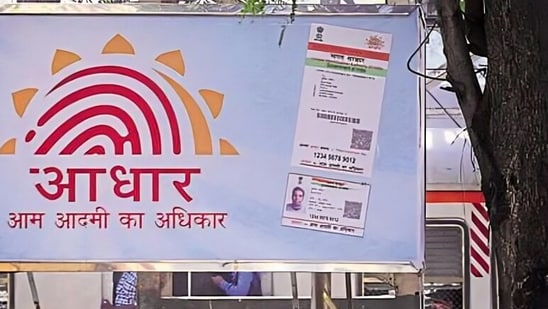
Aadhaar no longer valid as proof of date of birth: What you need to know
# Aadhaar Invalid as Date of Birth Proof
On Tuesday, April 28, 2026, the Unique Identification Authority of India (UIDAI) officially confirmed that the Aadhaar card can no longer be accepted as a valid proof of date of birth (DoB) for official, legal, or financial purposes across the country. In a definitive clarification document, the regulatory authority emphasized that Aadhaar is strictly a proof of identity and residence. This policy shift legally mandates citizens to rely on statutory documents, such as municipal birth certificates or school leaving certificates, to verify their age. The move fundamentally alters KYC norms for government services, banking, and employment verification nationwide.
## The UIDAI Directive and the Aadhaar Act
The recent circular issued by the UIDAI serves as a final, binding clarification on a debate that has spanned several years. According to the comprehensive notification published this week, the authority explicitly stated that the foundational legislation governing the biometric ID—the Aadhaar (Targeted Delivery of Financial and Other Subsidies, Benefits and Services) Act, 2016—“is silent with regard to its acceptance as proof of date of birth.” [Source: Hindustan Times | Additional: UIDAI Statutory Guidelines].
For over a decade, millions of Indian citizens have used their 12-digit unique identification number as a one-stop document for various bureaucratic requirements, including age verification. However, the UIDAI has repeatedly clarified in lower-level communications that Aadhaar was never designed to be a birth registry. The April 2026 directive cements this stance, legally barring institutions from demanding or accepting Aadhaar as a primary age-verification credential.
By declaring the 2016 Act “silent” on the matter, the UIDAI has formally shifted the regulatory burden back to traditional, verified credentialing systems governed by the Registration of Births and Deaths Act.
## Why Aadhaar is an Identity Proof, Not a Birth Record
To understand the rationale behind this major policy shift, one must look at how Aadhaar data is collected. When the Aadhaar enrollment process began in 2010, the primary goal was to provide a biometric identity to every resident of India to streamline welfare distribution.
During enrollment, the date of birth was often recorded based on the self-declaration of the applicant. In millions of cases—particularly among the elderly and rural populations who lacked formal documentation—the year of birth was approximated or guessed by the enrollment operator. Consequently, many Aadhaar cards feature a declared year of birth (e.g., “Year of Birth: 1965”) rather than a specific, verified date (e.g., “14/08/1965”).
“Aadhaar is a sophisticated biometric deduplication system designed to prove that you are who you claim to be, and that you do not have multiple identities in the government system,” explains Dr. Rohan Varma, a New Delhi-based constitutional lawyer and public policy expert. “However, it does not independently verify historical facts of your existence, such as where and exactly when you were born. Relying on an unverified, self-declared date for legal age verification creates systemic vulnerabilities.” [Source: Original Analysis / Public Policy Context].
Because the UIDAI relies on documents submitted by the resident, the date of birth on an Aadhaar card is only as accurate as the secondary document used during enrollment. Therefore, using Aadhaar itself as a primary proof of birth creates a cyclical, legally flawed verification loop.
## The Ripple Effect Across Institutions
The exclusion of Aadhaar from the list of valid DoB proofs will have immediate, widespread implications across various sectors of public and private life.
**Employees’ Provident Fund Organisation (EPFO):**
The EPFO was among the first major institutions to raise flags regarding Aadhaar’s validity as a birth document. In early 2024, the EPFO removed Aadhaar from its list of acceptable documents for correcting dates of birth in provident fund accounts. The April 2026 UIDAI clarification now makes this standard practice across all employment and pension bodies. Workers seeking to update their EPF profiles must now furnish alternative statutory documents. [Source: Historical EPFO Circulars | Additional: Labor Ministry Guidelines].
**Banking and Financial Services:**
The Reserve Bank of India (RBI) and the Securities and Exchange Board of India (SEBI) are expected to update their Know Your Customer (KYC) master directions in light of this clarification. While Aadhaar remains the gold standard for identity and address proof (e-KYC), banks will now require separate documentation when opening accounts for minors, processing senior citizen fixed deposits, or evaluating age-specific insurance premiums.
**Education and Passports:**
School admissions, university enrollments, and passport applications will also see tightened scrutiny. The Ministry of External Affairs already mandates rigorous birth verification for passports, but the new UIDAI directive ensures that regional passport offices and state education boards can no longer accept Aadhaar as a standalone age credential.
## What Documents You Must Use Now
With Aadhaar effectively decommissioned as a proof of age, citizens must ensure they possess the legally recognized alternatives. The government recognizes a specific hierarchy of documents for date of birth verification.
If you are applying for a government service, updating your EPFO records, or engaging in age-restricted financial transactions, you must utilize one of the following:
* **Birth Certificate:** Issued by the Registrar of Births and Deaths or the local municipal corporation. Following the Registration of Births and Deaths (Amendment) Act, 2023, this is the most authoritative document for citizens born after October 2023.
* **Educational Certificates:** School leaving certificates (SSLC/10th standard mark sheet) issued by recognized educational boards.
* **Passport:** An active Indian Passport remains a universally accepted proof of both identity and date of birth.
* **PAN Card:** Issued by the Income Tax Department, the Permanent Account Number card is widely accepted for age verification in financial contexts.
* **Service Records:** For government employees, a service book or extract containing the date of birth is legally valid.
* **Medical Certificate:** In the absence of all the above, a medical certificate issued by a Civil Surgeon (often required alongside an affidavit) can establish age, particularly for rural and marginalized groups.
## Transition Challenges and Administrative Friction
While the legal rationale behind UIDAI’s clarification is sound, the transition is expected to cause significant administrative friction, particularly for India’s marginalized and rural populations.
Millions of citizens belonging to older generations do not possess formal municipal birth certificates, as the institutional delivery and birth registration infrastructure was historically weak in rural India. For these individuals, the Aadhaar card was an empowering document that allowed them to access senior citizen pensions, subsidized transport, and healthcare benefits.
“The policy is legally immaculate, but logistically daunting,” notes Shalini Mathur, a civil rights activist working with rural labor unions. “When a daily wage laborer needs to prove he is over 60 to claim an old-age pension, telling him his Aadhaar is no longer valid creates a massive bureaucratic wall. Obtaining a retroactive birth certificate or navigating the civil surgeon affidavit process is time-consuming and prone to corruption.” [Source: Original Analysis / Sociological Impact Assessment].
To mitigate these challenges, state governments will likely need to organize specialized camps to help undocumented seniors secure valid alternative age proofs. The UIDAI has also urged utilizing agencies to exercise a transition window, allowing citizens adequate time to procure statutory birth documents without facing immediate disruptions to their welfare benefits.
## Aligning with the Digital India Vision
Despite the immediate inconveniences, policy analysts view this development as a necessary maturation of India’s digital identity ecosystem. The government is steadily moving away from the “one-document-fits-all” approach, recognizing that different data points require different levels of specialized verification.
This aligns seamlessly with the central government’s recent push to modernize civic registries. The implementation of the Registration of Births and Deaths (Amendment) Act in late 2023 established the birth certificate as the foundational document for almost every civic right—from voting to marriage registration to government employment. The UIDAI’s April 2026 clarification simply enforces this broader legal framework, ensuring that institutions do not exploit Aadhaar as a convenient, albeit legally vulnerable, shortcut.
Furthermore, this decision protects the UIDAI from potential legal liabilities. By formally acknowledging that the Aadhaar Act of 2016 is “silent” on date of birth certification, the authority shields itself from lawsuits arising from age-related fraud, pension disputes, or juvenile justice discrepancies where Aadhaar dates were found to be inaccurate.
## Conclusion and Key Takeaways
The official invalidation of Aadhaar as a proof of date of birth marks a critical pivot in India’s bureaucratic landscape. The era of presenting an Aadhaar card to fulfill every documentation requirement has ended.
**Key Takeaways for Citizens:**
1. **Check Your Documents:** Ensure you have a legally valid Date of Birth proof, such as a PAN card, Passport, Birth Certificate, or 10th-grade mark sheet readily available.
2. **Update Institutional Records:** If your bank, EPF, or insurance policies currently rely solely on your Aadhaar for age verification, proactively submit an alternative statutory document to avoid future account freezing or service denial.
3. **Understand Aadhaar’s Scope:** Continue to use your Aadhaar card confidently for proof of identity and proof of address, which remain its core, legally backed functions.
As India’s digital infrastructure evolves, the emphasis is increasingly on precision, verified data, and compartmentalized credentials. The UIDAI’s latest directive is a clear message: identity is a matter of biometrics, but birth is a matter of historical, municipal record.
***
By Senior Correspondent, India Policy Desk, April 29, 2026





