
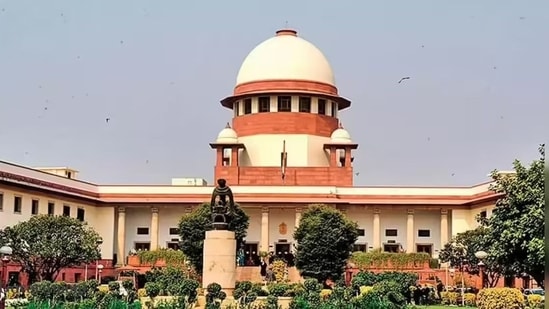
Petition filed in Supreme Court for ‘urgent' removal of IPS Ajay Pal Sharma from Bengal over ‘partisan conduct’
# SC Plea Over Bengal IPS Observer
**By Senior Correspondent, India Electoral Review** | April 29, 2026
**NEW DELHI** — Merely weeks ahead of the highly anticipated West Bengal state assembly elections, a high-stakes legal battle has erupted over electoral oversight. On April 29, 2026, a petition was filed in the Supreme Court of India demanding the immediate removal of Uttar Pradesh cadre IPS officer Ajay Pal Sharma from his Election Commission-appointed role as police observer for the sensitive South 24 Parganas district. The plea accuses the renowned “encounter specialist” of exhibiting partisan conduct, arguing that his deployment jeopardizes the neutrality of the electoral process in one of Bengal’s most politically volatile regions. [Source: Hindustan Times]
The urgent mentioning of this petition before the apex court highlights the intense administrative and political scrutiny surrounding the deployment of central observers in West Bengal. As the Election Commission of India (ECI) gears up to conduct massive polling exercises, the choice of a police officer with a controversial, tough-on-crime reputation has triggered a fierce debate over the balance between maintaining law and order and ensuring unbiased electoral oversight.
## The Controversy Surrounding IPS Ajay Pal Sharma
IPS Ajay Pal Sharma, a highly decorated officer from the Uttar Pradesh cadre, has built a formidable reputation as an “encounter specialist.” Over his career, he has been involved in numerous high-profile operations targeting organized crime syndicates and listed criminals in northern India. While his aggressive policing style has earned him accolades and rapid promotions within his home cadre, it has also attracted persistent scrutiny from human rights organizations and civil liberties advocates.
The Election Commission’s decision to deploy him as a Police Observer in West Bengal—a state currently governed by the Trinamool Congress (TMC), which sits in fierce opposition to the Bharatiya Janata Party (BJP) ruling Uttar Pradesh—has raised administrative eyebrows. Police Observers play a critical role during Indian elections; they are the eyes and ears of the ECI on the ground, tasked with monitoring the deployment of Central Armed Police Forces (CAPF), assessing the neutrality of local police, and ensuring that no voter intimidation occurs.
Critics argue that an officer celebrated for kinetic law enforcement in a BJP-ruled state may carry ideological or operational biases into an opposition-ruled state. The petitioners contend that Sharma’s past record and alleged proximity to specific political establishments in Uttar Pradesh render him unfit to serve as an impartial arbiter in a highly polarized electoral environment. [Source: Hindustan Times | Additional: Constitutional Law and Electoral Framework of India]
## The Legal Challenge in the Supreme Court
The petition filed before the Supreme Court invokes Article 32 of the Constitution, seeking the enforcement of fundamental rights under Article 14 (Right to Equality) and Article 21 (Right to Life and Liberty), arguing that free and fair elections are a basic structure of the Constitution. The petitioners have sought an “urgent” listing of the matter, citing the imminent polling schedule in South 24 Parganas.
**Key prayers in the petition include:**
* The immediate recall of IPS Ajay Pal Sharma from his role as Police Observer in West Bengal.
* A directive to the Election Commission of India to implement a more transparent screening process for appointing central observers.
* An interim stay on Sharma’s administrative orders pertaining to troop deployments in the South 24 Parganas district until the court reaches a final verdict.
The legal brief alleges “partisan conduct” and a “reasonable apprehension of bias.” The petitioners have cited past judicial precedents where the Supreme Court has intervened to ensure that officers deployed for election duty possess an unimpeachable record of political neutrality. They argue that the mere perception of bias, especially from a high-ranking police observer, is enough to intimidate local administrative machinery and deter free voting.
## South 24 Parganas: A High-Stakes Electoral Battleground
To understand the gravity of this petition, one must look at the geography and political history of South 24 Parganas. As one of West Bengal’s largest and most populous districts, it encompasses vast rural swathes, urban peripheries, and the difficult riverine terrain of the Sundarbans. Politically, the district has traditionally been an impregnable fortress for the ruling Trinamool Congress, accounting for a massive chunk of legislative assembly seats.
However, the district is equally notorious for a long history of electoral violence. During previous assembly and panchayat elections, South 24 Parganas witnessed severe clashes, allegations of widespread booth capturing, and the intimidation of opposition workers. The challenging topography makes rapid police response difficult, allowing local political strongmen to exert disproportionate influence over isolated polling booths.
The Election Commission frequently categorizes vast sections of this district as “highly sensitive,” necessitating heavy deployments of CAPF. In this tinderbox environment, the role of the Police Observer is paramount. The observer dictates which booths receive central security cover and oversees the route marches meant to instill confidence among vulnerable voters. For the opposition, a tough officer like Sharma is a necessary antidote to local muscle power. For the ruling establishment, his deployment is viewed as an overreach meant to demoralize the state police.
## The Election Commission’s Stance and Precedents
Under Article 324 of the Constitution, the Election Commission of India enjoys plenary powers of superintendence, direction, and control over elections. The ECI maintains a robust internal roster of IAS, IPS, and IRS officers from various state cadres to serve as General, Police, and Expenditure observers.
Historically, the ECI has defended its appointments by stating that officers are selected based on their seniority, operational experience, and ability to handle high-pressure situations. The Commission argues that deploying officers from outside the poll-bound state is a standard practice designed precisely to eliminate local biases. By bringing in a seasoned officer from Uttar Pradesh to West Bengal, the ECI aims to disrupt any existing nexus between the local political leadership and the state police force.
The Supreme Court has generally been reluctant to interfere with the Election Commission’s administrative decisions once the Model Code of Conduct (MCC) is in force, citing the constitutional mandate to ensure elections are completed on schedule. However, there have been rare instances where the ECI, either voluntarily or via judicial nudging, has replaced observers or returning officers to preserve the sanctity of the electoral process if concrete evidence of bias is presented.
## Expert Perspectives on Electoral Neutrality
Legal and electoral experts emphasize that the mere perception of prejudice can be detrimental to democratic exercises.
“The fundamental bedrock of our electoral system is not just that elections must be fair, but they must manifestly be seen to be fair by all participating stakeholders,” explains Dr. R.K. Vishwanathan, a former constitutional law professor and electoral reform advocate. “When you appoint an officer renowned for extra-judicial or aggressive policing methods from a politically antagonistic state cadre, you inevitably invite allegations of administrative weaponization.”
Conversely, former law enforcement officials argue that ‘tough’ districts require tough administrators. “South 24 Parganas has a documented history of poll violence that disenfranchises thousands,” notes retired IPS officer and security analyst Meera Sanyal. “An ‘encounter specialist’ tag is media nomenclature. In reality, Sharma is a senior officer equipped to handle severe law and order breakdowns. The ECI’s priority is securing the ballot, not appeasing political sensibilities.” [Source: Independent Expert Commentary]
## Political Repercussions in West Bengal
The petition has poured fresh fuel on the already blazing political discourse in West Bengal. Leaders of the ruling state government have consistently accused the central government of utilizing independent constitutional bodies, including the ECI and central investigative agencies, to tilt the electoral playing field. The deployment of Sharma is being cited by local leaders as an attempt to “intimidate the state bureaucracy” and micromanage the election through proxy.
On the other side of the aisle, opposition parties in Bengal have welcomed Sharma’s appointment, citing the necessity of impartial and unyielding security oversight. They argue that local police often act as an extension of the ruling party, turning a blind eye to intimidation tactics. From their perspective, the Supreme Court petition is a delay tactic engineered by local vested interests to remove an officer who threatens their monopoly on electoral malpractice.
## Implications for the 2026 Assembly Polls
The outcome of this Supreme Court petition will have far-reaching implications for the 2026 West Bengal Assembly Elections and beyond. If the apex court admits the plea and orders Sharma’s removal, it would set a massive legal precedent, potentially opening the floodgates for political parties to challenge ECI observer appointments nationwide based on an officer’s past track record or home cadre.
Furthermore, such a ruling could force the ECI to revise its internal Standard Operating Procedures (SOPs) for observer deployments, requiring a more stringent, perhaps bipartisan, vetting process.
However, if the Supreme Court dismisses the petition—aligning with its historical deference to the ECI during election periods—it will embolden the Commission’s authority to deploy any officer it deems fit to ensure peaceful polling. For South 24 Parganas, it would mean the continuation of a highly militarized and strictly monitored polling process under Sharma’s watchful eye.
## Conclusion: Balancing Security and Impartiality
The legal challenge against IPS Ajay Pal Sharma’s deployment encapsulates the inherent complexities of conducting elections in the world’s largest democracy. As West Bengal braces for a fiercely contested democratic exercise in 2026, the spotlight has shifted from the politicians to the administrators.
The Supreme Court’s impending decision will not only determine who oversees the security apparatus in South 24 Parganas but will also redefine the boundaries of executive discretion held by the Election Commission of India. Ultimately, the judiciary is tasked with walking a tightrope: ensuring that the iron hand required to curb electoral violence is firmly guided by the impartial spirit of the Constitution. As the dates draw closer, all eyes remain fixed on New Delhi for a ruling that will undoubtedly shape the ground realities of the Bengal elections.





