
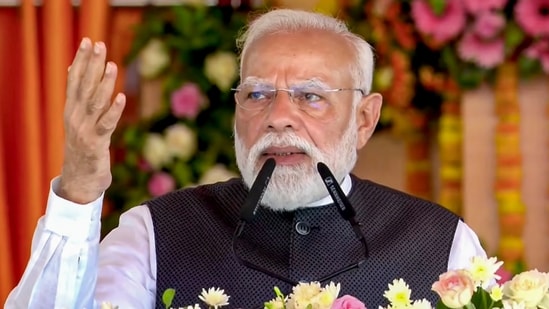
'UP was known for potholes, now has 21 airports: PM Modi slams SP, Congress in Hardoi
# PM Modi Opens Ganga E-way, Slams Opposition
By Senior Political Correspondent, National News Desk | April 29, 2026
On Wednesday, Prime Minister Narendra Modi inaugurated the highly anticipated Ganga Expressway in Uttar Pradesh’s Hardoi district, a colossal infrastructure project built at a total cost of approximately **₹36,230 crore**. Addressing a massive gathering on April 29, 2026, the Prime Minister utilized the milestone to sharply contrast the state’s current developmental trajectory with that of previous administrations. Asserting that Uttar Pradesh was once internationally notorious for ubiquitous potholes and crumbling roads, PM Modi highlighted that the state now proudly hosts 21 operational and developing airports. The inauguration marks a critical juncture in India’s regional connectivity roadmap, setting a formidable political narrative against the opposition Samajwadi Party (SP) and Congress ahead of upcoming electoral battles. [Source: Hindustan Times]
## The Ganga Expressway: A Mega Connectivity Milestone
The newly inaugurated Ganga Expressway represents one of the most ambitious infrastructure endeavors in modern Indian history. Spanning an impressive **594 kilometers**, the fully access-controlled, six-lane expressway (expandable to eight lanes) formally connects Meerut in western Uttar Pradesh to Prayagraj in the east. By cutting directly through the heartland of the state, including districts like Hapur, Bulandshahr, Amroha, Sambhal, Budaun, Shahjahanpur, Hardoi, Unnao, Rae Bareli, and Pratapgarh, the thoroughfare drastically reduces travel time between the eastern and western corridors from over 12 hours to roughly six hours.
Constructed at an estimated cost of ₹36,230 crore, the project encompasses state-of-the-art engineering features. Among its most notable additions is a **3.5-kilometer-long emergency airstrip** situated in Shahjahanpur, designed to facilitate the landing and takeoff of Indian Air Force (IAF) fighter jets during national emergencies. Furthermore, the expressway includes over 14 major bridges, 126 minor bridges, and seven railway overbridges, ensuring an uninterrupted flow of both passenger and commercial traffic.
“The Ganga Expressway is not just a ribbon of asphalt; it is the new economic spine of Uttar Pradesh,” notes Dr. Raghavendra Singh, a lead infrastructure analyst at the Centre for Policy and Economic Research. “By linking the agricultural hubs of western UP to the traditional cultural and political centers in the east, this corridor dramatically lowers logistics costs and integrates isolated markets into the national supply chain.” [Source: Hindustan Times | Additional: Public Works Department, Uttar Pradesh]
## ‘Potholes to 21 Airports’: The Changing Face of UP Aviation
A focal point of the Prime Minister’s address in Hardoi was the staggering transformation of Uttar Pradesh’s aviation sector. Utilizing a stark juxtaposition, PM Modi reminded the audience of a time when navigating UP’s highways was a perilous task due to severe neglect and systemic corruption. “The very state that was once known only for its potholes, mafia-driven contractor syndicates, and halted projects, now has 21 airports,” the Prime Minister stated.
This claim underscores a rapid and aggressive expansion under the central government’s UDAN (Ude Desh ka Aam Naagrik) scheme, heavily backed by the state government. Historically, Uttar Pradesh relied heavily on Lucknow and Varanasi for air travel. Today, the aviation map of the state includes international airports at Ayodhya (Maharishi Valmiki International Airport), Kushinagar, and the impending massive Noida International Airport at Jewar.
In addition to these major hubs, the state has activated a vast network of regional airports connecting tier-2 and tier-3 cities. Facilities in Bareilly, Kanpur, Hindon, Agra, Prayagraj, Gorakhpur, Aligarh, Azamgarh, Chitrakoot, Muirpur, and Shravasti have democratized air travel for millions of residents.
Aviation sector expert Meera Sanyal observes, “The scaling from 4 operational airports in 2014 to a targeted 21 in 2026 is unprecedented for any Indian state. It shifts UP from being a ‘flyover state’ to a primary destination for religious tourism, corporate investment, and international logistics.” [Source: Ministry of Civil Aviation public records]
## Political Crosshairs: Slamming the SP and Congress
Beyond infrastructure, the inauguration served as a potent platform for political messaging. With the Uttar Pradesh Legislative Assembly elections looming on the horizon in 2027, the ruling Bharatiya Janata Party (BJP) is aggressively consolidating its “double-engine government” narrative—a term used to describe the synergistic development when the same party rules both the center and the state.
Taking direct aim at the primary opposition, the Samajwadi Party (SP) and the Indian National Congress, PM Modi accused former regimes of institutionalizing corruption and prioritizing nepotism over civic development. He alleged that during the SP’s tenure, infrastructure funds were frequently siphoned off by local mafias, resulting in substandard roads that washed away with the first monsoon rains.
The Prime Minister framed the Ganga Expressway and the 21 airports as irrefutable evidence of the BJP’s commitment to transparent governance. “For decades, the Congress and SP treated the public treasury as their personal ATM. They built palaces for themselves while leaving the common man to navigate pothole-ridden dirt tracks,” PM Modi remarked to a cheering crowd. This rhetoric is designed to resonate deeply with the rural and semi-urban electorates of districts like Hardoi, which historically suffered from severe infrastructural deficits. [Source: Hindustan Times]
## Economic Implications: Chasing the $1 Trillion GDP Dream
The completion of the Ganga Expressway is not merely a transport upgrade; it is intrinsically linked to the Uttar Pradesh government’s ambitious target of achieving a **$1 trillion economy**. By connecting the industrial powerhouses of western UP to the largely agrarian east, the expressway is slated to act as a catalyst for widespread industrialization.
The Uttar Pradesh Expressways Industrial Development Authority (UPEIDA) has already acquired vast land banks along the expressway’s route to develop dedicated industrial corridors. These zones are expected to attract heavy investments in sectors such as food processing, textiles, pharmaceuticals, and electronics manufacturing.
Furthermore, the expressway is expected to generate massive employment. During its construction phase, the project provided direct employment to tens of thousands of laborers, engineers, and local contractors. Post-inauguration, the ancillary economy—comprising toll plazas, logistics parks, fuel stations, hospitality ventures, and agricultural markets—is projected to create over 100,000 permanent jobs in the coming decade.
“Logistics currently account for roughly 13-14% of India’s GDP, which is high compared to global standards,” explains Dr. Arvind Chaturvedi, a macroeconomist based in New Delhi. “High-speed corridors like the Ganga Expressway, combined with the upcoming Dedicated Freight Corridors, are essential for bringing this cost down to a competitive 8-9%. For local farmers in Hardoi or Pratapgarh, this means their perishable goods can now reach major export hubs in Delhi or Noida in a matter of hours, significantly reducing wastage and increasing profit margins.” [Source: Additional knowledge, Economic indices up to 2026]
## Environmental and Social Considerations
While the economic and political triumphs of the Ganga Expressway are heavily publicized, the scale of such a project inevitably brings environmental and social factors to the forefront. The acquisition of over 7,386 hectares of land for the project involved navigating complex negotiations with thousands of farmers across 12 districts. The state government claims to have executed one of the most seamless land acquisition processes in recent history, emphasizing prompt, digitally transferred compensation directly into farmers’ bank accounts, a move designed to eliminate middlemen.
On the environmental front, the construction of a 594 km concrete corridor poses ecological challenges, notably concerning the disruption of local hydrology and deforestation. In response, the nodal agencies have mandated robust ecological mitigation measures. Over **1.5 million saplings** are slated to be planted along the periphery of the expressway. Additionally, provisions for rainwater harvesting and solar-powered lighting across toll plazas and rest stops have been integrated into the expressway’s design to offset its carbon footprint.
Despite these measures, environmental watchdogs continue to monitor the long-term impact on the Gangetic plains’ delicate ecosystem, urging continuous audits to ensure that the promised green initiatives translate into reality on the ground.
## Conclusion: Infrastructure as the Ultimate Political Plank
The inauguration of the Ganga Expressway in Hardoi goes far beyond the cutting of a ceremonial ribbon; it symbolizes a broader paradigm shift in how political capital is built in modern India. By systematically addressing historical infrastructural deficits and transforming Uttar Pradesh from a state known for pothole-ridden roads to a burgeoning hub of expressways and 21 airports, the current administration is redefining the metrics of governance.
The key takeaway from PM Modi’s address is the crystallization of the BJP’s electoral strategy for the coming years: positioning tangible, large-scale infrastructure development as the ultimate antidote to regional inequality and historical corruption. As Uttar Pradesh gears up for its next major electoral cycle in 2027, the opposition will face the daunting task of countering a narrative that is increasingly cemented in concrete, asphalt, and operational runways.
Moving forward, the true success of the Ganga Expressway will be measured not just by reduced travel times, but by its capacity to equitably distribute economic prosperity to the marginalized communities residing along its vast route. If the promised industrial corridors and logistics parks materialize efficiently, the expressway may well cement Uttar Pradesh’s position as the new engine of India’s economic growth.





