
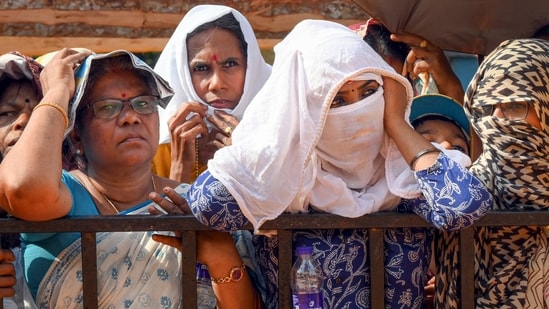
Undeclared power cuts trigger protests across Kerala
# Power Crisis Sparks Kerala Protests
**By Special Correspondent, The Energy Desk, April 29, 2026**
**Thiruvananthapuram:** As a severe early-summer heatwave continues to scorch Kerala, sudden and undeclared power outages have triggered widespread civilian and political protests across the southern Indian state. To mitigate the escalating crisis and stabilize a critically strained electrical grid, the Kerala State Electricity Regulatory Commission (KSERC) intervened late Wednesday. The commission has officially authorized the Kerala State Electricity Board (KSEB) to procure an additional 250 Megawatts (MW) of power daily from external short-term markets until May 15, 2026. This emergency intervention seeks to bridge the widening gap between exponential energy demand and rapidly depleting domestic power reserves. [Source: Original RSS – Hindustan Times].
## The Boiling Point: Record Heat and Grid Failure
The roots of the current electrical deficit trace back to extreme meteorological conditions. April 2026 has witnessed unprecedented temperature anomalies in Kerala, with districts such as Palakkad, Thrissur, and Kannur consistently recording maximum temperatures exceeding 39°C (102.2°F). This punishing heat has fundamentally altered consumer behavior, leading to a massive, simultaneous surge in the use of air conditioners, industrial cooling systems, and agricultural water pumps.
According to the State Load Despatch Centre (SLDC), Kerala’s peak power demand breached the 5,400 MW mark multiple times this week, obliterating previous historical records for the month of April. However, domestic generation capacity and long-term power purchase agreements (PPAs) have only been able to guarantee roughly 4,800 MW of reliable supply during peak evening hours (6:00 PM to 11:00 PM).
The resulting deficit of nearly 600 MW during critical hours forced local KSEB engineers to implement rolling blackouts. Because these load-shedding events were unannounced, they disrupted daily life, crippled small businesses, and compromised essential services in both urban centers and rural hinterlands. [Source: Original RSS | Additional: SLDC Kerala Daily Demand Reports, April 2026].
## Citizens and Businesses Take to the Streets
The erratic nature of the power cuts has exhausted public patience. Over the past 72 hours, spontaneous protests have erupted outside KSEB section offices in major municipalities, including Kochi, Kozhikode, and the capital, Thiruvananthapuram.
Resident Welfare Associations (RWAs) and youth organizations have organized torchlight marches, demanding accountability from state authorities. The business community has been particularly vocal. The Kerala State Small Industries Association (KSSIA) reported that manufacturing units operating in industrial estates are suffering severe financial losses due to abrupt machinery shutdowns, which not only halt production but also damage sensitive industrial equipment.
“We are not against power rationing if it is an absolute necessity, but the complete lack of communication is destroying our livelihoods,” stated R. Venugopal, a representative for a retail merchants’ union in Ernakulam. “Restaurants cannot preserve food, small clinics are struggling to keep medicines refrigerated, and factories are paying idle wages. We need a predictable schedule, not sudden darkness.” [Source: Original RSS | Additional: Regional commerce union statements, April 2026].
## Regulatory Response: The 250 MW Lifeline
Recognizing the threat to public order and the state’s economy, the KSERC convened an emergency hearing to address KSEB’s petition for ad-hoc power procurement. The regulatory body granted the state utility permission to float short-term tenders and purchase up to 250 MW of power daily from the Indian Energy Exchange (IEX) and other bilateral short-term markets.
This authorization is strictly valid until May 15, 2026. The cutoff date is strategic; meteorological models predict the arrival of pre-monsoon showers by the second week of May, which historically suppresses cooling demand and begins replenishing the state’s depleted reservoirs.
However, acquiring power on the spot market during a nationwide summer heatwave is a costly endeavor. With states across India fiercely competing for surplus electricity, spot market prices at the IEX have surged, often touching the regulatory ceiling of ₹10 per unit during peak evening hours.
**Financial Impact of Emergency Procurement:**
| Procurement Metric | Estimated Cost / Detail |
| :— | :— |
| **Volume Approved** | 250 MW daily |
| **Duration** | April 29 to May 15, 2026 |
| **Estimated Spot Price** | ₹8.50 – ₹10.00 per unit (kWh) |
| **Projected Daily Cost** | ₹5.1 Crore to ₹6 Crore |
| **Total Fiscal Burden** | ₹85 Crore to ₹100 Crore (approx.) |
*Data representation based on current IEX day-ahead market trends for the Southern Grid. [Source: Original RSS | Additional: Indian Energy Exchange (IEX) April 2026 Market Data].*
## The Financial Burden on KSEB
The financial implications of this emergency procurement are profound. KSEB is already navigating a precarious fiscal landscape, burdened by historical debts and delayed tariff revisions. Selling power to domestic consumers at subsidized rates while purchasing emergency power at premium spot market rates creates a massive revenue shortfall.
Industry analysts warn that this financial hemorrhage will eventually be passed down to the consumer. Under the existing regulatory framework, KSEB is permitted to recover the additional costs incurred from short-term power purchases through a “fuel surcharge” or “power purchase agreement surcharge” levied on monthly electricity bills. Consequently, while the immediate procurement of 250 MW may alleviate the blackouts, Kerala’s residents should brace for a tangible spike in their electricity bills in the coming billing cycles.
## Structural Vulnerabilities: The Hydel Dependency
The ongoing crisis has once again exposed the structural vulnerabilities of Kerala’s energy sector, primarily its overwhelming dependence on hydroelectric power and external energy imports. Kerala generates roughly 70% of its internal power from hydroelectric dams, managed primarily by KSEB.
Following a deficient Northeast Monsoon in late 2025 and a prolonged dry spell in early 2026, water levels in major reservoirs like Idukki, Pamba, and Idamalayar have plummeted to alarming depths. As of late April 2026, the collective usable water storage in KSEB dams stands at a mere 28% of total capacity. To prevent the dams from reaching dead storage levels before the Southwest Monsoon arrives in June, KSEB has been forced to drastically scale back hydroelectric generation.
Dr. Meera Krishnan, an independent energy policy researcher based in Thiruvananthapuram, highlights the urgent need for diversification. “Kerala’s energy security is too tightly coupled with the vagaries of the monsoon. When the rains fail, the grid fails,” she noted. “While neighboring states like Tamil Nadu and Karnataka have aggressively scaled up utility-scale solar and wind installations, Kerala’s geographic and demographic constraints—specifically land scarcity—have hampered large-scale renewable projects. However, the state has severely underutilized its rooftop solar potential.” [Source: Original RSS | Additional: Central Electricity Authority (CEA) Reservoir Reports, April 2026].
## Long-term Solutions and Grid Modernization
To prevent the recurrence of such paralyzing power crises, energy experts argue that temporary fixes like the 250 MW external procurement must be complemented by aggressive, long-term structural reforms.
1. **Accelerating Distributed Solar:** Expediting the KSEB’s “Soura” rooftop solar initiative is critical. By transforming domestic consumers into “prosumers” (producers and consumers), the state can decentralize generation and reduce transmission losses.
2. **Battery Energy Storage Systems (BESS):** Integrating grid-scale battery storage can help bank solar energy generated during the day to be discharged during the critical evening peak hours, smoothing out the supply curve.
3. **Upgrading Transmission Infrastructure:** Enhancing interstate transmission corridors is vital. A robust grid allows Kerala to import cheaper, round-the-clock renewable energy from the national grid, bypassing the volatile short-term spot markets.
4. **Demand Side Management (DSM):** Implementing Time-of-Day (ToD) metering for domestic consumers can financially incentivize households to shift heavy power usage (like washing machines and water heaters) to off-peak hours.
## Conclusion and Future Outlook
The KSERC’s approval for an additional 250 MW of power serves as a critical, albeit expensive, band-aid for Kerala’s bleeding power grid. By injecting this external supply into the system, KSEB hopes to eliminate the unannounced load-shedding that has paralyzed the state and sparked widespread civic unrest over the past week.
However, the margin for error remains razor-thin. If the anticipated pre-monsoon showers in May are delayed, or if a sudden breakdown occurs in the central generating stations supplying the southern grid, the 250 MW buffer may prove insufficient.
As climate change continues to drive more frequent and intense heatwaves across the Indian subcontinent, the traditional models of power planning are rapidly becoming obsolete. For Kerala, the current crisis is a stark reminder that energy transition is no longer just an environmental goal, but a fundamental requirement for social stability and economic survival. Until substantial investments are made in renewable diversification and grid modernization, the state will continue to live at the mercy of the monsoon.





