
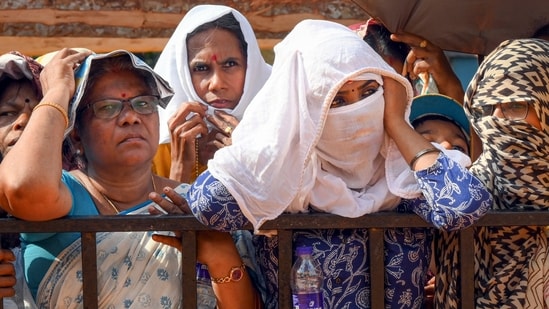
Undeclared power cuts trigger protests across Kerala
# Sudden Power Cuts Trigger Kerala Protests
**By Special Correspondent, India Power Daily, April 29, 2026**
**Thiruvananthapuram** — Sweeping, undeclared power outages across Kerala have ignited widespread public protests this week as the southern Indian state battles a severe, prolonged summer heatwave. In response to the escalating crisis and mounting public anger over disrupted livelihoods, the Kerala State Electricity Regulatory Commission (KSERC) intervened on Wednesday, granting the Kerala State Electricity Board (KSEB) emergency approval to procure 250 megawatts (MW) of additional power daily. This critical measure, mandated to remain in effect until May 15, 2026, aims to stabilize the grid and bridge the yawning gap between skyrocketing consumer demand and dwindling hydroelectric generation. [Source: Original RSS – Hindustan Times | Additional: KSERC Official Directives 2026].
The sudden power interruptions have severely impacted domestic life, industrial output, and the operations of essential services, prompting swift political and regulatory maneuvering to avert a total grid collapse.
## The Breaking Point: Heatwaves and Unprecedented Demand
The root of the current power crisis lies in an unusually harsh summer. Since early March 2026, Kerala has recorded temperatures consistently 2 to 3 degrees Celsius above the historical average, particularly in districts like Palakkad, Thrissur, and Kannur. This intense heat has fundamentally altered consumer behavior, triggering a massive surge in the utilization of air conditioners and cooling appliances.
Historically, Kerala’s peak power demand hovered around 4,300 MW to 4,500 MW during the summer months. However, late April 2026 has seen peak demand routinely shatter previous records, touching an unprecedented 5,400 MW during the evening hours (between 6:00 PM and 11:00 PM). The state’s internal generation capacity, heavily reliant on hydroelectricity, has proven utterly inadequate to absorb this localized shock.
“What we are witnessing is the collision of climate-induced heatwaves and structural grid vulnerabilities,” notes Dr. Ramesh Menon, an energy economist based in Kochi. “When night-time temperatures refuse to drop, the simultaneous switching on of millions of air-conditioning units creates a demand spike that the current infrastructure simply cannot support without aggressive load shedding.” [Source: Independent Energy Policy Analysis].
## Regulatory Intervention: Securing 250 MW
Faced with a rapidly deteriorating situation and growing unrest, KSEB petitioned the regulatory authorities for emergency relief. The Kerala State Electricity Regulatory Commission (KSERC) acted swiftly, explicitly allowing KSEB to secure 250 MW of additional power daily until May 15 to meet the growing demand. [Source: Original RSS – Hindustan Times].
This 250 MW buffer will primarily be sourced from the national power exchanges, including the Indian Energy Exchange (IEX), through Day-Ahead Market (DAM) and Real-Time Market (RTM) contracts. The regulatory approval is highly significant because purchasing power from the open market during peak summer commands a steep premium. Without explicit KSERC clearance, KSEB could not legally bypass existing power purchase caps, nor could it pass the financial burden onto consumers down the line.
According to internal KSEB documents, the procurement strategy will focus strictly on the evening peak hours, ensuring that the additional 250 MW flows into the state grid precisely when domestic load hits its maximum.
## Public Outcry Over Undeclared Outages
While regulatory fixes are in motion, the reality on the ground has been fraught with frustration. Over the past seventy-two hours, unannounced power cuts—sometimes lasting up to three hours at a stretch—have severely disrupted daily life. Unlike scheduled load shedding, where citizens and businesses can plan around anticipated outages, undeclared power cuts cause maximum economic and operational damage.
Protests have erupted outside multiple KSEB section offices across the state. In Kozhikode, youth groups staged a sit-in demonstration late Tuesday night, demanding transparency regarding the outage schedules. Meanwhile, in Ernakulam, the commercial hub of the state, small and medium business owners have voiced deep concerns over inventory losses and operational downtime.
Sajeev Kumar, a representative of the Kerala Vyapari Vyavasayi Ekopana Samithi (KVVES), highlighted the severe impact on local commerce. “Undeclared power cuts are a death knell for micro-enterprises. Bakeries, cold storages, and small-scale manufacturing units are suffering immense losses. If there is a power shortage, the government must declare a proper load-shedding schedule so we can manage our backup generators. Keeping us in the dark is unacceptable.” [Source: Local Merchant Association Statements, 2026].
## Hydroelectric Dependence and Reservoir Depletion
To understand why Kerala is uniquely vulnerable to summer power crises, one must examine the state’s energy generation profile. Kerala has historically prided itself on clean energy, with nearly 70% of its internal generation capacity coming from large hydroelectric projects, notably the Idukki and Sabarigiri dam systems.
However, this over-reliance on hydro power becomes the state’s Achilles’ heel during years of poor rainfall or extended pre-monsoon dry spells. As of late April 2026, the combined water levels in Kerala’s major reservoirs have plummeted below 32% of their total storage capacity.
**Current Power Scenario Breakdown (Estimated April 2026):**
| Generation/Source | Peak Capacity Contribution | Notes |
| :— | :— | :— |
| **Internal Hydroelectric** | ~1,600 MW | Heavily restricted to preserve water till June. |
| **Central Generating Stations (CGS)** | ~1,800 MW | Long-term allocation from national grid. |
| **Long-Term Private Contracts** | ~1,000 MW | Often subject to transmission corridor constraints. |
| **Renewable (Solar/Wind)** | ~300 MW | Drops to near zero during evening peak hours. |
| **Emergency Procurement (New)** | 250 MW | Approved by KSERC till May 15. |
*Data representation based on Kerala’s historical energy modeling.*
With the Southwest Monsoon not expected to hit the Malabar coast until the first week of June, KSEB must carefully ration the remaining water in the Idukki and Sabarigiri reservoirs. Operating these hydro plants at full capacity now could risk a total blackout in late May if pre-monsoon showers fail. Consequently, internal generation has been deliberately scaled back, directly leading to the current supply shortfall. [Source: Central Water Commission Reservoir Data | Additional Public Knowledge].
## Financial Implications for KSEB
The authorization to purchase 250 MW of short-term power is a critical lifeline for the public, but it represents a massive financial hemorrhage for the Kerala State Electricity Board. During the summer, the entire country experiences high energy demand, driving up spot prices on power exchanges.
While KSEB sells electricity to domestic consumers at heavily subsidized, tiered rates averaging ₹4 to ₹6 per unit, the cost of emergency power procured from the open market can easily range from ₹8 to ₹12 per unit, depending on the time block. This disparity results in a negative financial spread, exacerbating the utility’s already strained balance sheet.
Experts estimate that procuring an additional 250 MW daily until May 15 could cost KSEB hundreds of crores of rupees in unbudgeted expenditure. Eventually, this financial burden will likely be passed down to the consumer through a “fuel surcharge” or tariff revision later in the fiscal year. The regulatory commission’s approval, therefore, is not merely operational but carries deep economic implications for the state’s taxpayers.
## Long-Term Solutions: The Renewable Shift and Grid Modernization
The ongoing protests and the resulting emergency power procurements have reignited debates over Kerala’s long-term energy security. While the state cannot build new large-scale hydroelectric dams due to ecological constraints and Western Ghats conservation laws, the diversification of its energy portfolio is moving at a slower pace than required.
The government’s ambitious *Soura* rooftop solar program has added vital daytime capacity, but solar power inherently fails to address Kerala’s unique problem: the evening peak. Without large-scale Battery Energy Storage Systems (BESS) or Pumped Storage Hydroelectric (PSH) projects, solar energy generated at noon cannot keep air conditioners running at 9:00 PM.
Energy analysts argue that KSEB must urgently pivot toward modern grid management. “Kerala needs rapid investment in grid-scale battery storage and aggressive implementation of smart metering with Time-of-Day (ToD) tariffs,” suggests Dr. Menon. “If consumers are charged a premium for electricity used during the evening peak, and given discounts for daytime usage when solar power is abundant, the demand curve can be flattened. Until consumer behavior is financially incentivized to change, these summer crises will remain an annual feature.” [Source: Independent Energy Policy Analysis].
Furthermore, strengthening the inter-state transmission corridors is essential. Even when KSEB secures power from the national exchange, physical constraints on the transmission lines connecting Kerala to the rest of the southern grid can limit how much power can actually be imported during peak moments.
## Conclusion: A Waiting Game Till the Monsoons
The KSERC’s approval for the daily procurement of 250 MW of additional power until May 15 acts as an immediate, vital tourniquet on a bleeding grid. By ensuring this buffer is in place, KSEB hopes to eliminate the need for undeclared power cuts, thereby quelling the widespread protests that have disrupted the state. [Source: Original RSS – Hindustan Times].
However, the coming weeks will remain a tightrope walk for the energy sector. Should temperatures climb further, or should there be unexpected outages at central generating stations, the 250 MW buffer may quickly prove insufficient. For the millions of residents and small business owners enduring the sweltering heat in Kerala, relief relies entirely on two factors: the seamless delivery of this newly procured market power, and the eventual, desperately awaited arrival of the pre-monsoon showers.
Until the skies finally open over the Western Ghats to replenish the depleted reservoirs, Kerala’s power stability will remain fragile, heavily dependent on expensive open-market purchases and the endurance of its aging grid infrastructure.





