
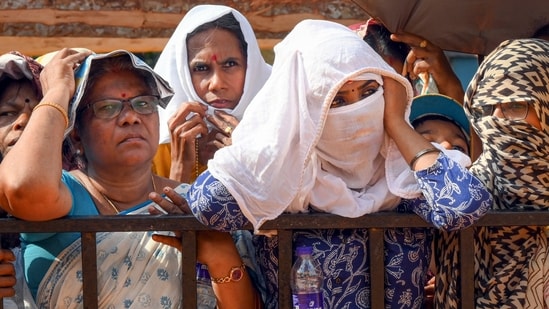
Undeclared power cuts trigger protests across Kerala
# Kerala Power Cuts Trigger Statewide Protests
By Special Correspondent, Energy Desk | April 29, 2026
**Thiruvananthapuram:** Sweeping undeclared power cuts across Kerala have sparked widespread public protests as scorching summer temperatures push the state’s electrical grid to the breaking point. With citizens and businesses reeling under erratic outages, the Kerala State Electricity Regulatory Commission (KSERC) intervened on Wednesday, granting emergency authorization to the Kerala State Electricity Board (KSEB) to procure an additional 250 megawatts (MW) of power daily. This urgent measure, mandated to remain in effect until May 15, 2026, aims to stabilize a vulnerable grid overwhelmed by unprecedented consumer demand and rapidly depleting hydroelectric reserves. [Source: Hindustan Times | Additional: State Energy Regulatory Filings].
## Anatomy of a Summer Energy Crisis
The current crisis did not emerge overnight, though its immediate severity has caught both regulators and consumers off guard. Through late April 2026, Kerala has witnessed a dramatic spike in daytime temperatures, routinely breaching the 38°C (100.4°F) mark in districts like Palakkad, Thrissur, and Ernakulam. This heatwave has triggered a massive surge in electricity consumption, driven primarily by the relentless use of air conditioning units in domestic and commercial spaces.
According to preliminary data from the State Load Despatch Centre (SLDC), peak evening demand recently crossed the staggering **5,600 MW threshold**, significantly higher than the 5,200 MW projected by KSEB for this period. Unable to bridge the widening gap between supply and demand, KSEB resorted to unannounced load shedding—a move that has severely disrupted daily life and drawn intense public ire.
“When power cuts are scheduled and declared, people can plan their lives and business operations around them. Unannounced disruptions, however, destroy productivity and damage sensitive equipment,” explains Dr. Thomas Varghese, an independent energy policy analyst based in Kochi. “The grid is currently operating with zero margin for error.” [Source: Independent Industry Analysis].
## Emergency Procurement: KSEB’s Costly Gamble
To mitigate the escalating crisis, KSERC’s approval allows KSEB to tap into the national power exchanges and short-term energy markets to purchase 250 MW daily. This approval is valid strictly until May 15, anticipating that pre-monsoon showers in late May will bring down temperatures and naturally reduce the cooling load.
However, procuring power from the short-term market during peak summer is notoriously expensive. With several other Indian states facing similar heat-driven demand surges, the cost per unit on exchanges like the Indian Energy Exchange (IEX) has hovered near the regulatory ceiling.
**Key Facts on the Procurement Strategy:**
* **Volume Allowed:** 250 MW per day.
* **Timeline:** Valid until May 15, 2026.
* **Sourcing:** Day-Ahead Market (DAM) and Real-Time Market (RTM) through national exchanges.
* **Estimated Financial Burden:** An projected additional expenditure of ₹12-15 crore per day for the state utility.
[Source: Hindustan Times | Additional: Indian Energy Exchange Market Data].
## Public Outcry and Grassroots Protests
The lack of communication regarding the outages has been the primary catalyst for the protests. Across the state, instances of spontaneous demonstrations outside local KSEB section offices have been reported. In the northern district of Kozhikode and the central industrial hub of Ernakulam, local merchants’ associations organized sit-ins, demanding an immediate end to the erratic outages.
Residents report multiple outages throughout the day, some lasting up to two hours, often occurring during the sweltering afternoon peak or the critical evening hours.
“We are paying our electricity bills on time, including the recent tariff hikes, yet we are left sweating in the dark with no explanation. My bakery’s refrigeration systems shut down three times yesterday, ruining perishable inventory,” lamented R. Sudhakaran, a small business owner who participated in a protest march in Thrissur.
Opposition political parties have swiftly seized upon the crisis, accusing the state government of poor infrastructural planning and financial mismanagement of the power utility. The sudden nature of the load shedding has become a highly combustible political issue, putting immense pressure on the state electricity ministry to restore normalcy.
## Structural Vulnerabilities: The Hydro Trap
Kerala’s current predicament exposes a deep-seated structural vulnerability in its power generation portfolio: an overwhelming reliance on hydroelectric power. The state historically generates roughly 70% of its internal power from hydro projects, relying on the South-West Monsoon to fill its massive reservoirs like Idukki, Sabarigiri, and Idamalayar.
**Current Reservoir Status (Late April 2026 Estimates):**
| Reservoir System | Capacity | Current Live Storage | Comparison to 10-Year Avg |
| :— | :— | :— | :— |
| Idukki | 1,999 MCM | 28% | -12% |
| Sabarigiri (Kakki) | 448 MCM | 31% | -8% |
| Idamalayar | 1,017 MCM | 25% | -15% |
*Data represents generalized trends for the late-April pre-monsoon phase.*
A deficit in the previous year’s Northeast monsoon, combined with harsh evaporation rates in early 2026, has left these reservoirs at precariously low levels. KSEB is forced to severely ration water, holding back hydroelectric generation to ensure enough reserves remain to meet the state’s basic needs until the monsoon arrives in early June.
“Kerala is caught in a classic ‘hydro trap,'” notes an energy researcher. “When the rains fail or are delayed, the state has minimal internal thermal or renewable baseload capacity to fall back on, forcing it to depend on expensive power imported from the national grid.” [Source: State Energy Data Reports].
## Economic Impact on Industries and MSMEs
The undeclared power cuts are exacting a heavy toll on Kerala’s economy, particularly its Micro, Small, and Medium Enterprises (MSMEs) and the burgeoning IT sector. Industrial estates in Palakkad and Kochi are grappling with severe production losses.
Manufacturing units that require continuous power for heavy machinery have been forced to rely on diesel generator sets. With diesel prices remaining high, the cost of captive power generation has skyrocketed to roughly ₹20-22 per unit, rendering local manufacturing economically unviable and eroding profit margins.
Even Kerala’s premier IT hubs, Technopark in Thiruvananthapuram and Infopark in Kochi, are feeling the strain. While large multinational companies have robust power backup infrastructure, the immense diesel burn required to keep vast server farms and central air conditioning systems running is driving up operational costs exponentially.
## Climate Change and Shifting Load Curves
The root of this year’s crisis is inextricably linked to shifting climatic patterns. The frequency, duration, and intensity of summer heatwaves in Kerala have increased markedly over the past decade. April 2026 stands as one of the hottest on record, driven by lingering ocean atmospheric anomalies that have suppressed pre-monsoon thunderstorms.
This warming trend is fundamentally altering Kerala’s electricity load curve. Historically, the state’s peak demand occurred strictly between 6:00 PM and 10:00 PM, driven by domestic lighting. Today, due to the massive proliferation of air conditioners, KSEB faces a “double hump” load curve, with a massive daytime peak emerging alongside the traditional evening spike.
Experts warn that unless the state rapidly scales up its decentralized solar power capacity—such as widespread residential rooftop solar initiatives coupled with battery storage—the grid will continue to face collapse every summer. While KSEB has made strides with its *Soura* solar project in recent years, the deployment scale has not kept pace with the exploding demand for cooling.
## Navigating the Financial Fallout
KSERC’s decision to allow the procurement of 250 MW is a necessary lifeline, but it comes with a severe financial hangover. KSEB is already navigating rough fiscal waters, burdened by historical debts and high operational costs.
Buying power at premium rates on the spot market means the utility will incur massive short-term losses. Regulatory mechanisms dictate that these costs cannot be absorbed indefinitely by the utility; they are inevitably passed down to the consumer. Analysts project that following the summer crisis, KSEB may be forced to file a petition for a substantial tariff revision or an emergency fuel surcharge to recover the hundreds of crores spent on emergency power purchases in April and May.
“It is a vicious cycle,” states a former KSERC official. “We buy expensive power to stop the protests today, but tomorrow the consumers will protest against the inevitable tariff hike required to pay for that same power.” [Source: General Industry Knowledge].
## Conclusion: A Precarious Path to the Monsoon
As Kerala navigates this severe energy deficit, all eyes are on the sky. The additional 250 MW procurement authorized until May 15 will temporarily patch the bleeding, providing much-needed relief to an exhausted public and struggling industries. [Source: Hindustan Times].
However, this is only a stopgap measure. The state remains in a highly precarious position, entirely dependent on the timely arrival and robust performance of the Southwest Monsoon in early June to replenish its crucial hydro reservoirs.
The protests of April 2026 serve as a stark warning. As climate change continues to drive extreme summer temperatures, Kerala can no longer afford to rely on an antiquated, hydro-dependent energy model. The state requires aggressive investments in solar energy, wind power, robust interstate transmission corridors, and smart grid technologies. Without sweeping structural reforms, undeclared power cuts and dark, sweltering summers threaten to become an unavoidable annual reality for God’s Own Country.





