
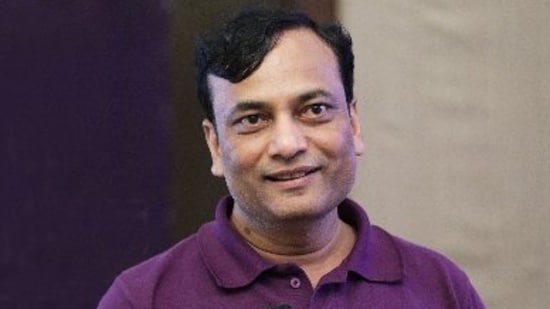
Axis My India won't release exit poll results for West Bengal elections, says Pradeep Gupta
# Axis My India Halts Bengal Exit Polls
**By Siddharth Rao, Election Desk | April 30, 2026**
In an unprecedented development in Indian psephology, leading polling agency Axis My India has officially announced it will not release exit poll results for the highly contested 2026 West Bengal Legislative Assembly elections. Speaking on Thursday, Axis My India founder and managing director Pradeep Gupta stated that field investigators were unable to gather statistically reliable data due to a severe lack of responsiveness from voters across the state. This abrupt withdrawal by India’s most prominent election forecasting agency highlights the extreme polarization, complex socio-political dynamics, and potential undercurrents of apprehension gripping the electorate in a fiercely fought battle between the ruling Trinamool Congress (TMC) and the opposition Bharatiya Janata Party (BJP). [Source: Hindustan Times | Additional: Election Commission of India Public Records].
## The Unprecedented Move by Axis My India
Axis My India has built a formidable reputation over the last decade for its highly accurate exit polls and post-poll surveys, often predicting complex multipolar electoral contests with pinpoint precision. However, the 2026 West Bengal elections have proven to be an insurmountable challenge for the agency’s statistical models.
According to the official statement given by Pradeep Gupta on April 30, field agents deployed across the state’s 294 constituencies reported that voters were actively refusing to participate in the surveys. “The core of our methodology relies on the authentic and fearless expression of the voter as they exit the polling booth. In West Bengal, our teams are observing a widespread phenomenon where voters are either completely silent or visibly hesitant to disclose their electoral choices,” Gupta noted. [Source: Hindustan Times].
When a significant portion of a randomized sample refuses to answer—or deliberately provides misleading answers—the margin of error expands exponentially. Psephologists refer to this as “non-response bias.” If a polling agency attempts to process this flawed data, the resulting projections are often wildly inaccurate. Axis My India’s decision to prioritize their institutional credibility over media visibility by scrapping the poll entirely speaks volumes about the opaque nature of the current ground reality in West Bengal.
## The “Silent Voter” Phenomenon and Ground Realities
The refusal of West Bengal’s electorate to engage with pollsters is not occurring in a vacuum. It is deeply tied to the state’s historical and contemporary political culture, which is heavily reliant on grassroots cadre mobilization and, unfortunately, a well-documented history of political violence.
“West Bengal operates on an intensely hyper-local political surveillance system. In many villages and urban wards, local party workers know precisely who is voting for whom,” explains Dr. Ananya Sen, a political scientist at the Centre for Electoral Studies in Kolkata. “When an external surveyor asks a voter to reveal their choice, the immediate psychological response is self-preservation. Voters fear that pollsters might inadvertently leak data to local political enforcers, leading to post-poll retribution.” [Additional: Expert Analysis on Bengal Political Culture].
The 2026 assembly elections have seen an escalation in this polarization. With the TMC fighting anti-incumbency and the BJP making aggressive organizational pushes, the stakes have never been higher. The Left-Congress alliance has also attempted to reclaim its lost bastions, turning several districts into tense, triangular contests. In such an environment, the “silent voter” becomes the most crucial demographic. These voters quietly cast their ballots without participating in rallies, wearing party colors, or speaking to the media.
## Implications for the 2026 Assembly Elections
The absence of a reliable exit poll from a heavyweight agency like Axis My India has profound implications for the narrative leading up to counting day. Exit polls, while not always perfect, serve as a pressure valve for political anxiety. They provide a general direction of the wind, allowing political parties to manage expectations and strategize for government formation.
Without this data, both the ruling administration and the opposition are flying blind.
**Key Political Ramifications:**
* **Anxiety in Party Headquarters:** Without clear data, internal party feedback mechanisms become the sole source of intelligence, which are notoriously prone to confirmation bias.
* **Media Speculation:** The void left by Axis My India will likely be filled by less rigorous, localized polls, potentially leading to widespread misinformation or sensationalized predictions on regional news channels.
* **Administrative Alertness:** The Election Commission of India (ECI) and central security forces must remain on high alert. The inability to predict a clear winner often heightens the risk of clashes during and immediately after the counting process.
### Polling Dynamics: 2021 vs. 2026 Comparison
| Metric | 2021 Assembly Elections | 2026 Assembly Elections |
| :— | :— | :— |
| **Voter Engagement with Pollsters** | Moderate to High | Extremely Low / Silent |
| **Primary Campaign Themes** | Welfare vs. Hindutva | Anti-incumbency vs. Regional Pride |
| **Polling Agency Confidence** | High (Multiple accurate predictions) | Low (Axis My India pulls out) |
| **Key Battleground Demographics** | Women voters (Silent Majority) | Youth and Rural workers |
## The Methodological Crisis in Modern Psephology
Axis My India’s withdrawal from West Bengal sheds light on a broader crisis within modern psephology: the increasing difficulty of conducting on-the-ground surveys in highly volatile regions. Traditionally, pollsters rely on randomized, stratified sampling, taking into account caste, religion, gender, and economic status to build a representative model of the electorate.
However, survey methodology assumes a fundamental baseline of democratic safety—that a citizen feels secure enough to express a political preference to an anonymous surveyor.
Ravi Krishnan, an independent data analyst based in New Delhi, points out the logistical nightmare this poses. “Agencies use tablets and GPS-tracked applications to ensure their field workers are actually visiting the assigned polling booths. But what happens when the surveyor arrives and is chased away by local goons, or when 8 out of 10 voters simply walk past the surveyor with their heads down? You cannot mathematically correct for a state of fear.” [Additional: Public Polling Methodologies].
To compensate for physical surveying difficulties, some agencies shift to Computer-Assisted Telephone Interviewing (CATI). Yet, telephonic surveys in rural West Bengal often skew heavily toward upper-income, male demographics, missing the crucial female and marginalized voters who historically decide the fate of the state. Axis My India, known for its rigorous face-to-face ground methodology, likely determined that neither approach could yield defensible data.
## Historical Precedents: When Silence Speaks Volumes
The current situation in West Bengal evokes memories of other historic elections where the silence of the voter masked massive, structural shifts in political power.
In the 2007 Uttar Pradesh Assembly elections, Mayawati’s Bahujan Samaj Party (BSP) swept to absolute majority in a result that completely blindsided most pollsters. The Dalit and marginalized voters had remained notoriously silent during surveys, fearing intimidation from dominant castes. Similarly, in the 2021 West Bengal elections, while some pollsters accurately predicted a TMC win, almost none anticipated the massive mandate Mamata Banerjee received, largely driven by the silent consolidation of female voters rallying behind her welfare schemes.
The silence in 2026 could represent an undercurrent working against the incumbent, a unified consolidation against the opposition, or widespread disillusionment with all political alternatives. The inability to distinguish between fear, apathy, and strategic silence is precisely why Axis My India chose to step back.
## Election Commission’s Stance on Voter Safety
The withdrawal of exit polls due to voter non-responsiveness indirectly casts a spotlight on the Election Commission of India (ECI). Despite the ECI’s deployment of hundreds of companies of Central Armed Police Forces (CAPF) to ensure free and fair elections, the psychological barrier for voters clearly remains intact.
While the physical act of casting a ballot may be secure inside the booth, the socio-political environment outside the booth remains charged. The ECI has repeatedly issued notices to state authorities and political parties to curb inflammatory speech and localized intimidation tactics. Yet, as Pradeep Gupta’s announcement underlines, enforcing physical security does not automatically translate to psychological security for the voter.
## Looking Ahead: The Final Countdown
As West Bengal awaits counting day, the decision by Axis My India to withhold its exit poll data ensures that the suspense will endure until the electronic voting machines (EVMs) are finally opened.
For the journalism and psephology industries, April 30, 2026, will be remembered as a watershed moment—a day when the data scientists admitted that human emotion, specifically fear and caution, cannot always be quantified into a pie chart.
Ultimately, the true voice of the West Bengal electorate will only be revealed through the official ballot count. Until then, political analysts, media houses, and the parties themselves must navigate a rare silence in what is usually India’s loudest democratic festival. The voters of West Bengal have chosen to keep their counsel, proving once again that in a democracy, the ballot box remains the ultimate, untampered vault of the public’s will.





