
'No one is answering': SpiceJet cancellations at Mumbai airport leave passengers stranded for hours
# SpiceJet Chaos: Mumbai Flyers Stranded
By Special Correspondent, India News Desk, April 30, 2026
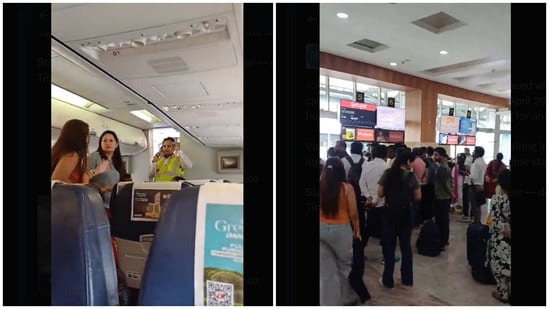
Mumbai (April 30, 2026) — Hundreds of passengers were left completely stranded at **Chhatrapati Shivaji Maharaj International Airport (BOM)** in Mumbai on Thursday morning following a sudden spate of unannounced SpiceJet flight cancellations. Visuals from the departure terminals showed exhausted travelers, including elderly individuals and young children, waiting in massive queues alongside their luggage, desperately trying to get answers from airline staff. With ground personnel reportedly unavailable or unable to provide clarity, the situation quickly devolved into a chaotic standoff. The sudden disruption raises fresh questions about the struggling low-cost carrier’s operational stability and its adherence to passenger rights protocols amidst increasing regulatory scrutiny [Source: Hindustan Times].
## Visuals of Turmoil at Terminal 2
The incident came to light early Thursday when frustrated passengers began uploading videos to social media platforms. The viral footage depicted chaotic scenes at **Terminal 2**, highlighting long, unmoving queues stretching far past the designated check-in counters. Luggage carts were piled high, and many passengers could be seen sitting on the terminal floor, visibly exhausted after hours of waiting.
“No one is answering us. The counters are practically empty, and the few staff members present are entirely clueless about when or if our flights will take off,” a passenger can be heard shouting in one of the widely circulated videos.
According to initial reports, at least **six domestic departures** and **two international connections** operated by SpiceJet were either abruptly canceled or delayed indefinitely without prior intimation via SMS or email. Families traveling for the summer holiday rush found themselves bearing the brunt of the mismanagement. Reports from the ground indicated that essential amenities, such as water and basic refreshments—which airlines are mandated to provide during extended delays—were not distributed in a timely manner.
## Breakdown of Communication
The core of the passenger grievance on Thursday was not just the cancellations, but the absolute breakdown in communication. In the aviation industry, operational hurdles such as technical snags, crew shortages, or air traffic congestion are expected variables. However, the inability to communicate these issues to paying customers often triggers intense passenger blowback.
Dr. Arvind Mehta, an independent aviation analyst based in New Delhi, noted the severity of the operational lapse. “When an airline fails to provide a frontline response, it signals a deeper systemic breakdown. The ground staff are often left in the dark by the central operations control. If the staff at the counters don’t know the status of the aircraft, they tend to avoid agitated crowds, leading to the exact scenario we saw in Mumbai today,” Dr. Mehta explained.
Security personnel from the **Central Industrial Security Force (CISF)** eventually had to intervene to maintain order as tempers flared near the airline’s ticketing desks. Passengers demanded immediate refunds or accommodations on alternative flights, a request that ground staff appeared unequipped to authorize on the spot [Source: Hindustan Times | Additional: Public Aviation Forums].
## Regulatory Framework and Passenger Rights
The events at Mumbai airport immediately drew the attention of consumer rights advocates, who pointed to the strict guidelines laid down by the **Directorate General of Civil Aviation (DGCA)**. Under the prevailing **Civil Aviation Requirements (CAR)**, Indian airlines are legally obligated to facilitate passengers in the event of denied boarding, flight cancellations, and severe delays.
When a flight is canceled, the airline must offer either a full refund or an alternative flight that is acceptable to the passenger. Furthermore, if the cancellation is not communicated at least **24 hours in advance**, the airline is liable to provide compensation alongside the refund.
**Key DGCA Mandates for Flight Cancellations:**
* **Notification:** Passengers must be informed of cancellations via the contact details provided at the time of booking.
* **Compensation:** If the passenger is not informed at least 12 hours before departure, the airline must provide compensation ranging from **₹5,000 to ₹10,000** (depending on the flight duration), plus the ticket refund.
* **Care and Comfort:** For delays extending beyond two hours, airlines must provide free meals and refreshments.
* **Accommodation:** If a delay pushes a flight to the next day, hotel accommodation and airport transfers must be provided free of charge.
Despite these clear regulations, passengers stranded on Thursday alleged that SpiceJet failed on all fronts—offering neither alternative travel arrangements nor immediate compensatory relief. The DGCA is expected to issue a show-cause notice to the airline’s management seeking a detailed report on the disruption.
## SpiceJet’s Systemic Financial Context
To understand the chaos at Mumbai airport, one must look at the broader macroeconomic and operational struggles that SpiceJet has endured over the past several years. Once the second-largest low-cost carrier in India, the airline has spent the better part of the post-pandemic era battling severe financial turbulence.
Since 2023, the airline has faced multiple insolvency petitions filed by aircraft lessors over unpaid dues at the **National Company Law Tribunal (NCLT)**. While the airline’s promoter, Ajay Singh, managed to infuse capital and the company successfully raised substantial funds through equity shares to clear immediate debts in 2024 and 2025, cash flow issues appear to persist.
These financial constraints invariably bleed into operations. A significant portion of SpiceJet’s fleet has historically been grounded due to an inability to procure spare parts or settle maintenance contracts. When an airline operates with a highly constrained and tightly scheduled fleet, a single technical snag or crew shortage can create a cascading domino effect, disrupting the entire day’s network.
“SpiceJet has been in a perpetual state of financial restructuring,” notes financial aviation consultant Priya Raman. “While they have miraculously survived scenarios that bankrupted peers like Go First, operating on razor-thin margins with limited backup aircraft means that any localized disruption—like an issue in Mumbai—instantly becomes a network-wide crisis.”
## Ripple Effects Across the Aviation Network
The disruption at a major hub like Mumbai has extensive ripple effects. As the second-busiest airport in the country, Chhatrapati Shivaji Maharaj International Airport operates at near maximum capacity, handling hundreds of daily flight movements.
When an airline suffers a sudden operational collapse at such a congested airport, it does not merely affect the stranded passengers. It occupies valuable terminal real estate, strains airport security, and can delay the turnaround times of other airlines sharing the same infrastructure. On Thursday, the spillover effect was palpable, with airport authorities working overtime to manage the physical crowd flow to ensure that passengers of other airlines could access security checkpoints without hindrance.
Furthermore, flight cancellations of this magnitude put intense pressure on last-minute airfares. Stranded passengers desperate to reach their destinations are forced to book tickets on rival carriers like IndiGo, Air India, or Akasa Air. Due to dynamic pricing algorithms, a sudden surge in demand invariably causes spot fares on these routes to skyrocket, further aggravating the financial burden on the consumer.
## The Future Outlook for Indian Aviation
The situation unfolding in Mumbai serves as a stark reminder of the fragile balance within India’s rapidly growing aviation sector. On a macro level, India remains one of the fastest-growing aviation markets in the world, characterized by record-breaking aircraft orders by giants like Air India and IndiGo. However, the market is simultaneously plagued by massive supply chain issues, global engine shortages, and intense domestic competition that keeps yields aggressively low.
For airlines like SpiceJet, the margin for error is virtually non-existent. To regain consumer trust, the carrier must address its core operational vulnerabilities. Industry watchers suggest that without stabilizing its active fleet size and maintaining adequate standby crews and aircraft, these sudden, unannounced cancellations will remain an ongoing threat to their brand reputation.
As Thursday’s events demonstrated, the modern Indian flyer is highly informed and quick to hold corporations accountable through digital media. The viral videos of unstaffed counters and distressed families do lasting damage to an airline’s public perception—damage that cannot be easily repaired by subsequent marketing campaigns or discounted fare sales.
## Conclusion and Key Takeaways
The massive flight cancellations and subsequent passenger stranding by SpiceJet at Mumbai airport highlight an urgent need for stricter regulatory enforcement regarding passenger rights. As travelers faced hours of uncertainty, the lack of effective ground-level communication exacerbated an already stressful situation.
**Key Takeaways:**
* **Immediate Disruption:** Dozens of flights were affected at Mumbai’s T2, leading to severe overcrowding and passenger distress.
* **Communication Failure:** The primary grievance was the absence of airline staff to provide updates, alternative flights, or basic amenities.
* **Regulatory Scrutiny:** The DGCA is closely monitoring the situation, and SpiceJet may face financial penalties if found in violation of the CAR guidelines regarding passenger compensation.
* **Systemic Roots:** The chaos is symptomatic of SpiceJet’s ongoing financial and operational vulnerabilities, driven by fleet shortages and tight cash flows.
Moving forward, the onus lies heavily on both the airline’s management to rectify its operational dispatch reliability, and on the civil aviation regulator to ensure that passengers are not left paying the price for corporate inefficiencies. Until these systemic issues are fully resolved, travelers are advised to closely monitor their flight statuses and understand their legal rights regarding refunds and compensation before heading to the airport.





