
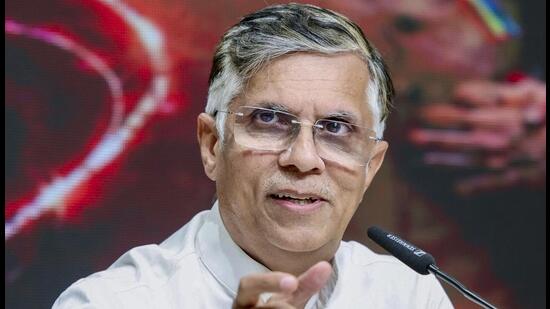
Supreme Court reserves order on Cong leader Pawan Khera’s anticipatory bail plea
# SC Reserves Order on Pawan Khera’s Bail Plea
**By Siddharth Narayan, The National Desk, April 30, 2026**
The Supreme Court of India on Thursday reserved its order on the anticipatory bail plea filed by senior Indian National Congress leader and spokesperson Pawan Khera. The plea stems from multiple First Information Reports (FIRs) registered against him across different states over alleged defamatory remarks against the political leadership. During a high-stakes hearing in New Delhi on April 30, 2026, Senior Advocate Abhishek Manu Singhvi, representing Khera, strongly opposed the necessity of custodial interrogation. He argued that the charges, rooted in political discourse, do not warrant arrest, highlighting Khera’s continuous cooperation with investigating agencies. The apex court’s impending decision is expected to set a critical precedent regarding the boundaries of political speech and the preemptive arrest of opposition figures.
## Inside the Courtroom: Singhvi’s Legal Defense
The courtroom witnessed intense legal maneuvering as Senior Advocate Abhishek Manu Singhvi laid out a comprehensive defense for the Congress leader. At the core of Singhvi’s argument was the assertion that the state police apparatus was being utilized disproportionately for an offense that, even if proven, carries a maximum sentence of less than seven years.
Singhvi systematically dismantled the prosecution’s demand for custodial interrogation. “The power to arrest is not synonymous with the necessity to arrest,” Singhvi argued before the bench. He emphasized that **Pawan Khera is a well-known public figure with deep roots in society**, entirely eliminating any flight risk. Furthermore, Singhvi pointed out that Khera had meticulously complied with all previous summons and had actively participated in the ongoing investigations.
The defense leaned heavily on recent jurisprudential shifts emphasizing that bail is the rule and jail is the exception, a doctrine that the Supreme Court has repeatedly sought to enforce. By highlighting the non-violent nature of the alleged crime—which revolves entirely around spoken words at a press conference—Singhvi argued that the push for an arrest was optics-driven rather than legally mandated. [Source: Original RSS | Additional: Supreme Court of India Public Records]
## The Genesis of the Controversy and Multiple FIRs
The legal entanglement for Pawan Khera is part of a broader, recurring pattern in Indian politics where political rhetoric rapidly devolves into multi-state legal battles. The current anticipatory bail plea relates to a series of FIRs lodged in several jurisdictions, primarily governed by the ruling Bharatiya Janata Party (BJP). The complainants allege that Khera’s recent public statements were not merely political critique, but crossed the line into intentional defamation and the promotion of enmity between different groups.
These FIRs typically invoke sections relating to defamation, intentional insult with intent to provoke breach of the peace, and public mischief. Because these cases are filed in scattered geographical locations, the logistical and legal burden on the accused becomes monumental.
Historically, Khera has faced similar situations. In 2023, he was dramatically deboarded from a flight at the New Delhi airport and temporarily arrested over statements made regarding the Prime Minister, a move that the Supreme Court subsequently intervened in by clubbing the FIRs and granting interim relief. The 2026 proceedings act as a legal continuation of this environment, raising persistent questions about the threshold at which political satire and criticism transition into actionable criminal offenses.
## The Transition to the Bharatiya Nagarik Suraksha Sanhita (BNSS)
A crucial layer to the April 2026 hearing is the application of the new criminal codes. With the Bharatiya Nagarik Suraksha Sanhita (BNSS) having fully replaced the Code of Criminal Procedure (CrPC), the nuances of anticipatory bail have come under fresh judicial scrutiny.
Legal experts are closely watching how the Supreme Court interprets the anticipatory bail provisions under the BNSS in the context of political leaders. Under the new framework, the state prosecution argued that Khera’s statements had wide-reaching implications on public order, thereby justifying a thorough custodial probe to uncover any “larger conspiracy.”
However, Singhvi countered this by citing the foundational principles of the new code, which ostensibly aim to reduce unnecessary pre-trial incarceration. “The new statutes were designed to modernize justice, not to provide new avenues for political retribution,” noted Dr. Meenakshi Iyer, a senior constitutional researcher at the National Law Institute. “If the Supreme Court allows custodial interrogation for defamation-linked charges under the BNSS, it could set a highly restrictive precedent for political speech.” [Source: Independent Legal Analysis]
## Summary of Courtroom Arguments
To understand the crux of the hearing, one must look at the opposing viewpoints presented before the bench:
| Aspect of the Case | Defense Arguments (AM Singhvi) | Prosecution/State Arguments |
| :— | :— | :— |
| **Necessity of Arrest** | Unnecessary; accused is a public figure and a non-flight risk. | Necessary to uncover the intent and potential conspiracy behind the remarks. |
| **Nature of Offense** | Political speech; non-violent; maximum punishment under 7 years. | Provocative speech that threatens public tranquility and social harmony. |
| **Cooperation** | Accused has responded to notices and joined the investigation. | Custodial interrogation required as answers have allegedly been evasive. |
| **Multiple FIRs** | An abuse of the legal process designed to harass the opposition. | Legitimate grievances filed by citizens across different states. |
## Political Ramifications and the ‘Chilling Effect’
Beyond the legal technicalities, the Supreme Court’s decision carries heavy political weight. The Congress party has continually maintained that the deployment of police forces against its spokespersons is an intimidatory tactic. Khera, as the Chairman of the Media and Publicity Department for the All India Congress Committee (AICC), is frequently at the forefront of the opposition’s verbal offensives against the ruling government.
Political analysts argue that the weaponization of FIRs against spokespersons is intended to create a “chilling effect” on free speech. If political communicators fear imminent arrest for their press briefings, the fundamental nature of democratic opposition is stifled.
“The strategy of entangling political opponents in a web of cross-country litigation is not new, but its frequency has intensified,” states Rohan Varma, an independent political scientist based in New Delhi. “When the Supreme Court reserves an order on such a high-profile anticipatory bail plea, it isn’t just deciding Pawan Khera’s fate. It is drawing the battle lines for what constitutes permissible political critique in India today.”
## Freedom of Expression vs. Defamation
The legal battle also brings the delicate balance between Freedom of Speech and Expression under Article 19(1)(a) of the Indian Constitution and the reasonable restrictions under Article 19(2) back into the spotlight. While the Constitution guarantees the right to free speech, it does not offer blanket immunity against defamation or the disruption of public order.
The prosecution has consistently pushed the narrative that words spoken by influential leaders like Khera have a multiplier effect in the era of digital media. Therefore, they argue, the threshold for “public mischief” is breached much faster today than in the past.
Conversely, the defense relies on the landmark *Arnesh Kumar vs. State of Bihar* guidelines, which mandate that police officers should not automatically arrest individuals for offenses punishable by up to seven years of imprisonment. Singhvi vehemently argued that Khera’s case falls squarely within this protective umbrella, making the demand for his arrest a clear violation of established Supreme Court directives.
## Conclusion: Anticipating the Supreme Court’s Verdict
As the Supreme Court reserves its order, the Indian political and legal communities wait with bated breath. The forthcoming verdict will have immediate and long-lasting implications.
**Key Takeaways:**
1. **Protection of Liberty:** If the Supreme Court grants anticipatory bail, it will reinforce the legal shield protecting political figures from preemptive arrests over verbal statements, cementing the doctrine that custodial interrogation is a last resort.
2. **Precedent for BNSS:** The ruling will provide vital interpretive clarity on how the newly implemented Bharatiya Nagarik Suraksha Sanhita (BNSS) approaches white-collar and political offenses, particularly concerning pre-trial detention.
3. **Political Climate:** A rejection of the bail plea could send a stark warning to opposition parties, potentially altering the aggressive nature of political campaigns and press briefings across the country.
The Supreme Court’s decision is expected to be pronounced in the coming days. Until then, Pawan Khera remains under the interim protection of the court. The ruling will ultimately serve as a litmus test for the resilience of free speech protections in India’s highly polarized political landscape.
***
*Disclaimer: This article provides legal and political analysis based on the latest Supreme Court proceedings as of April 30, 2026. Legal outcomes are subject to the final published orders of the judiciary.*





