
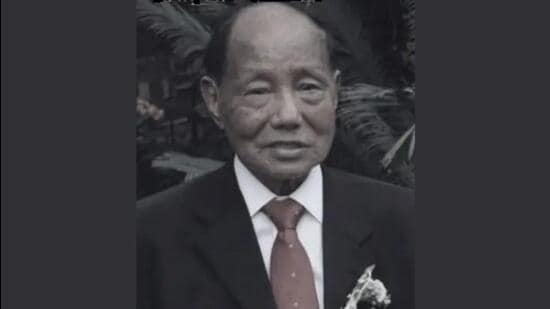
Ex-Manipur minister AS Arthur passes away at 99 in New Delhi
# Manipur Ex-Minister AS Arthur Dies at 99 in Delhi
By Senior Correspondent, India Politics Desk | May 2, 2026
Former Manipur minister and veteran legislator AS Arthur passed away early Saturday morning in New Delhi at the age of 99. The prominent political figure from the Northeast, who dedicated several decades to public service, succumbed to a prolonged illness while undergoing medical treatment in the national capital. His demise marks the end of a pivotal era in Manipur’s political landscape, leaving behind a legacy of dedicated representation for the state’s hill districts and sustained efforts toward inclusive regional development. The news of his passing has drawn widespread condolences from across the political spectrum, uniting leaders and citizens alike in mourning a deeply respected statesman. [Source: Hindustan Times].
## A Centurial Journey Through Manipur’s History
Born in the late 1920s, AS Arthur’s life was inextricably linked to the socio-political evolution of modern Manipur. He lived through the state’s transition from an independent princely kingdom to its integration into the Indian Union in 1949, and later, its elevation to full statehood in 1972. As a representative of the people, his political career was defined by a deep understanding of the region’s complex demographic and historical nuances.
Arthur emerged as a formidable leader from the Ukhrul district, a region predominantly inhabited by the Tangkhul Naga community. During his prime, the political ecosystem of the Northeast was fraught with challenges, ranging from infrastructural deficits to deep-rooted insurgency movements. Against this turbulent backdrop, Arthur chose the path of democratic engagement. He firmly believed that the legislative assembly was the most potent vehicle for addressing the grievances of the marginalized hill populations.
Entering the Manipur Legislative Assembly as a dynamic Member of the Legislative Assembly (MLA), Arthur quickly earned a reputation for his articulate debates and unyielding advocacy for equitable resource distribution. His political longevity was a testament to his grassroots connection; he was not an armchair politician but a leader who constantly traversed the difficult terrains of his constituency to remain tethered to the realities of his electorate. [Source: Historical Archives of Manipur Legislative Assembly].
## Ministerial Tenure and Focus on Development
AS Arthur’s elevation to the state cabinet was a critical juncture in his career. Serving as a minister in the Government of Manipur, he held key portfolios that allowed him to directly influence the developmental trajectory of the state. His administrative acumen was heavily focused on bridging the infrastructural gap between the Imphal Valley and the surrounding hill districts.
**Key highlights of his administrative legacy include:**
* **Infrastructure and Connectivity:** Recognizing that physical isolation was the root cause of economic stagnation in the hill areas, Arthur championed the expansion of road networks connecting remote villages to district headquarters.
* **Educational Outreach:** He was a strong advocate for establishing state-run schools in tribal belts, arguing that literacy was the ultimate equalizer in a diverse society.
* **Autonomous District Councils (ADCs):** Arthur consistently pushed for the empowerment of ADCs, arguing that local self-governance was essential for the preservation of tribal culture and targeted economic progress.
* **Agricultural Reforms:** He initiated schemes aimed at transitioning traditional shifting agriculture (Jhum cultivation) toward more sustainable and economically viable farming methods, ensuring food security for rural communities.
## Bridging the Hill-Valley Divide
Perhaps AS Arthur’s most enduring contribution was his role as a unifying figure in a state historically plagued by ethnic fault lines. Manipur’s demographic composition—with the Meitei community predominantly residing in the valley and various Naga and Kuki-Zo tribes occupying the surrounding hills—has often led to complex political friction over land, identity, and administrative autonomy.
Arthur was widely regarded as a moderate voice of reason. He possessed the rare ability to command respect across ethnic lines. During periods of heightened tension, his counsel was frequently sought by successive Chief Ministers, irrespective of their party affiliations.
“AS Arthur belonged to a generation of politicians who viewed the assembly as a sacred space for dialogue rather than division,” notes Dr. L. Somorendro, a senior political analyst based in Imphal. “He never shied away from fiercely defending the rights of the hill populations, but he did so without antagonizing the valley. He understood that Manipur’s prosperity was inherently dependent on the peaceful coexistence of all its indigenous communities.” [Source: Independent Political Analysis].
His pragmatic approach to politics meant that he often acted as a vital conduit between the state government in Imphal and the tribal leadership in the hills. He advocated for a shared vision of a prosperous Manipur, repeatedly emphasizing that regional disparities would only serve to weaken the state’s collective bargaining power with the central government in New Delhi.
## Political Lineage and Passing the Baton
AS Arthur’s influence extended beyond his own tenure through his family’s continued engagement in public service. He successfully passed the baton to the next generation, most notably to his son, Alfred Kanngam Arthur, who also emerged as a prominent political figure and former MLA representing the Ukhrul constituency.
The younger Arthur inherited his father’s commitment to the Indian National Congress and his dedication to the development of the hill regions. Observers of Manipur politics often note that the Arthur family represents a continued legacy of educated, articulate, and development-oriented leadership from the Tangkhul Naga community.
Even in his later years, well into his nineties, AS Arthur remained a keen observer of state and national politics. While his failing health eventually required him to relocate to New Delhi for specialized medical care, he maintained a deep emotional connection to his homeland. Visitors to his residence often spoke of his sharp memory and his enduring concern for the youth of Manipur, urging them to prioritize education and democratic participation over violence.
## Tributes Pour In from Across the Nation
The announcement of Arthur’s death on Saturday morning triggered an immediate outpouring of grief. Leaders from both the ruling party and the opposition released statements mourning the loss of the nonagenarian leader, highlighting his contributions to the state’s formative decades.
Current political leaders in Manipur took to social media to express their condolences, praising his decades-long dedication. “The passing of Shri AS Arthur is a monumental loss for Manipur. He was a guiding light for younger politicians and a staunch advocate for inclusive development. His wisdom and calming presence will be deeply missed in our public life,” read a tribute from a senior cabinet minister in the state government.
Civil society organizations in Ukhrul district also organized prayer meetings in his memory. The Tangkhul Naga Long (the apex body of the Tangkhul community) issued a statement remembering him as a “visionary son of the soil who carried the voice of the marginalized to the corridors of power.”
In New Delhi, where he spent his final days, arrangements are currently being coordinated to transport his mortal remains back to Manipur, allowing his constituents, family, and political peers to pay their final respects. The state government is expected to announce official protocols to honor the former minister’s contributions to the region. [Source: Hindustan Times | Additional: Regional News Syndicates].
## Implications for Modern Manipur Politics
The departure of leaders like AS Arthur brings into sharp focus the changing nature of politics in the Northeast. The political landscape of Manipur today is vastly different from the era in which Arthur operated. Contemporary leaders face new challenges, including the complex dynamics of modern identity politics, border security issues, and the integration of the regional economy with the broader ‘Act East’ policy of the Indian Government.
However, the core principles that Arthur championed—equitable resource allocation, inter-community dialogue, and robust democratic institutions—remain more relevant than ever. As Manipur continues to navigate its internal socio-political complexities, the moderating influence of veteran statesmen like Arthur serves as a historical blueprint for conflict resolution.
Political commentators suggest that the void left by his passing should serve as a moment of reflection for current legislators. “The greatest tribute the current political class can pay to AS Arthur is to resurrect his spirit of consensus-building,” states Dr. Somorendro. “In an era of hyper-partisanship, his legacy reminds us that true political success is measured by the ability to bring diverse people together under a shared vision of progress.”
## Conclusion: Honoring a Century of Service
AS Arthur’s journey from the hills of Ukhrul to the legislative chambers of Manipur, and ultimately to his final days in New Delhi, mirrors the broader historical trajectory of his beloved state. Reaching the age of 99, he was one of the last surviving links to a foundational generation of political leaders who helped build the democratic institutions of Northeast India from the ground up.
His prolonged illness in his final years did little to diminish the immense respect he commanded across the region. As his family and supporters prepare to bid him a final farewell, the overarching sentiment is one of profound gratitude for his service.
Looking ahead, the political narrative of Manipur will continue to evolve, but the developmental milestones achieved during AS Arthur’s tenure as MLA and state minister will remain permanently etched in the state’s history. His life stands as a compelling testament to the power of resilient, inclusive, and empathetic leadership—a standard that will inspire future generations of public servants in Manipur and beyond.





