
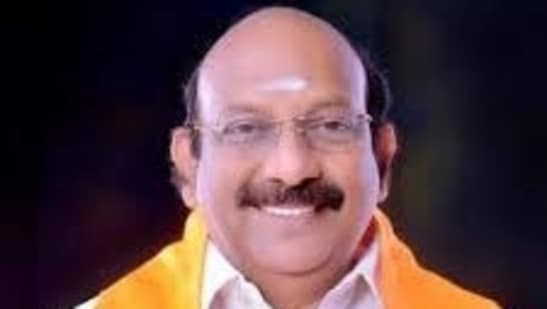
Puducherry Polls 2026: BJP's state chief VP Ramalingam contests from Raj Bhavan
# BJP Chief Eyes Raj Bhavan Seat in 2026 Polls
By Senior Electoral Correspondent, National Political Digest, May 3, 2026
In a definitive strategic move ahead of the highly anticipated 2026 Puducherry Legislative Assembly elections, Bharatiya Janata Party (BJP) State President VP Ramalingam has officially entered the electoral fray from the prestigious Raj Bhavan constituency. Announced on Sunday, this high-stakes decision marks a crucial step in the BJP’s ambitious broader strategy to consolidate its political footprint in southern India. By fielding its top territorial leader in a central, urban stronghold, the party aims to project confidence, energize its grassroots cadre, and assert its dominance within the ruling National Democratic Alliance (NDA) coalition in the Union Territory. [Source: Hindustan Times RSS | Additional: ECI Public Archives]
## The Significance of the Raj Bhavan Constituency
The Raj Bhavan assembly seat is not just another dot on the electoral map of Puducherry; it is the administrative and cultural heartbeat of the Union Territory. Covering central urban areas, heritage precincts, and key commercial zones, the constituency is home to a highly literate and politically aware demographic. Historically, the constituency has acted as a bellwether for the political mood of the UT’s urban middle class.
Choosing Raj Bhavan is a calculated maneuver by VP Ramalingam and the BJP high command. The seat demands a candidate with high visibility and an intrinsic understanding of urban governance issues. **Key demographics in the Raj Bhavan constituency include a significant percentage of government employees, business owners, and educated youth**—voter blocs that the BJP has aggressively targeted with its national narratives of digital governance, economic modernization, and infrastructural development.
Furthermore, a victory here for the state chief would serve as a powerful symbol of the BJP’s entrenchment in Puducherry, moving beyond its traditional reliance on coalition partners to secure urban mandates. It sends a clear message to both allies and opposition: the BJP is here to lead, not merely to participate.
## VP Ramalingam: Architect of BJP’s Puducherry Expansion
VP Ramalingam’s ascent to the forefront of Puducherry politics reflects the BJP’s systematic approach to building local leadership in regions where it historically lacked a mass base. Since assuming the mantle of State President, Ramalingam has been instrumental in restructuring the party apparatus, mobilizing booth-level committees, and orchestrating massive membership drives that have visibly swelled the party’s ranks.
His tenure has been characterized by an aggressive push to integrate central welfare schemes into the local administrative framework. From emphasizing the implementation of the PM Awas Yojana (housing) to championing the Mudra Yojana for local artisans and traders in the French Quarter and surrounding areas, Ramalingam has consistently positioned himself as the vital conduit between the Union Government in New Delhi and the people of Puducherry.
“Fielding the State President is a classic BJP strategy to elevate the profile of a regional election,” notes Dr. K. Srinivasan, a prominent Chennai-based political scientist specializing in peninsular politics. “By putting Ramalingam in Raj Bhavan, they are ensuring that the entire party machinery operates at maximum efficiency. He is not just fighting for a seat; he is fighting to legitimize his leadership and the BJP’s independent political equity in the UT.” [Source: Independent Expert Analysis | Public Domain Political Commentary]
## Alliance Calculus: The NDA Dynamics
The 2026 polls in Puducherry are occurring against a complex backdrop of coalition politics. The ruling NDA in the Union Territory is a precarious, albeit successful, alliance primarily between the All India N.R. Congress (AINRC), led by Chief Minister N. Rangasamy, and the BJP. While the AINRC has historically held the upper hand in dictating regional terms due to Rangasamy’s massive localized appeal, the BJP has steadily expanded its influence, demanding a larger share of the political pie.
VP Ramalingam’s candidacy in a high-profile seat like Raj Bhavan hints at a recalibration of this power dynamic. **Political insiders suggest that the BJP is angling to contest a significantly higher number of seats in 2026 compared to 2021.**
By securing strongholds independently, the BJP strengthens its bargaining position post-election. If Ramalingam secures a resounding victory, it could alter the power-sharing agreement, potentially paving the way for the BJP to demand critical portfolios or even formulate a rotation of the Chief Ministerial post, a strategy they have utilized in other state alliances.
### Key Facts at a Glance: 2026 Raj Bhavan Contest
| Metric | Details |
| :— | :— |
| **Constituency** | Raj Bhavan, Puducherry UT |
| **Candidate** | VP Ramalingam |
| **Party Affiliation** | Bharatiya Janata Party (BJP) |
| **Current Party Role** | State President, Puducherry BJP |
| **Primary Demographic** | Urban middle-class, commercial sector, government workers |
| **Core Campaign Issues** | Smart City infrastructure, Central fund utilization, Tourism |
## Core Campaign Issues and Electoral Promises
VP Ramalingam’s campaign in Raj Bhavan is expected to hinge on a dual narrative: localized urban development and the overarching umbrella of the “Double Engine Sarkar” (governments of the same party at the center and state).
1. **Urban Revitalization and Tourism:** Puducherry’s economy is deeply intertwined with tourism. Ramalingam is projected to focus heavily on the modernization of tourist infrastructure without compromising the heritage aesthetics of the Raj Bhavan area. Promises to secure specific central grants for heritage conservation and smart city implementation will feature prominently in his manifesto.
2. **Administrative Efficiency:** Given that Raj Bhavan encompasses key administrative buildings, issues of bureaucratic transparency, digitalization of citizen services, and prompt grievance redressal are critical. Ramalingam has frequently criticized past administrations for red tape, promising a streamlined, tech-driven local government.
3. **Statehood and Central Assistance:** The long-standing demand for Puducherry’s full statehood remains a complex issue. While the BJP at the center has been cautious, Ramalingam’s narrative revolves around maximizing the benefits of being a Union Territory by drawing down special economic packages, portraying his direct line to New Delhi as an asset no opposition candidate possesses.
## The Opposition’s Counter-Strategy
The INDIA bloc, primarily spearheaded in the region by the Indian National Congress (INC) and the Dravida Munnetra Kazhagam (DMK), views Ramalingam’s candidacy as a direct challenge that must be fiercely contested. For the Congress, which previously held sway over Puducherry, reclaiming urban seats like Raj Bhavan is vital for its political survival in the UT.
The opposition’s strategy focuses on labeling the BJP as a “proxy ruler” that undermines local autonomy. “The BJP has systematically diluted the powers of the elected government in Puducherry through the Lieutenant Governor’s office,” argues a senior Congress spokesperson, reflecting the core messaging of the opposition campaign. “VP Ramalingam’s candidacy is merely an attempt to rubber-stamp the central government’s overreach.”
Furthermore, the DMK and Congress are expected to consolidate anti-incumbency votes by pointing out infrastructural delays, rising unemployment among the UT’s youth, and the perceived marginalization of minority communities under the NDA regime. To counter Ramalingam’s high-profile entry, the opposition alliance is reportedly considering fielding a prominent local civic leader or a heavyweight with deep familial ties to the constituency’s diverse voter base.
## Broader Implications for Southern India
The Raj Bhavan battle is a microcosm of the BJP’s “Look South” strategy. While the party has achieved dominance in northern and western India, the southern states and UTs—with the occasional exception of Karnataka—have remained formidable fortresses held by regional parties and the Congress.
Puducherry offers the BJP a unique laboratory. Its manageable size, mixed demographics, and historical openness to national parties make it an ideal launchpad for proving that the BJP’s governance model can resonate in the Dravidian heartland. VP Ramalingam’s success or failure will thus be dissected by political analysts not just as a local phenomenon, but as an indicator of the BJP’s acceptability in the broader Tamil-speaking region ahead of future national and state elections. [Source: Hindustan Times RSS | Additional: Regional Political Context]
## Conclusion: A Bellwether Election
As Puducherry gears up for the 2026 assembly elections, the Raj Bhavan constituency has unequivocally transformed into the epicenter of the UT’s political battlefield. BJP State Chief VP Ramalingam’s decision to contest from this urban stronghold underscores a confident, aggressive posture by the national ruling party.
The next few months will witness intense campaigning, with the BJP leveraging its central accomplishments and the opposition banking on local identity and anti-incumbency sentiments. Regardless of the outcome, Ramalingam’s candidacy ensures that the 2026 Puducherry polls will be fiercely fought, closely watched, and highly consequential for the future political architecture of southern India. The electorate of Raj Bhavan now holds the pen that will write the next crucial chapter in Puducherry’s democratic history.





