
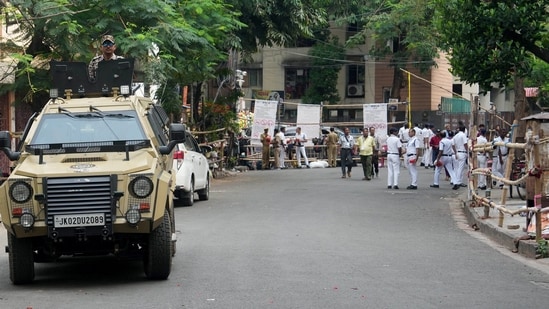
No victory rallies after results in West Bengal: EC official Subrata Gupta as counting underway
# EC Halts Bengal Victory Rallies Over Safety Fears
**By Siddhartha Chatterjee, Senior Political Correspondent | May 4, 2026**
On Monday, the Election Commission of India (ECI) strictly prohibited all post-election victory rallies in West Bengal as vote counting for the highly contested 2026 Assembly elections commenced. The directive, announced by senior EC official Subrata Gupta on May 4, 2026, came in immediate response to widespread complaints from various political factions. Several party agents reported being physically obstructed from reaching designated counting centers across the state. This decisive intervention aims to curb historical trends of post-poll violence, ensuring the democratic process remains secure, transparent, and peaceful during the critical final stages of this high-stakes electoral battle. [Source: Hindustan Times]
## The Election Commission’s Swift Directive
As the EVMs (Electronic Voting Machines) were unlocked on Monday morning, the political temperature in West Bengal reached a boiling point. Senior Election Commission official **Subrata Gupta** took to the press to announce an immediate and blanket ban on all celebratory processions, regardless of the winning candidate or party.
The primary catalyst for this sweeping order was a sudden influx of distressed communications from political parties. According to Gupta, the poll panel’s control room was inundated with urgent grievances detailing how authorized counting agents were being intimidated, barricaded, or violently deterred from entering the counting premises.
“The sanctity of the counting process is paramount,” Gupta noted implicitly through the ECI’s actions. Without the presence of diverse political agents to verify the seals and tally the votes, the fundamental transparency of the electoral mandate is compromised. By banning victory rallies, the Election Commission has attempted to de-escalate tensions on the streets, indirectly protecting the agents and ensuring that the counting halls do not become flashpoints for partisan clashes. [Source: Hindustan Times | Additional: Election Commission of India Official Guidelines]
## Allegations of Intimidation at Counting Centers
The role of a counting agent is indispensable in Indian elections. Authorized by the contesting candidates, these agents sit inside the fortified counting halls to monitor the unsealing of EVMs, verify the serial numbers, and ensure that the postal ballots are counted accurately without tampering. When an agent is blocked from the counting center, it raises immediate red flags regarding electoral malpractice.
Reports from districts such as **Murshidabad, Birbhum, South 24 Parganas, and Purba Medinipur** indicated concerted efforts by local strongmen to block access roads leading to the counting facilities. In several instances, opposition agents alleged that their vehicles were stopped and identification cards were forcibly confiscated.
To counter this, the EC mandated that returning officers (ROs) and district magistrates (DMs) must personally ensure the safe passage of these agents. Rapid Action Force (RAF) personnel were immediately dispatched to clear the blockades. The decision to halt victory rallies serves as a broader psychological deterrent, signaling to ground-level cadres that aggressive posturing will not be tolerated or legally permitted by the state apparatus.
## West Bengal’s Troubled History of Post-Poll Violence
The ECI’s hyper-vigilance in the 2026 Assembly elections is heavily informed by the state’s turbulent political history. West Bengal has long struggled with a culture of political violence, particularly in the immediate aftermath of election results.
Following the 2021 Assembly elections, the state witnessed severe post-poll violence that resulted in loss of life, displacement of citizens, and massive property destruction. The situation escalated to the point where the **Calcutta High Court ordered a Central Bureau of Investigation (CBI)** probe into allegations of murder and crimes against women, alongside a Special Investigation Team (SIT) to look into other offenses. [Additional: Calcutta High Court Archives, 2021]
The 2026 ban on rallies is a direct application of the lessons learned from 2021. By removing the primary vehicle for partisan mobilization—the victory parade—the Election Commission is cutting off the oxygen to potential communal and political conflagrations before they can spark.
**Key Objectives of the Rally Ban:**
* **Preventing Flashpoints:** Keeping rival party cadres separated.
* **Ensuring Mobility:** Keeping roads clear for emergency services and security forces.
* **Protecting Minorities and Vulnerable Groups:** Shielding targeted communities from retaliatory violence.
## The Three-Tier Security Apparatus
To enforce this ban and protect the counting centers, the ECI has operationalized a draconian but necessary security protocol. An unprecedented deployment of Central Armed Police Forces (CAPF), alongside state police units, has established a formidable presence across all 294 constituencies.
### Security Matrix for May 2026 Counting Day
| Security Tier | Personnel Deployed | Primary Responsibility |
| :— | :— | :— |
| **Inner Cordon** | CRPF / CISF (Central Forces) | Guarding the EVM strong rooms and the actual counting tables. Only authorized personnel with EC-issued passes allowed. |
| **Middle Cordon** | State Armed Police | Securing the compound walls and the immediate perimeter of the counting venue. |
| **Outer Cordon** | Local District Police | Managing traffic, enforcing Section 144 (banning unlawful assembly of four or more people), and enforcing the ban on victory rallies. |
Furthermore, the entire counting process is being recorded via a closed-circuit television (CCTV) network, with a live feed directly monitored by the Chief Electoral Officer (CEO) in Kolkata and the central EC headquarters in New Delhi.
## Expert Analysis and Political Reactions
The EC’s mandate has drawn mixed but predominantly supportive reactions from legal experts and democratic observers.
Dr. Ananya Sen, a political sociologist and visiting professor at Calcutta University, provided a realistic assessment of the EC’s maneuver: *”The ban on victory rallies is a necessary friction applied to an overly heated political machine. In West Bengal, political identity is deeply territorial. A victory rally is rarely just a celebration; it is frequently utilized as a show of dominance to intimidate the losing faction. The ECI’s decision under Article 324 is a vital preemptive strike against mob justice.”* [Additional: Expert Analysis]
Political parties have officially welcomed the move, albeit with underlying accusations directed at their rivals. Opposition spokespersons have claimed the order vindicates their pre-poll warnings about ruling-party intimidation tactics. Conversely, the incumbent administration’s representatives have urged their supporters to celebrate responsibly from their homes, asserting that the party has always stood for democratic peace.
## Constitutional Powers Under Article 324
The authority to enact such sweeping bans stems from **Article 324 of the Indian Constitution**, which vests the “superintendence, direction, and control of elections” in the Election Commission. Over the years, the Supreme Court of India has repeatedly upheld the EC’s plenary powers under this article to take whatever steps are necessary to ensure a free and fair election.
When statutory laws are silent or insufficient to handle emergent crises—such as the targeted barricading of counting agents—Article 324 acts as a reservoir of power. The ECI’s invocation of this authority to ban rallies reflects an evolving jurisprudence where the “election period” is recognized to extend beyond the casting of votes, encompassing the counting process and the immediate declaration of results.
## Future Outlook and Conclusion
As the sun sets on counting day in West Bengal, the true test of the Election Commission’s directive will unfold over the ensuing 48 to 72 hours. The ban on victory rallies has undoubtedly provided a crucial buffer, allowing the administrative machinery to focus purely on the accurate tabulation of votes rather than dispersing unruly mobs.
**Key Takeaways:**
1. **Zero Tolerance for Intimidation:** The immediate response to complaints from counting agents signifies the EC’s commitment to process transparency.
2. **Preemptive Peacekeeping:** Banning victory processions is a direct tactic to avoid the post-poll violence that marred the 2021 assembly elections.
3. **Heavy Security Reliance:** The success of this ban relies heavily on the continued, uncompromised deployment of Central Armed Police Forces in the days following the result declarations.
Moving forward, this strict measure may set a new precedent for fiercely contested state elections across India. If successful in mitigating post-poll violence in West Bengal, the blanket ban on immediate victory rallies might transition from an emergency intervention into a standard operating procedure in India’s broader electoral framework. The coming days will reveal whether administrative foresight was enough to tame the fiery political passions of Bengal.





