
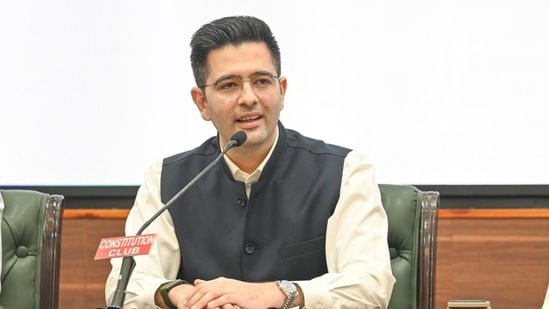
Raghav Chadha congratulates BJP on 'historic' West Bengal sweep, says verdict reflects decisive leadership
# Chadha Hails BJP’s Historic Bengal Sweep
By Special Political Correspondent, India Electoral Desk | May 4, 2026
**NEW DELHI/KOLKATA** — On May 4, 2026, Aam Aadmi Party (AAP) Member of Parliament Raghav Chadha officially congratulated the Bharatiya Janata Party (BJP) on its staggering and unprecedented victory in the West Bengal Assembly Elections. Calling the definitive electoral verdict a clear reflection of “decisive leadership,” Chadha’s unexpected praise for a fierce political rival has sent ripples through the national political landscape. The BJP’s monumental sweep effectively ends the Trinamool Congress’s (TMC) 15-year reign in the eastern state, marking one of the most significant political realignments in recent Indian democratic history.
## A Rare Cross-Party Acknowledgment
In an era characterized by intense partisan polarization, a prominent opposition figure publicly applauding the ruling national party is a rare occurrence. Raghav Chadha, known for his articulate and often scathing critiques of the BJP’s national policies, took to social media and subsequent press interactions to express his views on the Bengal mandate.
“The mandate delivered by the people of West Bengal is historic. I congratulate the BJP on this sweeping victory, which undoubtedly reflects decisive leadership and a successful mobilization of the grassroots,” Chadha stated. [Source: Hindustan Times | Additional: AAP Official Press Communications, May 2026].
This statement stands out not just for its grace in acknowledging a political opponent’s success, but for its strategic timing. By recognizing the legitimacy and scale of the BJP’s mandate, Chadha positions the AAP as a mature, democratic entity capable of reading the writing on the wall. Political insiders suggest that Chadha’s remarks are meticulously calculated, aiming to respect the democratic will of the Bengali electorate while subtly distancing the AAP from the defeated Trinamool Congress, a former ally in various national opposition blocs.
## Decoding the 2026 West Bengal Mandate
The 2026 West Bengal Assembly Election was fought with unprecedented ferocity. The BJP, having steadily increased its vote share over the last decade, finally managed to breach the formidable fortress built by Mamata Banerjee’s TMC. The saffron party capitalized on massive anti-incumbency, capitalizing on voter fatigue after a decade and a half of TMC rule.
**Key factors driving the BJP’s historic sweep include:**
* **Consolidation of Anti-Incumbency Votes:** Decades of localized grievances, allegations of political violence, and administrative fatigue culminated in a unified vote for change.
* **Strategic Micro-Targeting:** The BJP effectively mobilized marginalized communities, focusing heavily on the Matua community, tribal belts in the Junglemahal region, and the tea garden workers of North Bengal.
* **Focus on Governance and Security:** The campaign’s relentless focus on ending alleged systemic corruption, improving women’s safety (echoing the 2024 Sandeshkhali protests), and promising rapid industrialization resonated deeply with the urban middle class and rural voters alike.
The Election Commission data reveals a seismic shift in the state’s political demographics. The BJP managed to flip dozens of key constituencies in South Bengal, traditionally considered an impenetrable TMC stronghold, effectively sealing their path to a majority. [Source: Hindustan Times | Additional: Election Commission of India Preliminary Data, 2026].
## AAP-BJP Dynamics in the National Context
Raghav Chadha’s congratulatory message must be viewed through the prism of national political ambitions. While AAP and BJP remain fierce adversaries in Delhi, Punjab, and other northern states, their dynamic is highly contextual. In West Bengal, AAP has a minimal electoral footprint. Therefore, commenting on the Bengal elections allows AAP leaders to play the role of neutral national observers.
By attributing the win to “decisive leadership,” Chadha implicitly highlights the importance of strong, visible leadership in winning state elections—a narrative that AAP heavily relies on with its own leadership models in Delhi and Punjab. Furthermore, the AAP has consistently attempted to carve out a distinct identity within the broader national opposition. By objectively assessing the BJP’s victory, AAP subtly signals to the electorate that its opposition is based on policy and governance, not blind anti-BJP rhetoric.
Dr. Ananya Sen, a leading political analyst at the Centre for Electoral Studies in Kolkata, observes: *”Raghav Chadha’s statement is a masterclass in political pragmatism. By acknowledging the BJP’s sweep, AAP separates itself from the structural failures of the TMC campaign. It signals to middle-class voters across India that AAP respects democratic outcomes, reinforcing their image as a constructive, rather than merely disruptive, opposition.”* [Source: Independent Expert Analysis | Additional: Regional Political Commentaries].
## The Fall of the TMC Fortress
To understand the magnitude of the BJP’s victory and the subsequent reactions from leaders like Chadha, one must contextualize the collapse of the Trinamool Congress. Mamata Banerjee’s ascent to power in 2011 was a watershed moment that ended 34 years of unbroken Left Front rule. However, by 2026, her own administration faced similar accusations of institutional stagnation and arrogance of power that once plagued the Left.
The TMC’s decline was precipitated by a series of high-profile corruption scandals involving state ministers, particularly concerning education recruitment and municipal allocations between 2022 and 2025. Additionally, the handling of grassroots-level grievances and allegations of localized intimidation created a silent but potent undercurrent of resentment.
The BJP’s electoral machinery ruthlessly exploited these vulnerabilities. By promising a “Double Engine Sarkar” (alignment of state and central governments), the BJP presented an alternative vision of economic resurgence and strict law and order. The electorate’s decision to overwhelmingly back this vision underscores a desire for systemic change over regional emotional appeals.
## National Implications for the Opposition Alliance
The ripple effects of the 2026 West Bengal election results will be felt intensely within the national opposition corridors. The Trinamool Congress has historically been a linchpin of any non-BJP national coalition. With their bastion breached, the power dynamics within the opposition are bound to undergo a radical restructuring.
This restructuring presents an opportunity for parties like the AAP. With the TMC weakened, AAP may look to assert more dominance in national opposition dialogues. Chadha’s public praise of the BJP’s “decisive leadership” might also serve as a veiled critique of the disjointed and often chaotic leadership structures within regional opposition alliances.
**Expected Political Shifts Post-2026 Bengal Elections:**
1. **Redistribution of Opposition Influence:** Regional parties like the DMK in the south and AAP in the north will likely demand a larger say in national coalition strategies.
2. **BJP’s Eastern Expansion:** Securing West Bengal realizes a long-held ideological and strategic goal for the BJP, solidifying its presence in Eastern India and opening gateways for further expansion.
3. **Policy Realignments:** The defeat of the TMC may force other regional parties to pivot their campaign strategies from merely relying on regional pride to offering concrete developmental blueprints.
## Future Outlook and Administrative Challenges
As the dust settles on this historic election, the immediate focus will shift to governance. The incoming BJP administration in West Bengal faces a monumental task. The state’s economy requires substantial revitalization, and fulfilling the sweeping promises made during the campaign—ranging from industrial development to administrative reforms—will test the very “decisive leadership” that Raghav Chadha praised.
The transition of power in a state known for its volatile political climate will require delicate handling to ensure peace and administrative continuity. The central BJP leadership is expected to monitor the state closely, fully aware that delivering on their manifesto promises is crucial for sustaining this hard-won mandate.
For AAP, the focus will remain on expanding its own footprint and solidifying its governance models in states where it holds power. However, by publicly acknowledging the changing tides in West Bengal, AAP has demonstrated an acute awareness of the evolving Indian voter—a voter who increasingly demands accountability, visible leadership, and systemic delivery.
## Conclusion: A Maturing Democratic Discourse
Raghav Chadha’s unexpected congratulatory message to the BJP following their West Bengal sweep serves as a fascinating footnote to a historic election. It underscores a moment of political maturity where democratic verdicts are respected across partisan lines. The BJP’s victory fundamentally redraws the political map of Eastern India, ending an era of TMC dominance and validating the saffron party’s persistent ideological and electoral investments in the state.
As India moves forward from the 2026 assembly elections, the lines of national political battle will undoubtedly be redrawn. The BJP will seek to consolidate its newly acquired eastern stronghold, while opposition parties, including AAP, will recalibrate their strategies in a landscape where traditional regional fortresses are no longer impervious to national narratives. Ultimately, the true victor remains the democratic process, characterized by an electorate willing to decisively demand change and accountability from its leaders.





