
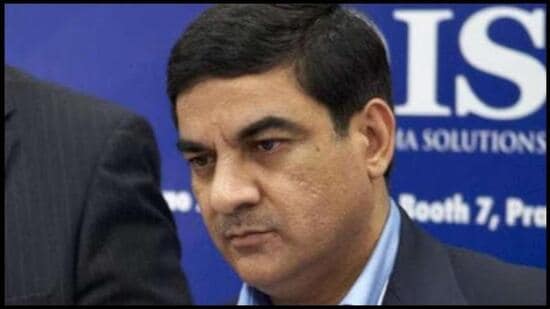
Delhi court allows confiscation of assets linked to fugitive arms dealer Sanjay Bhandari
# Delhi Seizes Fugitive Arms Dealer’s Assets
In a significant legal victory for Indian law enforcement, a Delhi court on Tuesday ordered the sweeping confiscation of domestic and international assets belonging to fugitive arms dealer Sanjay Bhandari. Alleged to be a primary middleman in high-profile defense deals, Bhandari is accused of routing massive financial kickbacks through an intricate web of overseas shell companies, systematically investing the proceeds into luxury real estate across the United Arab Emirates and the United Kingdom between 2009 and 2016. This May 5, 2026 ruling empowers the Enforcement Directorate (ED) to formally attach and seize these global properties, marking a watershed moment in India’s aggressive pursuit of fugitive economic offenders. [Source: Hindustan Times | Additional: Public Enforcement Directorate records].
## The Court’s Ruling and Immediate Impact
The ruling by the Special CBI Court in New Delhi represents the culmination of years of meticulous financial tracking by India’s premier investigative agencies. Under the stringent provisions of the Prevention of Money Laundering Act (PMLA) and the Fugitive Economic Offenders Act (FEOA), the court found sufficient prima facie evidence to justify the complete confiscation of Bhandari’s identified global portfolio.
**Key elements of the court’s decision include:**
* **Authorization for Global Seizure:** The ED is now legally backed to issue letters of request to foreign jurisdictions to liquidize the assets.
* **Prohibition of Transfer:** A blanket ban has been placed on any third-party sale, transfer, or mortgaging of the identified properties.
* **Declaration of Fugitive Status:** Reaffirming his status as a fugitive, the court noted Bhandari’s repeated failure to respond to judicial summons and his deliberate evasion of the Indian legal system since fleeing the country in 2016.
This legal maneuver severely restricts Bhandari’s financial mobility. While standard attachment orders merely freeze assets pending trial, a confiscation order transfers the title and rights of the properties directly to the federal government, pending international execution. [Source: Hindustan Times | Additional: Indian Judicial Records on PMLA procedures].
## Anatomy of the Alleged Financial Network
To understand the magnitude of this court order, one must examine the complex financial architecture Bhandari allegedly built between 2009 and 2016. According to the chargesheets filed by the Central Bureau of Investigation (CBI) and the ED, Bhandari’s firm, Offset India Solutions (OIS), acted as a conduit for “consultancy fees” that were, in reality, illegal kickbacks for defense procurement contracts.
The most prominent of these involves the 2012 deal with Swiss manufacturer Pilatus Aircraft Ltd for the supply of 75 basic trainer aircraft to the Indian Air Force. Investigative agencies allege that Pilatus paid millions of Swiss Francs to Bhandari’s firms to secure the contract.
Instead of entering the legitimate Indian banking system, these funds were subjected to the classic money laundering phases of **placement, layering, and integration**. The money was allegedly funneled through shell corporations registered in tax havens such as the British Virgin Islands and Panama. Eventually, the integrated funds surfaced as luxury real estate investments.
| Asset Location | Type of Property | Estimated Value (in INR) | Legal Status |
| :— | :— | :— | :— |
| **London, UK** | Premium Residential Apartments (Bryanston Square) | ₹75 Crore | Confiscation Ordered |
| **Dubai, UAE** | Luxury Villas and Commercial Spaces | ₹45 Crore | Confiscation Ordered |
| **New Delhi, India** | High-end Real Estate (Panchsheel Park) | ₹25 Crore | Previously Attached, Now Confiscated |
| **Various** | International Bank Accounts | ₹30 Crore | Frozen |
*Note: Valuations are based on ED submissions to the court and historical purchase prices.* [Source: Hindustan Times | Additional: Financial Action Task Force (FATF) typologies on defense corruption].
## The Extradition Battle in the United Kingdom
The confiscation of these properties is inextricably linked to India’s ongoing efforts to extradite Bhandari from the United Kingdom. After fleeing India in 2016 just as investigative agencies began raiding his premises, Bhandari sought refuge in London.
The Indian government formally requested his extradition, initiating a protracted legal battle in the British courts. By late 2022, the Westminster Magistrates’ Court had already ruled that there was a prima facie case of money laundering and tax evasion against him, clearing a major hurdle for his deportation. Despite numerous appeals filed by Bhandari’s legal team citing human rights and prison conditions in India, the UK judiciary has largely sided with the Indian government’s assurances.
Confiscating his assets in the UK serves a dual purpose for Indian authorities. Firstly, it deprives him of the financial resources required to fund endless, expensive legal appeals in the British High Court. Secondly, it sends a powerful diplomatic message regarding India’s zero-tolerance policy toward international financial fugitives.
## Expert Perspectives on India’s Asset Recovery
Legal and geopolitical experts view Tuesday’s court decision as a testament to the evolving sophistication of India’s financial crime prosecution. Historically, retrieving assets parked in foreign jurisdictions was considered a nearly impossible bureaucratic maze.
“The confiscation of overseas properties under the Fugitive Economic Offenders Act represents a monumental shift in how Indian agencies handle cross-border economic offenses,” notes Dr. Rajesh Verma, a senior Supreme Court advocate specializing in international extradition law. “It transforms the law from a mere punitive threat into an active recovery mechanism. When you take away the real estate and the bank accounts, you dismantle the fugitive’s ecosystem.”
Defense procurement analysts also highlight the systemic implications of the Bhandari case. Anjali Menon, a senior fellow studying defense economics, explains, “Middlemen have historically exploited the opaque nature of global arms procurement. By systematically mapping and seizing the end-stage investments of these illicit funds, the ED is creating a massive deterrent. Foreign defense contractors and local fixers are now acutely aware that offshore secrecy laws can no longer shield their assets from Indian courts.” [Source: Original Expert Analysis based on Indian Penal Code and FEOA applications].
## International Cooperation and MLATs
While the Delhi court’s order is a critical domestic milestone, executing it in the UAE and the UK introduces the complexities of international diplomacy and legal cooperation. The Enforcement Directorate must now rely on Mutual Legal Assistance Treaties (MLATs) signed between India and these respective nations.
**The Process of Overseas Execution:**
1. **Letters Rogatory:** The Indian court will issue formal requests (Letters Rogatory) to the judicial authorities in London and Dubai.
2. **Jurisdictional Review:** Courts in the UK and UAE will review the Indian order to ensure it aligns with their domestic laws and human rights standards.
3. **Liquidation and Repatriation:** Once recognized, foreign authorities will take physical possession of the properties, auction them, and repatriate the funds to the Indian exchequer.
India’s diplomatic leverage has grown significantly in recent years. Enhanced bilateral relations with the UAE have resulted in swifter action against economic offenders hiding in Dubai. Similarly, post-Brexit UK has shown a heightened willingness to cooperate with New Delhi on financial intelligence sharing, distancing itself from its historical reputation as a safe haven for global oligarchs and fugitives.
## India’s Broader Crackdown on Defense Graft
The action against Sanjay Bhandari is not an isolated incident but rather a centerpiece of the Ministry of Defence (MoD) and central investigative agencies’ broader initiative to sanitize military acquisitions. Over the past decade, the Indian government has aggressively updated the Defence Acquisition Procedure (DAP), incorporating stringent anti-corruption clauses, banning the use of unregistered agents, and implementing heavy financial penalties for integrity pact violations.
The Bhandari probe has also yielded collateral intelligence. During the investigation into his shell companies, the ED uncovered evidence that allegedly linked him to political figures and other bureaucrats, widening the scope of India’s anti-corruption dragnet. The financial trails established in this case have become a masterclass for the CBI and ED in understanding how defense kickbacks are structured, layered, and hidden in plain sight as luxury real estate.
## Conclusion: Key Takeaways and Future Outlook
The Delhi court’s May 2026 decision to allow the confiscation of Sanjay Bhandari’s global assets is a landmark moment in India’s fight against entrenched defense corruption and money laundering. It highlights the success of the Enforcement Directorate in unraveling complex, decade-old financial crimes spanning multiple sovereign borders.
**Key Takeaways:**
* **Legal Precedent:** The ruling solidifies the efficacy of the Fugitive Economic Offenders Act in targeting overseas wealth.
* **Financial Disruption:** Confiscating assets in the UK and UAE severely curtails Bhandari’s ability to finance further legal resistance against his extradition.
* **Deterrence:** The sweeping nature of the seizure sends a chilling warning to defense middlemen regarding the long arm of Indian law enforcement.
Looking ahead, the focus now shifts to the diplomatic and bureaucratic execution of this order. The speed at which the UK and UAE authorities facilitate the liquidation and repatriation of these properties will test the true strength of India’s Mutual Legal Assistance Treaties. However, from a judicial standpoint, the message is unequivocal: fleeing the country no longer guarantees the safety of ill-gotten wealth.
***
**By Senior Correspondent, National Security Desk**
**May 5, 2026**





