
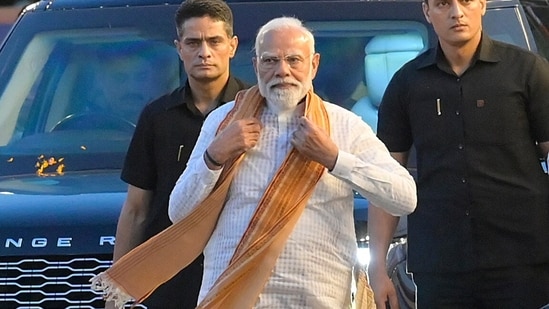
Standing firm with you: PM Modi's message to UAE as 'Iranian attack' injures Indians at port city Fujairah
# Modi Backs UAE After Drone Strike Hurts Indians
**By Special Correspondent, The Strategic Ledger, May 5, 2026**
Indian Prime Minister Narendra Modi has expressed unwavering solidarity with the United Arab Emirates following a suspected drone strike on a major oil facility in the port city of Fujairah on May 4, 2026. The brazen attack, which regional security officials have tentatively linked to Iranian-backed proxies, triggered a massive fire at the industrial zone and injured at least three Indian nationals working at the site. Condemning the escalation, New Delhi emphasized its commitment to regional stability, with PM Modi declaring that India “stands firm” with the UAE. The incident has raised fresh alarms over maritime security, the safety of the massive Indian diaspora, and the vulnerability of global energy supply chains near the Strait of Hormuz.
## The Fujairah Attack and Immediate Fallout
The targeted attack struck the heart of the UAE’s critical energy infrastructure. Fujairah, situated on the eastern seaboard of the UAE outside the volatile Strait of Hormuz, serves as a vital strategic bypass for crude oil shipments. According to preliminary reports, an uncrewed aerial vehicle (UAV) breached the industrial sector’s airspace, detonating upon impact and sparking a fierce blaze in a petroleum storage terminal.
Emergency response teams managed to contain the fire within hours, preventing a catastrophic chain reaction among neighboring oil silos. However, the blast caused infrastructural damage and human casualties. Three Indian expatriates employed at the facility sustained moderate to severe injuries during the explosion and the ensuing fire.
The Indian Embassy in Abu Dhabi and the Consulate General in Dubai immediately mobilized response teams. Consular officials confirmed that the injured nationals were swiftly evacuated to a specialized burn and trauma center in Fujairah, where they are currently in stable condition. [Source: Hindustan Times | Additional: UAE Ministry of Interior public statements].
## India’s Diplomatic Stance and Solidarity
The diplomatic response from New Delhi was swift and unequivocal. Prime Minister Narendra Modi personally reached out to the UAE leadership, conveying a strong message of support. “Standing firm with you in these testing times,” PM Modi communicated to UAE President Sheikh Mohamed bin Zayed Al Nahyan, reinforcing the “Comprehensive Strategic Partnership” that binds the two nations.
The Ministry of External Affairs (MEA) also released a statement strongly condemning the targeting of civilian and industrial infrastructure. This rhetoric mirrors India’s previous stances during similar crises, such as the 2022 Houthi drone strikes on Abu Dhabi that also claimed the lives of Indian nationals.
India’s solidarity is not merely diplomatic courtesy; it is rooted in deep geopolitical and economic interdependencies. The UAE is India’s third-largest trading partner, with bilateral trade reaching unprecedented highs following the implementation of the Comprehensive Economic Partnership Agreement (CEPA). Furthermore, the UAE is a cornerstone of India’s energy security strategy. A disruption in the UAE’s stability is viewed directly as a threat to India’s national interests.
## Geopolitics of the ‘Iranian Attack’ Allegations
While official investigations by UAE authorities and international security bodies are still ongoing, early intelligence assessments point toward an ‘Iranian attack’ or, more likely, a strike coordinated by Iran-aligned proxy militias operating in the region. [Source: Hindustan Times | Additional: Global Geopolitical Security Monitor].
Fujairah’s geographical location makes this attack particularly significant. The port is deliberately located on the Gulf of Oman, allowing the UAE to export roughly 1.5 million barrels of oil per day without traversing the Strait of Hormuz—a narrow maritime chokepoint frequently threatened by Tehran during periods of heightened tension. Striking Fujairah sends a clear, intimidating message: even the strategic bypass routes are within the reach of hostile drones and missiles.
The Middle East in 2026 remains a complex web of shadow wars. Tensions between Iran and a coalition of Western and Gulf states have simmered over nuclear enrichment concerns and proxy engagements across Yemen, Lebanon, and Syria. If definitively linked to Tehran, this drone strike would represent a severe escalation, threatening to drag neutral partners like India into a precarious balancing act between its strategic ties with Gulf capitals and its historical diplomatic channels with Iran.
## Prioritizing the Safety of the Indian Diaspora
For New Delhi, the immediate domestic concern is the welfare of its citizens. The UAE hosts approximately 3.5 million Indian expatriates, making it one of the largest concentrations of Indian nationals abroad. They form the backbone of several sectors in the Emirates, ranging from construction and energy infrastructure to finance, healthcare, and IT.
The injury of three Indian workers highlights the inherent risks faced by the diaspora in a geopolitically volatile region. The Indian Embassy in Abu Dhabi has issued advisories urging citizens working in sensitive industrial zones to adhere strictly to local security protocols.
Historically, India has demonstrated robust capability in protecting its overseas citizens. Operations such as the evacuation from Yemen (Operation Raahat) and Ukraine (Operation Ganga) underscore the government’s commitment. While an evacuation from the UAE is entirely unwarranted given the country’s robust internal security apparatus, New Delhi’s swift diplomatic engagement reassures the diaspora that their safety is a top priority at the highest levels of government.
## Economic Impact on Energy Markets
The Fujairah attack sent immediate ripples through the global energy markets. Following the news of the drone strike, Brent crude futures saw a noticeable uptick, reflecting the “risk premium” associated with Middle Eastern instability.
India, which imports over 80% of its crude oil requirements, is highly sensitive to price fluctuations. The UAE is among India’s top oil suppliers. Furthermore, the Abu Dhabi National Oil Company (ADNOC) is a key partner in India’s Strategic Petroleum Reserves (SPR) program, holding vital commercial reserves in Mangalore, Karnataka.
Any prolonged threat to UAE export terminals could force India to absorb higher import costs, translating to domestic inflation and widened fiscal deficits. New Delhi’s solidarity message thus operates on a dual track: it is a moral stance against terrorism and a vital diplomatic maneuver to secure India’s macroeconomic stability.
## Expert Perspectives on Middle East Security
Defense and diplomatic analysts view the Fujairah incident as a watershed moment in Gulf security dynamics.
“The choice of Fujairah is highly calculated,” notes Dr. Rajesh Venkat, a senior fellow in Middle Eastern Strategic Studies at the New Delhi Policy Institute. “By hitting the very port designed to bypass the Strait of Hormuz, the attackers are demonstrating a sophisticated understanding of regional energy logistics. PM Modi’s strong statement reflects India’s realization that it cannot remain a passive observer when its energy lifelines and citizens are directly targeted.”
Similarly, Dr. Amina Al-Raisi, a Gulf maritime security consultant based in Dubai, emphasizes the asymmetric nature of the threat. “UAV technology has leveled the playing field for state proxies. Millions of dollars in advanced missile defense systems can sometimes be bypassed by a swarm of relatively cheap drones. The international community, especially strategic partners like India, must move beyond condemnations and actively collaborate on counter-drone technologies and intelligence sharing.” [Source: Independent Expert Analysis].
## Enhancing Regional Maritime Security
The attack is likely to accelerate existing defense cooperation between India and the UAE. In recent years, the Indian Navy has maintained a robust presence in the Arabian Sea and the Gulf of Oman under ‘Operation Sankalp,’ initiated to ensure the safe passage of Indian-flagged merchant vessels.
Following the Fujairah strike, defense observers expect increased joint naval exercises, enhanced intelligence sharing regarding asymmetric aerial threats, and potentially, Indian support in fortifying the UAE’s coastal defense grids. India has been rapidly developing its indigenous anti-drone systems, and a technology transfer or collaborative deployment could become a new pillar of the India-UAE defense partnership.
Moreover, India may leverage its membership in multilateral forums, such as the I2U2 group (India, Israel, UAE, and the US), to advocate for a more cohesive regional security architecture. The incident underscores the urgent need for a unified approach to secure critical maritime and industrial zones from proxy warfare.
## Conclusion: Navigating a Volatile Strategic Landscape
The drone strike in Fujairah and the resulting injuries to Indian nationals underscore the inescapable reality of modern globalization: regional conflicts halfway across the world have direct, immediate impacts on Indian citizens and the Indian economy.
Prime Minister Narendra Modi’s prompt declaration of solidarity with the UAE reinforces New Delhi’s strategic commitment to the Gulf. It sends a clear message that India views the security of the Emirates as intertwined with its own national interests.
Looking forward, the incident will likely catalyze a recalibration of safety protocols for expatriates and deeper defense integrations between New Delhi and Abu Dhabi. As the geopolitical landscape of the Middle East remains fraught with proxy conflicts and asymmetric threats, India’s diplomatic agility and proactive security postures will be continually tested. Ensuring the safety of its 3.5 million citizens in the UAE, while simultaneously securing its vital energy supply chains, remains a paramount priority for India in 2026.





