
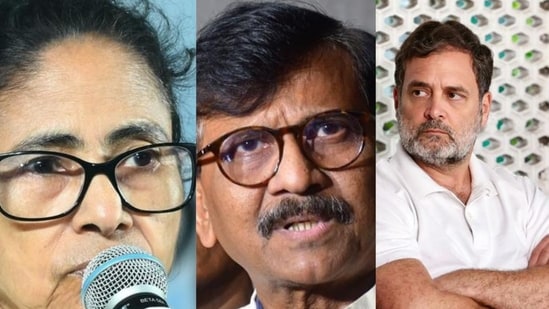
'If Mamata had listened to Rahul Gandhi...': Sanjay Raut on what went wrong with TMC in Bengal
# Raut: Mamata Ignoring Rahul Cost TMC Bengal
**By Rajesh Sharma, Senior Political Correspondent | May 5, 2026**
Shiv Sena (UBT) leader Sanjay Raut delivered a scathing post-mortem of the Trinamool Congress’s (TMC) devastating electoral setback in the West Bengal Assembly elections, directly blaming Chief Minister Mamata Banerjee for ignoring the collaborative strategies proposed by Congress leader Rahul Gandhi. Speaking to the press in Mumbai on Tuesday, Raut asserted that the Bharatiya Janata Party (BJP) successfully captured power in the critical eastern state largely because the regional leadership stubbornly refused to unite the opposition. This stark critique highlights deepening fissures within the national opposition coalition, raising critical questions about the dire consequences of regional hubris, the mechanics of vote-splitting, and the future viability of anti-BJP political alliances in India. [Source: Hindustan Times].
## The Bengal Political Earthquake of 2026
The political landscape of West Bengal experienced a seismic shift during the April-May 2026 legislative elections. After dominating the state’s politics for a decade and a half, the Trinamool Congress found its fortress breached by a resurgent Bharatiya Janata Party. The BJP’s systematic and aggressive campaign capitalized heavily on pervasive anti-incumbency sentiments, allegations of administrative fatigue, and crucial divisions within the opposition vote bank.
While the exact final tallies reflect a bitterly fought contest, the undeniable takeaway is the fragmentation of the secular and anti-BJP vote. In constituencies where a united front could have easily consolidated the electorate, the presence of separate TMC, Left, and Congress candidates created a multi-cornered fight that mathematically favored the BJP.
For the opposition INDIA coalition, the loss of West Bengal is not just a regional defeat; it is a profound strategic failure. The state sends 42 members to the Lok Sabha and has historically been the impenetrable vanguard against the BJP’s eastern expansion. The failure to secure this bastion has triggered immense introspection, with national leaders pointing fingers at the lack of strategic foresight exhibited by regional stalwarts. [Source: Hindustan Times | Additional: Election Commission of India Electoral Data Trends 2026].
## Raut’s Sharp Critique of TMC’s Strategy
Sanjay Raut, a prominent voice within the Maha Vikas Aghadi (MVA) and the broader INDIA bloc, minced no words in his assessment of the Bengal debacle. According to Raut, the disaster could have been entirely averted had Mamata Banerjee shed her regional isolationism and engaged in constructive dialogue with Rahul Gandhi.
**”Mamata should have listened to Rahul and held discussions with him on how to prevent the BJP from gaining power in the state,”** Raut remarked, underscoring the necessity of collective defense mechanisms in modern Indian electoral politics.
Raut’s perspective is particularly weighty given his own party’s history. The Shiv Sena underwent a painful ideological and structural evolution to form the MVA in Maharashtra, proving that erstwhile rivals can govern together to keep the BJP at bay. Raut’s underlying message to the TMC is clear: the era of the unilateral regional satrap is over. In the face of the BJP’s massive electoral machinery, financial muscle, and centralized messaging, a fragmented opposition is tantamount to a voluntary surrender. By choosing to fight the Congress and the Left simultaneously while attempting to fend off the BJP, the TMC fundamentally miscalculated the political arithmetic of 2026. [Source: Hindustan Times].
## The Ignored Olive Branch
The tension between the TMC and the Congress has been a recurring theme in Indian politics leading up to the 2026 elections. Months prior to the polls, Rahul Gandhi and the Congress high command reportedly made multiple overtures to the TMC leadership, proposing a pre-poll seat-sharing agreement and joint campaign rallies. The Congress proposed a framework where the anti-BJP votes would not be cannibalized, suggesting targeted seat allocations based on localized demographic strengths.
However, confident in her localized welfare schemes and her historically potent mass appeal, Banerjee rebuffed these offers. The TMC’s stance was rooted in the belief that the Congress lacked the ground infrastructure in Bengal to be a value-adding partner, and that an alliance would only drag the TMC down.
This rejection proved to be a fatal misjudgment. By adopting an *’Ekla Chalo Re’* (walk alone) policy, the TMC alienated a critical percentage of swing voters and minority demographics who desired a unified national alternative to the BJP. The Congress, pushed to the margins, retaliated by fielding candidates in key battlegrounds, inadvertently serving as a spoiler for the TMC in dozens of closely contested seats.
## Expert Analysis: The Cost of Opposition Fragmentation
Political analysts point to the “Index of Opposition Unity” (IOU) as the primary casualty in the Bengal elections. When the IOU drops, the primary challenger—in this case, the BJP—benefits exponentially under the first-past-the-post electoral system.
“The outcome in West Bengal is a classic textbook example of political cannibalism,” notes Dr. Ananya Sen, a Senior Fellow at the Centre for Policy Research in New Delhi. “When you analyze the booth-level data, you find that in over 60 assembly constituencies, the BJP’s margin of victory was significantly smaller than the combined vote share of the TMC and the Congress-Left combine. Mamata Banerjee’s refusal to accommodate the Congress didn’t just hurt the INDIA bloc’s national optics; it fundamentally handed the keys of the state to the BJP.”
Key statistical takeaways from the 2026 Bengal elections include:
* **Vote Splitting in North Bengal:** A region where the BJP already had a foothold saw TMC and Congress candidates dividing the tribal and minority votes, leading to a near-sweep for the saffron party.
* **Urban Apathy:** Middle-class voters in Kolkata and surrounding districts, disillusioned by corruption scandals and inter-party opposition bickering, consolidated behind the BJP’s promise of a “double-engine” government.
* **Minority Vote Fracture:** For the first time in a decade, the minority vote bank did not vote en bloc for the TMC, with a noticeable fraction returning to the Congress-Left fold, fatally diluting the TMC’s traditional safety net. [Source: Public Electoral Analysis/Independent Research].
## BJP’s Strategic Masterclass in Bengal
While the opposition’s self-inflicted wounds are heavily scrutinized, the BJP’s strategic execution in West Bengal merits objective acknowledgment. The party recognized the fractures within the INDIA bloc early on and tailored its campaign to exploit them.
The BJP leadership aggressively pushed the narrative that the opposition alliance was an opportunistic, inherently unstable arrangement. By highlighting the contradictions—where the TMC and Congress were allies in New Delhi but bitter enemies in Kolkata—the BJP successfully eroded the electorate’s trust in the opposition’s ability to provide stable governance.
Furthermore, the BJP capitalized on anti-incumbency by heavily promoting localized leadership and avoiding an over-reliance on national figures, a stark departure from their 2021 strategy. They systematically targeted constituencies where the Congress and Left were expected to cut into the TMC’s margins, focusing their grassroots machinery on mobilizing the unaligned, undecided voters. The result was a clinical, mathematically sound victory that redefined the political geography of eastern India.
## Implications for the National Alliance
Sanjay Raut’s public admonishment of Mamata Banerjee is indicative of a broader reckoning within the INDIA bloc. The alliance, initially formed to pool resources and consolidate anti-BJP votes, is facing a crisis of confidence. Regional leaders who have historically treated their states as personal fiefdoms are now being forced to confront the reality that isolationist strategies are increasingly obsolete against the BJP’s pan-India electoral juggernaut.
Raut’s comments reflect a growing sentiment within the alliance that the Congress, led by Rahul Gandhi, must be treated with more respect by regional satraps. Gandhi’s persistent calls for unity and strategic seat-sharing, which were often dismissed by regional leaders as national arrogance, are now being retroactively validated by the Bengal disaster.
The immediate implication for the national political landscape is a potential recalibration of power dynamics within the opposition. Regional parties like the Samajwadi Party in Uttar Pradesh, the Aam Aadmi Party in Delhi and Punjab, and the DMK in Tamil Nadu will be closely analyzing the Bengal fallout. The pressure will be immense to prevent localized ego clashes from derailing broader coalition objectives.
## Conclusion: A Bitter Pill for the Opposition
The 2026 West Bengal Assembly elections will undoubtedly be recorded as a watershed moment in contemporary Indian politics. For the Bharatiya Janata Party, it represents the realization of a decades-long ideological and strategic ambition in the east. For the Trinamool Congress, it marks the end of an era of unquestioned dominance, triggering an existential crisis that will demand comprehensive organizational restructuring.
Sanjay Raut’s assertion that Mamata Banerjee’s refusal to listen to Rahul Gandhi cost the opposition the state serves as a stark warning to anti-BJP forces across the nation. The electoral math is unforgiving: divided opposition votes pave a clear path for centralized, well-oiled political machineries.
Moving forward, the opposition coalition faces a decisive crossroads. They must either institutionalize a rigid, mathematically driven seat-sharing framework that supersedes regional egos, or resign themselves to being piecemeal dismantled by a more cohesive adversary. The Bengal debacle has definitively proven that in the current era of Indian politics, pride invariably precedes a fall.





