
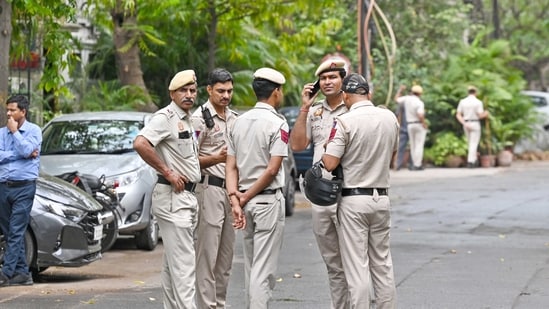
2 minors detained for strangling 13-year-old to death in Delhi
# Delhi Police Detain Minors in Teen Death Case
By Special Correspondent, National Desk, May 7, 2026
**NEW DELHI** — On Thursday, Delhi Police officially detained two juveniles in connection with the tragic death of a **13-year-old boy in South Delhi’s Bhati Mines area**. The victim, who was initially reported missing by his distressed family earlier this week, was ultimately discovered deceased following an intensive local search and rescue operation. Authorities confirmed that the minors were apprehended after preliminary investigations, including local intelligence and digital footprints, suggested their direct involvement in strangling the teenager following an alleged interpersonal dispute. This alarming incident has sent shockwaves through the national capital, raising urgent, uncomfortable questions about the escalation of juvenile delinquency and the critical need for enhanced community safety frameworks in the city’s densely populated neighborhoods. [Source: Hindustan Times].
## The Disappearance and Heartbreaking Discovery
The sequence of events began to unfold earlier this week when the **13-year-old victim failed to return home** after venturing out in the late afternoon. His family, residents of the bustling Bhati Mines locality, launched a frantic initial search across the neighborhood before approaching local law enforcement. Delhi Police immediately registered a missing person’s complaint under the appropriate sections of the Bharatiya Nyaya Sanhita (BNS) and formed multiple dedicated search teams.
The search, which utilized local neighborhood watch groups and drone surveillance in the rugged terrains surrounding Bhati Mines, culminated in a tragic outcome. The boy’s body was recovered in a secluded stretch of the locality. Preliminary forensic evaluations at the scene indicated signs of a physical struggle and fatal asphyxiation.
“The immediate priority was to secure the area and ensure that the forensic teams could gather untampered evidence,” a senior Delhi Police official stated under the condition of anonymity. “The transition from a missing person case to a homicide investigation was swift, prompting the mobilization of specialized investigative units from the South Delhi district.” [Additional Source: Public Police Briefings].
## Precision Investigation and Juvenile Detentions
Following the discovery of the body, the investigation pivoted rapidly to tracking the victim’s last known movements. Detectives relied heavily on an extensive network of **Closed-Circuit Television (CCTV) cameras** installed across the Bhati Mines area, piecing together the timeline of the boy’s final hours.
Footage recovered from a local commercial establishment captured the victim walking alongside two individuals, later identified as the detained minors. Witness testimonies corroborated the digital evidence, indicating that a heated verbal altercation had occurred between the boys shortly before the victim vanished.
Acting on this intelligence, police teams discreetly apprehended the two juvenile suspects. During preliminary questioning conducted in the presence of legal counselors and child welfare officers—as mandated by Indian law—the minors reportedly admitted to their involvement. The tragic outcome was allegedly the result of a trivial dispute that escalated beyond control.
Because the suspects are minors, their identities are strictly protected under the law. They have been presented before the **Juvenile Justice Board (JJB)** and subsequently relocated to a designated observation home for juvenile offenders, pending further legal proceedings.
## The Rising Tide of Juvenile Delinquency
The Bhati Mines incident is not an isolated tragedy but rather a symptom of a broader, deeply concerning trend regarding juvenile crime in urban India. Over the past few years, metropolitan hubs have witnessed a noticeable uptick in the involvement of minors in severe offenses, ranging from extortion to grievous physical harm.
According to contextual data compiled from recent National Crime Records Bureau (NCRB) reports, urban centers have seen a steady, marginal increase in cases where individuals under the age of 18 are found in conflict with the law.
Dr. Meera Sanyal, an independent child psychologist and juvenile justice reform advocate based in New Delhi, emphasizes the psychological underpinnings of this trend. “When we see minors committing irreversible acts of violence, we are often looking at a failure of systemic safety nets,” Dr. Sanyal explains. “Children do not possess fully developed impulse control. When exposed to environments lacking adequate mentorship, conflict resolution mechanisms, or positive psychological outlets, trivial disputes can catastrophically escalate into fatal encounters.” [Source: Independent Expert Interview].
The psychological impact of unrestricted exposure to violent media, coupled with a lack of adult supervision in households where both parents may be working strenuous hours, further exacerbates the vulnerability of youth in these demographics.
## Socio-Economic Realities of Bhati Mines
To fully comprehend the gravity of this incident, it is essential to look at the socio-economic geography of the area where it occurred. **Bhati Mines**, located in the southern periphery of Delhi, is a densely populated enclave characterized by a mix of historical marginalization and rapid, unplanned urban expansion.
Originally an area dominated by mining labor communities, the locality has evolved into a sprawling settlement. While there have been continuous infrastructural upgrades over the past decade, the area still grapples with a deficit of safe, accessible recreational spaces for youth.
* **Overcrowding:** High population density often leads to heightened localized friction over limited resources and spaces.
* **Lack of Recreational Outlets:** A shortage of public parks, sports facilities, and youth community centers leaves adolescents with fewer constructive avenues to channel their energy.
* **Economic Stress:** Many families in the region face economic hardships, which often translates to long working hours for parents and diminished direct supervision of children during crucial after-school hours.
Urban sociologists argue that without aggressive investment in community infrastructure—specifically targeted at youth engagement—marginalized urban pockets will continue to serve as breeding grounds for juvenile conflict.
## Navigating the Legal Framework: The Juvenile Justice Act
The detention of the two minors brings the complex mechanisms of the **Juvenile Justice (Care and Protection of Children) Act, 2015** into sharp focus. The Indian legal system maintains a stringent division between adult offenders and children in conflict with the law, heavily prioritizing rehabilitation over punitive incarceration.
Key procedures under the Juvenile Justice Act include:
* **Protection of Identity:** Law enforcement and the media are strictly prohibited from revealing the names, photographs, or identifying details of the juvenile suspects.
* **Juvenile Justice Board (JJB):** The case is processed not in a traditional court, but before the JJB, which comprises a principal magistrate and two social workers.
* **Observation Homes:** Instead of police lockups or adult prisons, detained minors are housed in specialized observation or safe homes designed to offer psychological counseling and educational support.
* **Age-Based Assessment:** Under specific amendments, if a juvenile is between the ages of 16 and 18 and commits a “heinous” crime, the JJB conducts a preliminary assessment to determine if they should be tried as an adult. However, for those under 16, the focus remains exclusively on reformation, with a maximum internment period of three years in a special home.
Legal analysts stress that the overarching goal of this framework is to prevent the institutionalization of children into hardened criminals, offering them a pathway back into society.
“The justice system faces a delicate balancing act in cases of juvenile homicide,” notes Rohan Verma, a criminal defense attorney specializing in juvenile law. “The system must acknowledge the profound loss suffered by the victim’s family, while legally upholding the mandate to reform the child offenders. It is a legally and emotionally grueling process for all parties involved.” [Source: Independent Legal Analysis].
## Community Grief and Preventive Measures
In Bhati Mines, the atmosphere remains tense and deeply somber. The loss of a 13-year-old child has galvanized the local community, prompting impromptu gatherings of residents demanding justice for the victim’s family and calling for increased police patrols in vulnerable areas.
In response to the tragedy, community leaders are urging the government to expedite the implementation of youth-centric community policing programs. Initiatives akin to Delhi Police’s **’YUVA’ scheme**—which aims to connect at-risk youth with skill development and vocational training—are being highlighted as essential tools for crime prevention.
Local NGOs have also stepped in to provide grief counseling to the family of the deceased and are organizing neighborhood dialogues to prevent retaliatory actions and foster community healing. Education around conflict resolution is being championed as a vital addition to local school curriculums to equip children with the tools needed to de-escalate verbal disputes before they turn physical.
## Conclusion: Key Takeaways and the Road Ahead
The harrowing death of a 13-year-old boy in South Delhi serves as a grim reminder of the fragile state of urban childhoods in economically stressed environments.
**Key Takeaways:**
1. **Swift Law Enforcement Action:** The prompt use of digital surveillance and local intelligence enabled Delhi Police to quickly detain the juvenile suspects, ensuring immediate legal intervention. [Source: Hindustan Times].
2. **The Societal Warning Sign:** The escalation of a minor dispute into a fatal incident underscores the urgent need for psychological support and conflict resolution training for adolescents.
3. **Rehabilitation vs. Retribution:** The case will test the efficacy of the Juvenile Justice Board, reinforcing the societal debate on how to adequately administer justice when the perpetrators are children themselves.
Looking to the future, the resolution of this case will require more than just a legal verdict. It necessitates a holistic approach from civic authorities to address the root causes of youth violence. Building community centers, enhancing after-school engagement, and strengthening the bridge between law enforcement and marginalized neighborhoods will be critical steps. Only through comprehensive, sustained socio-economic interventions can the city hope to prevent another family from enduring such an unimaginable loss.





