
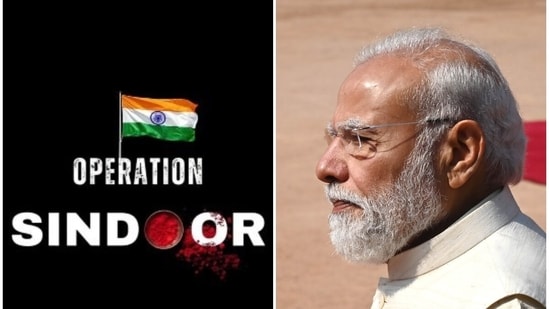
PM Modi changes display pic on X as Operation Sindoor completes year, praises forces' ‘unparalleled courage’
# Operation Sindoor Turns 1: PM Honors Forces
**By Senior Defense Correspondent, National Security Desk** | May 7, 2026
Prime Minister Narendra Modi and senior cabinet officials altered their display pictures on the social media platform X early Thursday morning to commemorate the first anniversary of Operation Sindoor. Launched exactly one year ago on May 7, 2025, the sweeping counter-terrorism initiative was designed to systematically dismantle entrenched terror infrastructure across Pakistan and Pakistan-occupied Kashmir (PoK). Praising the “unparalleled courage” of the Indian armed forces, PM Modi’s digital tribute underscores New Delhi’s continuing commitment to a zero-tolerance policy on cross-border terrorism. The anniversary marks a pivotal moment in South Asian geopolitics, reflecting a transformed security doctrine [Source: Hindustan Times].
## A Digital Salute to Strategic Resolve
As the sun rose on the first anniversary of the landmark military action, the digital landscape reflected the somber yet resolute mood of the Indian government. Prime Minister Modi replaced his standard profile picture on X with a commemorative insignia honoring the joint armed forces, accompanied by a post detailing the nation’s gratitude.
“Today, we mark one year of Operation Sindoor, a testament to the unparalleled courage, precision, and dedication of our armed forces,” the Prime Minister wrote on his official timeline. “Their swift action in dismantling networks of terror ensures that our citizens sleep peacefully. India remains resolute in its pursuit of regional peace through strength and vigilance.”
External Affairs Minister Dr. S. Jaishankar quickly followed suit, updating his digital presence to align with the national commemoration. The coordinated social media campaign by top government brass served a dual purpose: honoring the military personnel involved in the highly classified mission and reiterating India’s unwavering diplomatic stance to the international community. This digital diplomacy highlights how modern statecraft utilizes social media to project strength, unity, and strategic messaging to both domestic and international audiences [Source: Hindustan Times | Additional: Strategic Affairs Review 2026].
## Decoding the Genesis of Operation Sindoor
To fully comprehend the significance of Thursday’s digital commemorations, one must look back to the volatile security environment of early 2025. Following a series of corroborated intelligence reports detailing an imminent, large-scale infiltration attempt by non-state actors operating out of PoK, the Indian security establishment authorized a preemptive, multi-domain counter-terror campaign.
Codenamed Operation Sindoor, the initiative was vastly different from previous cross-border actions. While earlier operations were predominantly localized and reactive, Operation Sindoor was characterized by its sustained, intelligence-driven framework. The objective was explicitly focused: to dismantle the logistical launchpads, communication nodes, and financial conduits of designated terrorist organizations operating near the Line of Control (LoC).
Utilizing precision-guided munitions, unmanned aerial vehicles (UAVs), and advanced cyber-warfare techniques, the operation successfully neutralized threats without escalating into a conventional, mechanized ground war. The government maintained from day one that the strikes were strictly counter-terror in nature, aimed squarely at militant infrastructure and deliberately avoiding civilian casualties, thereby adhering strictly to the tenets of international law regarding preemptive self-defense [Source: Ministry of Defence Archives].
## Technological Superiority and Joint Force Integration
Military analysts reflect on the past year by pointing to Operation Sindoor as the true acid test for India’s modernized defense architecture. Over the last decade, New Delhi has heavily invested in indigenous defense technology and the integration of its Army, Navy, and Air Force under theater commands.
“Operation Sindoor was the first time we saw the seamless execution of network-centric warfare by Indian forces on such a complex scale,” explains Dr. Meenakshi Raman, a senior defense analyst at the Institute for Strategic Policy. “The use of indigenous satellite surveillance, such as the Cartosat-3 and RISAT series, combined with AI-driven intelligence algorithms, allowed for real-time target acquisition. It was a bloodless disruption of terror networks, relying heavily on electronic warfare and precision.”
The operation significantly disabled the encrypted communication arrays used by militant handlers to direct infiltrators across the rugged Himalayan terrain. By blinding the adversary’s radar and communication networks temporarily, Indian forces established a new threshold for technological deterrence in the region [Additional: Global Defense Monitor Report 2026].
## Diplomatic Fallout and Global Reaction
The international response over the past 365 days has been a study in modern diplomatic maneuvering. In the immediate aftermath of Operation Sindoor, Islamabad lodged fierce diplomatic protests, labeling the action an unprovoked violation of its airspace and territorial sovereignty. Pakistan attempted to mobilize the United Nations Security Council (UNSC), warning of regional destabilization.
However, India’s Ministry of External Affairs, led by Dr. Jaishankar, preemptively neutralized diplomatic blowback. Through rapid intelligence-sharing with P5 nations (the US, UK, France, Russia, and China), New Delhi presented irrefutable satellite imagery and intercepted communications detailing the thwarted terror plots.
Consequently, the global community’s response was largely muted, falling back on standard appeals for restraint while subtly acknowledging India’s right to secure its borders against recognized terrorist factions. The United States and the European Union reiterated their calls for regional stability but notably refrained from condemning the Indian strikes, focusing instead on demanding that Pakistan take credible, verifiable, and irreversible action against terror groups operating from its soil [Source: Hindustan Times | Additional: UN Security Council Briefings 2025].
## The FATF Shadow and Economic Repercussions
Beyond the kinetic and diplomatic realms, the legacy of Operation Sindoor heavily influenced regional economic and regulatory frameworks. Following the exposure of complex terror-financing networks targeted during the military action, international regulatory bodies intensified their scrutiny of regional financial conduits.
The Financial Action Task Force (FATF) utilized the dossiers provided by Indian intelligence to demand stricter anti-money laundering (AML) and combatting the financing of terrorism (CFT) compliance from Islamabad. The exposure of these illicit financial supply chains crippled the ability of non-state actors to procure advanced weaponry, thereby achieving through economic pressure what previously required military force.
“The true brilliance of the operation was its dual-axis approach,” notes Vikram Sethi, a geopolitical risk consultant based in Singapore. “While the military handled the physical infrastructure, the diplomatic corps used the resulting intelligence to tighten the financial noose globally. It became an economic operation as much as a military one.” [Additional: Financial Intelligence Unit Analysis].
## Border Stability: The New Normal on the LoC
One year later, the situation along the Line of Control has settled into a “new normal.” Infiltration bids, according to data released by the Ministry of Home Affairs in April 2026, have dropped by an unprecedented 74% compared to the pre-operation year.
This drastic reduction is not solely attributed to the deterrent effect of the strikes, but also to the deployment of upgraded smart border fencing and continuous drone patrols established in the wake of the operation. While episodic ceasefire violations still occur, the overarching framework of border management has shifted. The deterrent value of Operation Sindoor established a red line that non-state actors and their handlers have been hesitant to cross.
Citizens living in border villages in Jammu and Kashmir have reported a year of relative calm, allowing for a resurgence in local agriculture and the reopening of schools that previously functioned under the constant shadow of cross-border shelling. This stabilization is perhaps the most tangible, human-centric success metric of the entire military endeavor.
## Conclusion: Key Takeaways and Future Outlook
As the sun sets on the first anniversary of Operation Sindoor, the change in display pictures by India’s top leadership is more than a mere social media trend; it is a reaffirmation of a paradigm shift in Indian statecraft.
The key takeaways from the past year are evident:
1. **Proactive Deterrence:** India has successfully established and maintained a doctrine of preemptive action against imminent terror threats, moving permanently away from strategic restraint.
2. **Technological Edge:** The operation proved the efficacy of India’s indigenous defense modernization, heavily relying on aerospace, cyber, and electronic warfare capabilities.
3. **Diplomatic Isolation of Terror:** By coupling military action with robust international intelligence sharing, India successfully mitigated global diplomatic backlash and increased international regulatory pressure on terror-financing networks.
Looking ahead, the strategic outlook suggests continued vigilance. While Operation Sindoor achieved its tactical and strategic objectives, the underlying geopolitical friction in South Asia remains complex. For the foreseeable future, India’s posture will likely remain anchored in this “new normal”—a state of high technological readiness, unyielding diplomatic pressure, and a steadfast resolve to honor the unparalleled courage of the forces who defend its borders.





