
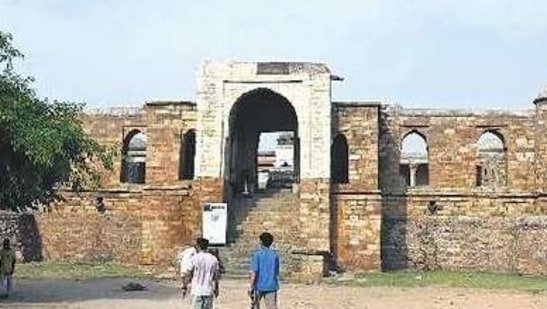
Experts debate conservation approach under Sultan Ghari revival plan
# Sultan Ghari Park Plan Sparks Heritage Debate
**By Staff Correspondent, Delhi Heritage Watch, May 9, 2026**
The Delhi Development Authority’s (DDA) ambitious revival plan to construct a landscaped park around the Sultan Ghari mausoleum has ignited a fierce debate among India’s top conservationists, historians, and ecologists. Built in 1231 CE in present-day Vasant Kunj, New Delhi, the monument is celebrated as India’s oldest Islamic tomb. However, the DDA’s May 2026 proposal to transform the rugged, scrub-forested environs into a manicured tourist attraction has drawn sharp criticism. Experts warn that heavy landscaping and “beautification” could threaten both the monument’s structural integrity and the fragile ecology of the surrounding Aravalli ridge. [Source: Hindustan Times].
## The Genesis of India’s First Islamic Mausoleum
To understand the gravity of the current conservation debate, one must look back over eight centuries. Sultan Ghari was commissioned by Shams ud-Din Iltutmish, the third ruler of the Delhi Sultanate’s Mamluk dynasty, for his eldest son, Prince Nasiru’d-Din Mahmud. Predating even the completion of the iconic Qutub Minar, the tomb represents a fascinating architectural transition.
The structure is unique for its underground crypt—the word *Ghari* literally translates to “cave” or “crypt.” It features an octagonal burial chamber encased within a fortress-like square courtyard. Architectural historians revere Sultan Ghari because it showcases a blend of indigenous Indian trabeate (post-and-lintel) construction and early Islamic design, utilizing repurposed elements from earlier Hindu and Jain temples. The raw, austere beauty of the structure has survived for nearly 800 years precisely because of its isolated, elevated location on the rocky ridge of the Aravallis. [Source: Archaeological Survey of India (ASI) Archives | Additional: INTACH Delhi Chapter].
## Unpacking the DDA’s Revival Vision
In an effort to boost heritage tourism and reclaim encroached land, the Delhi Development Authority recently proposed integrating Sultan Ghari into a larger “archaeological park” network. The blueprint mirrors previous DDA interventions, such as the Mehrauli Archaeological Park.
The proposed plans include:
* **Extensive Landscaping:** Rolling green lawns, ornamental flower beds, and a network of paved walking trails.
* **Visitor Amenities:** The construction of a visitor interpretation center, public restrooms, ticket kiosks, and a dedicated parking lot.
* **Illumination:** Installing architectural lighting to make the monument visually striking for night-time tourism.
* **Perimeter Fencing:** Securing the boundaries to prevent illegal encroachment and grazing by local livestock.
Proponents of the plan argue that these upgrades are long overdue. “Delhi’s heritage must be accessible and safe for modern tourists,” noted a senior urban planner involved with the DDA’s beautification drive. “By developing a park around Sultan Ghari, we are protecting it from urban encroachment while providing the city with a vital green lung and educational space.” [Source: Hindustan Times | Additional: Public Domain DDA Urban Proposals 2026].
## The Architectural Conservation Pushback
Despite the DDA’s intentions, specialized conservation architects argue that “beautification” is fundamentally different from “preservation.” The introduction of English-style lawns and water-intensive flora around medieval dry-stone masonry is a primary point of contention.
Dr. Aparna Sen, a leading conservation architect based in New Delhi, explained the structural risks: “Sultan Ghari was built in a dry, rocky terrain. When you introduce irrigated grass lawns right up to the base of ancient monuments, you artificially raise the water table and introduce constant moisture. This leads to capillary action, where water rises through the porous 13th-century stone, causing salt efflorescence, flaking, and ultimately, structural degradation.”
Furthermore, heritage purists argue against the “sanitization” of ruins. According to the Venice Charter on conservation, historical sites should be preserved in their authentic setting. Transforming a rugged medieval tomb into a manicured garden alters the site’s historical narrative, stripping away the solemn, isolated atmosphere that Iltutmish intended for his son’s resting place. [Source: Hindustan Times | Additional: International Council on Monuments and Sites (ICOMOS) guidelines].
## Ecological Threat to the Aravalli Ridge
Beyond structural concerns, the proposed landscaping threatens the local ecosystem. Sultan Ghari sits on a crucial segment of the Southern Delhi Ridge, an extension of the ancient Aravalli Range. This area is characterized by a specific dry deciduous scrub forest—a fragile ecosystem vital for local groundwater recharge and regional biodiversity.
Environmentalists warn that replacing native flora like *Dhau* (Anogeissus pendula) and *Khejri* (Prosopis cineraria) with ornamental plants and high-maintenance turf grass is ecologically disastrous.
“The Aravalli ridge is not a garden; it is a wild, arid ecosystem,” stated Vikramaditya Singh, an ecologist specializing in Delhi’s urban forests. “When authorities dump topsoil over ancient quartzite rock to grow grass, they destroy the natural topography. It alters the surface water runoff and destroys the habitat for native birds, reptiles, and insects that have thrived around Sultan Ghari for centuries.” [Source: Additional: Delhi Ridge Management Board Reports].
## The Challenge of Living Heritage
Complicating the conservation debate is Sultan Ghari’s status as a “living” monument. Unlike many dormant ruins managed by the Archaeological Survey of India (ASI), Sultan Ghari holds deep religious significance for the local population. Over the centuries, Prince Mahmud has been elevated to the status of a *Peer* (saint).
Every Thursday, devotees from neighboring villages—spanning both Hindu and Muslim communities—visit the crypt to light mustard oil lamps, offer flowers, and seek blessings. This syncretic tradition is an intangible cultural heritage that is just as vital as the stone structure itself.
Sociologists and local community leaders express anxiety that the DDA’s park development will corporatize the space. Introducing ticket counters, rigid visiting hours, and security fencing could alienate the traditional worshippers who have been the monument’s de facto custodians for generations.
“Conservation must be human-centric,” argued Dr. Meenakshi Khanna, a cultural historian. “If a revival plan cuts off the local community’s access to their ancestral shrine under the guise of ‘heritage management,’ it is not conservation; it is gentrification.” [Source: Hindustan Times | Additional: Ethnographic studies on Delhi’s syncretic shrines].
## Bridging the Gap: A Multidisciplinary Approach
The controversy surrounding Sultan Ghari underscores a broader administrative disconnect in Indian heritage management. While the ASI is primarily responsible for the core preservation of the monument, the surrounding land often falls under the jurisdiction of the DDA or local municipal bodies. This overlapping authority frequently leads to disjointed execution.
To resolve the impasse, experts advocate for a multidisciplinary approach that moves beyond the binary of “abandoned ruin” versus “manicured park.” Best practices suggest:
1. **Ecological Landscaping:** Utilizing native Aravalli plant species that require no irrigation, thereby protecting the monument from water damage while preserving the natural ridge habitat.
2. **Community Integration:** Ensuring that local devotees retain unrestricted, free access to the crypt for their weekly rituals, preserving the site’s intangible heritage.
3. **Minimalist Infrastructure:** Keeping visitor amenities like restrooms and parking well outside the immediate visual and structural buffer zone of the monument.
## Conclusion and Future Outlook
The DDA’s proposed revival of Sultan Ghari has inadvertently triggered a crucial national conversation about how India manages its immense historical wealth. While the urge to clean up and present monuments as tourist-friendly parks is understandable, the approach must be scientifically sound and contextually appropriate.
As of May 2026, citizen groups and heritage conservation bodies are petitioning the Ministry of Culture and the Delhi Government to revise the DDA’s blueprint. The ultimate outcome at Sultan Ghari will likely set a precedent for dozens of other vulnerable monuments scattered across the National Capital Region.
Protecting a 13th-century mausoleum requires more than just laying down turf and installing floodlights; it demands a deep respect for the stone’s history, the land’s ecology, and the people’s faith. Whether the authorities will pivot toward a more sensitive, scientifically backed conservation model remains to be seen.





