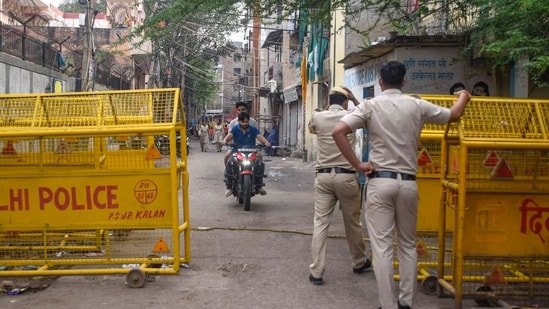
Two friends, returning after IPL match, crushed under speeding car
# IPL Fans Killed in Late-Night Speeding Crash
By Senior Correspondent, National News Desk | May 9, 2026
Two young friends returning home after an Indian Premier League (IPL) cricket match were killed instantly when a speeding car collided with their two-wheeler late Friday night. The severe impact of the crash left both riders dead on the spot before emergency medical services could intervene. Law enforcement officials have launched a comprehensive investigation into the fatal incident, highlighting ongoing systemic concerns regarding reckless late-night driving and the complexities of post-event traffic management in major metropolitan areas. [Source: Hindustan Times]
## The Tragic Incident Unfolds
The tragedy occurred during the late hours of Friday as thousands of cricket enthusiasts were dispersing from a highly anticipated IPL fixture. According to preliminary reports, the two victims were navigating a relatively clear stretch of an arterial city road when a privately owned four-wheeler, reportedly traveling at speeds well above the legal limit, rammed into their motorcycle from behind.
First responders who arrived at the scene noted that the sheer velocity of the offending vehicle gave the riders no opportunity to evade the collision. **”The impact of the collision was severe, and both riders died on the spot,”** local officials confirmed to the media. The physical evidence at the crash site, including extensive damage to both vehicles and prolonged skid marks, underscored the high-speed nature of the accident. [Source: Hindustan Times]
The bodies of the deceased were immediately transferred to a nearby government hospital for post-mortem examinations, while their families were notified by the authorities. The emotional toll on the community and the cricketing fanbase has been profound, casting a somber shadow over the ongoing sporting season.
## Law Enforcement and Forensic Investigation
Local police have registered a First Information Report (FIR) and cordoned off the accident site to allow forensic teams to gather critical evidence. Investigators are currently heavily reliant on closed-circuit television (CCTV) footage sourced from nearby traffic intersections and commercial establishments to reconstruct the exact sequence of events.
Initial investigative efforts are focused on determining several key factors:
* **The exact speed of the car** at the moment of impact.
* **The condition of the driver**, including potential driving under the influence (DUI) of alcohol or narcotics.
* **The functionality of streetlighting** and road visibility in the area.
* **Adherence to safety protocols**, such as whether the victims were wearing regulation-compliant helmets.
“We are meticulously analyzing all available technical and forensic data,” stated a senior traffic police officer familiar with the ongoing probe. “Strict legal action will be initiated against the perpetrator under the relevant sections of the law. Reckless driving that endangers public life will not be tolerated.” [Additional: Police Procedural Framework]
## A Growing Concern: Late-Night Urban Road Safety
This fatal crash brings to the forefront a persistent and deadly issue in urban India: late-night road traffic accidents. Despite repeated awareness campaigns and stricter penalties introduced in recent years, the combination of empty night-time roads and high-performance vehicles continues to be a lethal mix.
According to annual data consistently published by the Ministry of Road Transport and Highways (MoRTH), overspeeding remains the single largest contributor to road accident fatalities nationwide, accounting for over 70% of all crash-related deaths. The vulnerability of two-wheeler riders is particularly alarming; they represent the highest demographic of road accident victims.
| Primary Causes of Late-Night Accidents | Impact Level on Mortality | Prevention Difficulty |
| :— | :— | :— |
| **Overspeeding** | Extremely High | Moderate (Requires automated enforcement) |
| **Driving Under Influence (DUI)** | High | High (Requires active patrolling) |
| **Driver Fatigue** | Moderate | High (Behavioral issue) |
| **Poor Street Illumination** | Moderate | Low (Infrastructure improvement) |
| **Lack of Safety Gear (Helmets)** | High (for riders) | Moderate (Requires strict compliance checks) |
The lack of dense traffic after midnight often creates a false sense of security for drivers, prompting them to exceed speed limits and ignore traffic signals. When a collision occurs under these circumstances, the kinetic energy involved drastically reduces the survivability of the victims, especially those on two-wheelers. [Additional: MoRTH Annual Road Safety Report Context]
## Managing Post-Match Traffic: An Infrastructure Challenge
The context of this accident—returning from an IPL match—highlights a specific urban planning challenge. Mega-sporting events that conclude late at night, often between 11:30 PM and midnight, result in a massive, simultaneous exodus of tens of thousands of spectators.
This sudden surge places immense strain on local transport infrastructure. In many cities, public transportation services like metros or buses run on limited schedules after midnight, leaving fans heavily reliant on personal vehicles, ride-hailing services, or two-wheelers. The chaotic dispersal often leads to congested immediate perimeters around the stadium, followed by rapid, aggressive driving as attendees finally break free onto open arterial roads.
“The immediate aftermath of a stadium event is a high-risk window for traffic incidents,” explains Dr. Aarav Mehta, an independent urban mobility and road safety analyst. “You have a combination of high adrenaline from the match, severe physical exhaustion, and a sudden transition from gridlock to open roads. Without dynamic traffic calming measures—such as temporary speed bumps, heavy police deployment at strategic corridors, and extended public transit hours—these late-night dispersals remain a recipe for disaster.” [Additional: Urban Mobility Expert Analysis]
## Legal Implications and the Shift in Justice
The driver of the speeding car faces severe legal repercussions. Under the newly implemented Bharatiya Nyaya Sanhita (BNS), which replaced the colonial-era Indian Penal Code (IPC), traffic offenses resulting in death carry stringent penalties aimed at deterring reckless behavior.
If the investigation reveals that the driver was overspeeding negligently, charges will likely be framed under sections pertaining to causing death by rash and negligent acts. Furthermore, if evidence of intoxication is found, or if the driver attempted to flee the scene (hit-and-run), the severity of the charges and the corresponding non-bailable warrants will escalate significantly under the revised BNS frameworks.
Legal experts point out that the swift collection of electronic evidence, such as dashcam footage and speed-camera data, has revolutionized the prosecution of such cases. “Historically, proving excessive speed relied on eyewitness testimony, which is notoriously unreliable at night,” notes a senior advocate specializing in motor accident claims. “Today, digital forensics can calculate the exact speed upon impact, making convictions in reckless driving cases much more robust.” [Additional: Legal Framework Context up to 2026]
## Moving Towards Safer Streets: The Road Ahead
The tragic loss of two lives following what should have been a joyous sporting outing serves as a grim reminder of the fragility of life on urban roads. It underscores the urgent need for a multifaceted approach to road safety that goes beyond mere punitive measures.
**Key areas for immediate municipal focus include:**
1. **Automated Enforcement:** Expanding the network of speed-detecting cameras and automated number plate recognition (ANPR) systems on all major arterial roads, active 24/7.
2. **Event Transit Planning:** Mandating that large-scale events like the IPL coordinate with municipal transit authorities to run special, late-night public transport services, reducing the volume of private vehicles.
3. **Infrastructure Upgrades:** Improving nocturnal visibility through better LED street lighting and highly reflective road demarcations.
4. **Zero-Tolerance Patrolling:** Increasing visible police barricades and anti-drunk driving checkpoints specifically during the hours following major public gatherings.
## Conclusion
As authorities continue to piece together the final moments of the tragic collision that claimed the lives of two friends, the incident demands broader reflection. The celebration of major sporting events must be matched by an equally robust commitment to civic safety.
For the families of the victims, no judicial outcome can undo the sudden and violent loss they have endured. However, holding the responsible parties accountable and learning institutional lessons from this fatal crash is paramount. Until speed limits are respected as life-saving boundaries rather than mere suggestions, the threat of late-night tragedies will continue to haunt city streets.
The investigation remains ongoing, and further updates from the traffic police department are expected in the coming days as forensic reports are finalized.