
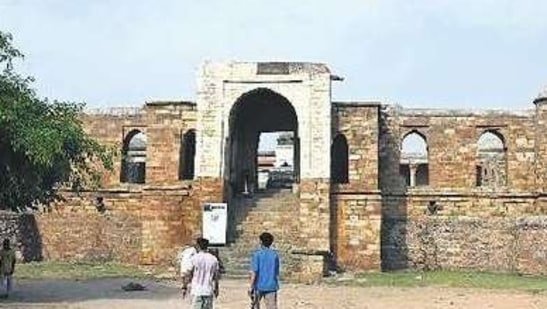
Experts debate conservation approach under Sultan Ghari revival plan
# Sultan Ghari Park Plan Sparks Heritage Debate
**By Staff Reporter, Heritage Observer | May 9, 2026**
In New Delhi, the historic Sultan Garhi mausoleum, an architectural marvel built in 1231 AD, has become the focal point of a renewed conservation controversy as of May 2026. The Delhi Development Authority (DDA) has formally proposed transforming the rugged terrain surrounding India’s oldest Islamic tomb into a landscaped archaeological park. While authorities aim to secure encroached lands, curb illegal dumping, and boost local tourism in the Vasant Kunj area, heritage experts and environmentalists push back. They argue the project’s heavy-handed “beautification” could irrevocably damage both the monument’s organic architectural integrity and its delicate Aravalli ridge ecosystem. This escalating debate highlights a critical modern clash between urban infrastructure development and authentic heritage preservation. [Source: Hindustan Times]
## The Historical Significance of Sultan Garhi
To understand the weight of the current debate, one must look at the monumental significance of Sultan Garhi. Commissioned by Shams ud-Din Iltutmish of the Delhi Sultanate’s Mamluk (Slave) dynasty, it was built to house the remains of his eldest son, Prince Nasiru’d-Din Mahmud. Predating the famous Qutub Minar complex’s later expansions, **Sultan Garhi stands as the very first monumental Islamic tomb in India.** [Source: Archaeological Survey of India (ASI) historical records]
The structure is highly unique, resembling a small fortress rather than a traditional mausoleum. Built with local quartzite stone, it features an octagonal crypt hidden beneath a courtyard—the term *Garhi* translates to “cave” or “crypt.” The architecture is a fascinating amalgamation of early Islamic and indigenous Indian styles, utilizing corbelled arches and recycled pillars from earlier Hindu and Jain temples. For nearly eight centuries, the monument has existed in harmony with the wild, rocky landscape of the Southern Ridge, serving not just as a historical marker, but as a living shrine venerated by local communities of various faiths.
## Unpacking the DDA’s Revival Vision
The Delhi Development Authority’s revival plan, updated and pushed into public discourse in early 2026, aims to integrate Sultan Garhi into a larger “heritage corridor” linking several lesser-known monuments in South Delhi. The DDA envisions an expansive archaeological park designed to make the site accessible, safe, and visually appealing to both domestic and international tourists.
Key components of the DDA proposal include:
* **Manicured Landscaping:** Introduction of formal lawns, ornamental flora, and paved walkways replacing the currently rugged, unpaved approaches.
* **Visitor Amenities:** Construction of an interpretation center, ticketing booths, modern restrooms, and a dedicated parking facility.
* **Security Infrastructure:** Installation of high fencing and CCTV networks to prevent ongoing issues of land encroachment and vandalism in the Vasant Kunj perimeter.
* **Structural Consolidation:** Chemical cleaning of the stone façade and the rebuilding of collapsed peripheral walls to “restore” the original fortress-like appearance. [Source: Delhi Development Authority urban planning documents]
Proponents of the plan argue that without immediate intervention, the monument risks being swallowed by Delhi’s aggressive urban sprawl. “We are not just protecting stones; we are reclaiming public space,” a senior DDA planning official noted anonymously during an April public consultation. “If we do not formalize the boundaries of Sultan Garhi with a designated park, the land mafia and illegal waste dumping will destroy the site entirely.”
## The Conservationist Counter-Argument
Despite the DDA’s stated intentions, the proposal has drawn sharp criticism from the architectural conservation community. The core of the argument revolves around the philosophical approach to historical preservation: **the preservation of “ruin value” versus modern “beautification.”**
Experts argue that layering a manicured, European-style park over a 13th-century rugged ruin strips the monument of its historical context. “The imposition of manicured green lawns and concrete walkways fundamentally alters the micro-environment of Sultan Garhi,” says Dr. Meenakshi Khanna, a prominent conservation architect. “This site was specifically chosen by Iltutmish for its austere, rocky elevation. By ‘parkifying’ the area, we are erasing the authentic medieval landscape and replacing it with a sterilized, Disneyfied version of history.” [Source: Independent Expert Analysis]
Furthermore, conservationists warn against the proposed structural consolidation. Many argue that ruins should be stabilized to prevent further decay, not rebuilt using modern materials to mimic antiquity. The use of heavy machinery for landscaping near the crypt’s foundations could also induce damaging vibrations, threatening the structural stability of the 800-year-old subterranean masonry.
## Ecological Concerns and Ridge Protection
Beyond the architectural debate, the DDA’s plan has alarmed environmentalists due to Sultan Garhi’s location within the Southern Ridge—a crucial extension of the Aravalli hill range. The Ridge acts as the “green lungs” of Delhi and is a vital groundwater recharge zone.
The proposed landscaping involves the introduction of non-native ornamental plants that require heavy watering, which starkly contrasts with the Ridge’s natural, semi-arid ecology. Environmental activists have pointed out that replacing native species like *Kikar* (Prosopis juliflora) and *Dhak* (Butea monosperma) with water-intensive lawns will severely deplete the local water table.
“Sultan Garhi cannot be viewed merely as an isolated stone structure; it is deeply embedded in the Aravalli ecosystem,” explains environmental researcher Vikram Singh. “Any development here must be ecologically sensitive. Pouring concrete for parking lots and visitor centers directly impedes the natural drainage patterns of the Ridge. We must protect the ecological heritage with the same vigor as the built heritage.” [Source: Delhi Ridge Forest Action Network]
## Global Precedents in Heritage Management
The controversy surrounding Sultan Garhi is not unique to Delhi; it is reflective of a global debate in heritage management. Historically, Indian civic authorities have modeled conservation on colonial-era frameworks, where monuments were isolated in the center of vast, manicured gardens—the Lodhi Gardens and the Humayun’s Tomb complex being prime examples. While these are highly successful public spaces, critics argue this one-size-fits-all model shouldn’t be blindly applied to all heritage sites.
In contrast, modern global conservation standards, such as those outlined by UNESCO and ICOMOS (International Council on Monuments and Sites), increasingly advocate for the preservation of the “cultural landscape.” This approach emphasizes minimal intervention. For example, in sites across Italy and Greece, authorities often opt for elevated wooden boardwalks that allow visitor access without suffocating the original earth or altering the surrounding native flora.
Indian experts are pointing to these international models, urging the DDA to pivot from a “development” mindset to a “stewardship” mindset. The goal, they argue, should be facilitating education and access without erasing the organic passage of time that gives Sultan Garhi its profound sense of history.
## Striking a Balance: The Path Forward
If the DDA and conservationists are to find common ground, a multi-disciplinary approach is required. Heritage advocates are not entirely opposed to securing the area; rather, they are proposing alternative, low-impact solutions.
**Proposed compromises include:**
1. **Ecological Landscaping:** Using only native, drought-resistant Aravalli plant species to secure the boundaries, completely avoiding the use of thirsty lawns and ornamental flower beds.
2. **Buffer Zones:** Establishing a strict “no-build” buffer zone immediately around the mausoleum, placing interpretation centers and parking facilities at the far edge of the designated DDA land, well away from the archaeological core.
3. **Community Integration:** Involving the local communities who currently view Sultan Garhi as a living shrine (a *dargah*). Formal park rules often marginalize traditional worshippers. A sensitive plan would accommodate both modern tourists and traditional devotees seamlessly. [Source: Indian National Trust for Art and Cultural Heritage (INTACH) guidelines]
## Conclusion: The Future of India’s First Mausoleum
The ongoing debate over the Sultan Ghari revival plan serves as a crucial litmus test for urban heritage management in India. As Delhi continues to expand, the pressure to package ancient history into neat, consumable tourist parks will only intensify. The DDA’s initiative correctly identifies the urgent need to protect Sultan Garhi from urban encroachment and neglect. However, the execution of this protection must not become a destructive force itself.
As the proposal undergoes further review in the coming months, the final outcome will set a vital precedent. It will determine whether India’s historical sites will be allowed to retain their authentic, rugged souls or if they will be uniformly sanitized for the sake of modern urban aesthetics. For Sultan Garhi, an 800-year-old silent sentinel of the Delhi Sultanate, the truest form of respect may simply be allowing it to exist exactly as it is—unpolished, authentic, and intricately tied to the earth upon which it was built.





