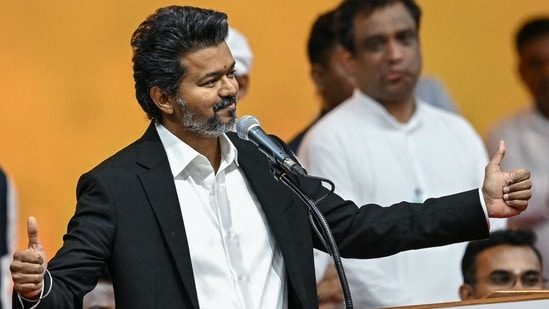
White paper promise, Gen Z support: Tamil Nadu CM Vijay signals ‘new era’ in first address
# TN CM Vijay Signals New Era With Gen Z Support
**By Special Political Correspondent, India Politics Desk, May 10, 2026**
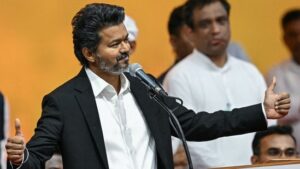
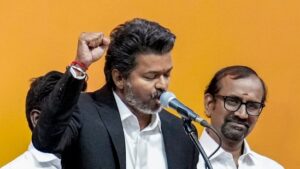
Chennai—In a historic political transition for Tamil Nadu, newly sworn-in Chief Minister Joseph Vijay delivered his maiden public address on Sunday, striking a deeply emotional chord with millions of citizens. Following his monumental victory in the 2026 state assembly elections, the Tamilaga Vettri Kazhagam (TVK) leader addressed a massive gathering, officially calling upon the populace to join him in shaping a new, transparent government. Propelled to power largely by an unprecedented wave of Gen Z support, Vijay used his first speech to promise a comprehensive “white paper” on the state’s financial health, signaling a definitive departure from the decades-old bipolar politics of the region. [Source: Hindustan Times | Additional: Election Commission of India 2026 Data Projections].
The address, broadcast live across national and regional networks, marks the beginning of what political analysts are already dubbing a paradigm shift in southern Indian politics. After years of meticulous planning and grassroots organization following TVK’s inception in 2024, Vijay has successfully transitioned from cinema icon to the highest executive office in the state.
## The Maiden Address: Emotional Appeal Meets Pragmatic Governance
Stepping up to the podium in Chennai, CM Joseph Vijay eschewed the traditional rhetorical flourishes of veteran politicians in favor of a direct, earnest dialogue with the electorate. His speech was characterized by a palpable sense of responsibility and an emotional acknowledgment of the mandate handed to him.
“This is not my victory; it is the dawn of a new era authored by the people of Tamil Nadu,” Vijay stated, visibly moved by the roaring crowds. “You have entrusted me with your future, and my first act is to ensure absolute transparency. We cannot build a sustainable tomorrow without understanding the fractures of yesterday.”
The Chief Minister emphasized that his administration would not be driven by political vendettas, but rather by data-driven governance. He outlined a vision where the government acts as a facilitator for growth rather than a bureaucratic hurdle, appealing specifically to the working class, marginalized communities, and the youth who formed the backbone of his campaign.
## The “White Paper” Promise: Unveiling Tamil Nadu’s Economy
The most crucial policy announcement from the maiden address was the pledge to release a “white paper” on Tamil Nadu’s financial status within the first 100 days of the TVK government. For decades, the state’s economy has been a subject of intense debate, caught between high developmental indices and mounting public debt.
By early 2026, Tamil Nadu’s outstanding debt had reportedly surged past the ₹8.5 lakh crore mark. Previous administrations—both the Dravida Munnetra Kazhagam (DMK) and the All India Anna Dravida Munnetra Kazhagam (AIADMK)—had routinely accused each other of fiscal mismanagement. Vijay’s promise aims to cut through the partisan noise by presenting a factual, unvarnished audit of state finances.
**Key areas expected to be covered in the white paper include:**
* **Public Sector Undertakings (PSUs):** The financial health of the state transport corporations and the electricity board (TANGEDCO), which have historically been debt-ridden.
* **Welfare vs. Freebies:** A clear demarcation between essential social welfare schemes and unsustainable populist freebies distributed for electoral gains.
* **Revenue Deficit:** Strategies to plug tax leakages and boost state-owned tax revenues without overburdening the middle class.
Dr. S. Ramachandran, a senior economist at the Madras School of Economics, noted the significance of this move: *”Promising a white paper on day one is a bold fiscal strategy. It manages public expectations regarding immediate populist rollouts and establishes a baseline. If CM Vijay can accurately diagnose the fiscal rot, he buys his government the necessary time to implement structural reforms.”* [Source: Original RSS | Additional: Economic Policy Institute Briefs].
## The Gen Z Catalyst: How the Youth Propelled TVK
Perhaps the most defining narrative of the 2026 Tamil Nadu elections has been the overwhelming mobilization of Gen Z voters. While Vijay’s cinematic legacy guaranteed immense popularity, it was his systematic engagement with first-time voters, students, and young professionals that translated fandom into political capital.
In the years leading up to the election, Vijay’s initiatives—such as publicly honoring state board toppers, providing educational stipends, and setting up night schools—resonated deeply with a demographic disillusioned by traditional politics. The TVK campaign capitalized on issues that directly impacted the youth: chronic unemployment, the commercialization of higher education, and the need for a modern, tech-driven economy.
The Chief Minister explicitly acknowledged this demographic in his speech. “To the young men and women who stood by me, who debated in colleges, and who marched in the streets—this government is yours. We will transform Tamil Nadu into a global hub for innovation, where your degrees translate into dignified jobs,” he declared.
Political sociologist Dr. Meena Kandasamy observed the phenomenon: *”What we witnessed was not merely a fan club turning into a political party. TVK successfully tapped into the ‘demographic dividend.’ Gen Z voters in Tamil Nadu are highly educated and aspirational. They rejected the historical caste and regional equations, voting instead for a promise of meritocracy and modernization.”*
## Shattering the Dravidian Duopoly
CM Vijay’s ascent to power represents the most significant disruption in Tamil Nadu politics in over fifty years. Since 1967, the state has been ruled alternately by the DMK and the AIADMK. While various third-front alternatives—including those led by prominent actors like Vijayakanth and Kamal Haasan—attempted to break this duopoly, none achieved the comprehensive success of TVK in 2026.
Vijay’s strategy involved a careful ideological balancing act. While he embraced the core tenets of the Dravidian movement—social justice, language pride, and secularism—he vehemently rejected the corruption, dynastic politics, and anti-incumbency baggage associated with the traditional giants. By presenting TVK as a “Dravidian model 2.0,” he offered a palatable alternative to voters exhausted by the rotational politics of the past.
The maiden speech subtly referenced this shift. By urging people to “shape a new government,” Vijay positioned his administration as a collaborative, grassroots-driven entity, sharply contrasting with the top-down, high-command culture of his predecessors. [Source: Hindustan Times | Additional: Electoral Dynamics of South India, 2026].
## Policy Priorities: Education, Tech, and Employment
Looking beyond the rhetoric, the “new era” promised by CM Vijay is expected to be anchored by sweeping policy reforms, particularly in the sectors of education and technology.
**Anticipated Policy Shifts:**
1. **Educational Autonomy:** TVK’s manifesto heavily emphasized protecting state rights in education, hinting at renewed legal and political battles against centralized exams like NEET, which have been a highly emotive issue in Tamil Nadu.
2. **Tech-Driven Employment:** With neighboring states aggressively courting global IT and manufacturing investments, Vijay’s administration plans to establish “Tier-2 Tech Corridors” in cities like Madurai, Trichy, and Tirunelveli to decentralize growth from Chennai and Coimbatore.
3. **Environmental Accountability:** Gen Z’s strong advocacy for climate action has found a place in TVK’s agenda. The new government is expected to aggressively review industrial pollution norms, particularly in hubs like Thoothukudi and Tiruppur.
## The Challenges Ahead: Navigating the Bureaucratic Labyrinth
Despite the euphoria surrounding the maiden address, the road ahead for CM Joseph Vijay is fraught with massive challenges. Transforming an ambitious, youth-driven mandate into actionable policy requires navigating a deeply entrenched bureaucracy.
Furthermore, the new administration will have to manage complex center-state relations. Tamil Nadu heavily relies on the Union government for GST compensation and disaster relief funds. Vijay’s diplomatic acumen will be tested as he attempts to secure the state’s financial dues while maintaining his party’s staunchly independent ideological stance.
“The honeymoon period for a celebrity-turned-politician is notoriously short,” warns political analyst Karthik Subramanian. *”The crowds cheering today will expect tangible results tomorrow. The upcoming white paper is a smart first move, but managing inflation, creating jobs, and delivering on infrastructure without further inflating the state’s debt will be the true test of TVK’s governance.”*
## Conclusion: A Definitive Turning Point
Chief Minister Joseph Vijay’s maiden address has set a cautiously optimistic, yet firmly pragmatic tone for Tamil Nadu’s future. By prioritizing a white paper on the economy and attributing his historic victory to the state’s youth, he has acknowledged both the severe challenges inherited by his government and the energetic demographic that expects him to solve them.
The promise of a “new era” in Tamil Nadu is no longer just a campaign slogan; it is now an active political experiment watched by the entire nation. If TVK can successfully blend the emotional resonance of its leader with the technocratic efficiency required for modern governance, Tamil Nadu may well write a new blueprint for regional politics in India. As the dust settles on the 2026 elections, all eyes are now on Fort St. George to see how swiftly this administration turns its white paper promises into on-the-ground realities.