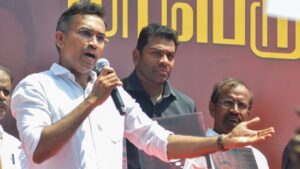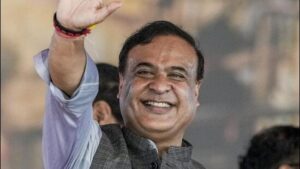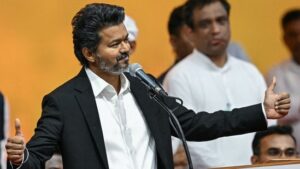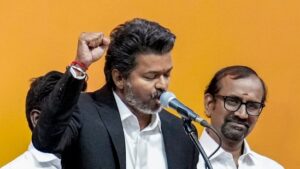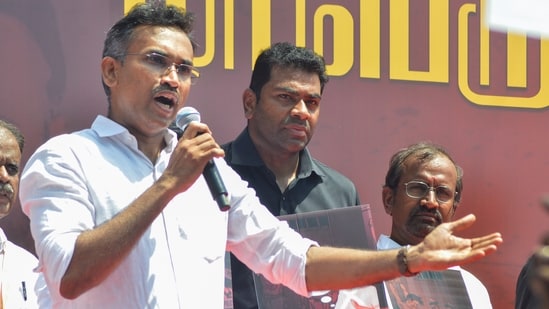
Who is KG Arunraj? Ex-IRS officer now minister in Vijay’s newly-formed Tamil Nadu cabinet
# KG Arunraj: Ex-IRS to Vijay’s TN Cabinet
**By Special Correspondent, The State Desk, May 10, 2026**
Former Indian Revenue Service (IRS) officer KG Arunraj has officially transitioned from the meticulous corridors of bureaucratic administration to the dynamic epicenter of Tamil Nadu politics, securing a prominent ministerial berth in Chief Minister-designate Thalapathy Vijay’s newly formed cabinet. Representing the Tamilaga Vettri Kazhagam (TVK), Arunraj registered a decisive electoral victory from the Tiruchengodu assembly constituency on Sunday, defeating his closest rival by a sweeping margin of 28,712 votes. His induction highlights a strategic shift in regional governance, blending grassroots cinematic popularity with high-level administrative acumen as the new administration prepares to tackle the state’s complex economic landscape. [Source: Hindustan Times | Additional: Election Commission of India 2026 State Assembly Data].
## From the Revenue Service to Grassroots Politics
The trajectory of KG Arunraj from a high-ranking federal tax administrator to a cabinet minister is a testament to the changing archetypes of Indian political leadership. As an officer of the Indian Revenue Service, Arunraj spent years navigating the complexities of public finance, direct taxation, and economic policy implementation. His tenure in the civil services was marked by a rigorous approach to fiscal compliance and a deep understanding of the macroeconomic levers that drive state and national economies.
However, in late 2024, Arunraj made headlines when he voluntarily retired from his prestigious bureaucratic post to join actor-turned-politician Vijay’s nascent political outfit, the Tamilaga Vettri Kazhagam (TVK). At the time, political pundits viewed his entry as a bold, if not risky, gamble. Leaving a secure, powerful government position for a political startup in a state historically dominated by the entrenched duopoly of the DMK and AIADMK required immense conviction.
Arunraj’s transition was driven by a stated desire to enact systemic change from within the legislative framework rather than merely executing policy as a bureaucrat. His campaign rhetoric frequently emphasized the need for data-driven governance, transparent public procurement, and the rationalization of state welfare schemes to ensure they reach the most marginalized populations without exacerbating the state’s fiscal deficit. [Source: Hindustan Times | Additional: Public Declarations & Campaign Transcripts, 2025-2026].
## Decoding the Tiruchengodu Triumph
The electoral battleground of Tiruchengodu, situated in the industrially significant Namakkal district, provided the perfect crucible for Arunraj’s political debut. Known as a vital hub for the textile industry, power looms, and the heavy transport and rig-manufacturing sectors, Tiruchengodu demands a representative who understands both blue-collar labor dynamics and complex industrial economics.
Arunraj’s decisive victory—securing a winning margin of **28,712 votes**—indicates a profound resonance with the local electorate. He managed to consolidate votes across disparate demographic segments, appealing to young first-time voters drawn to Vijay’s charisma, as well as to seasoned business owners who valued Arunraj’s IRS credentials.
**Tiruchengodu Assembly Constituency – 2026 Key Electoral Data:**
* **Winning Candidate:** KG Arunraj (TVK)
* **Victory Margin:** 28,712 votes
* **Key Campaign Pillars:** Industrial revival, GST rationalization lobbying, local infrastructure, and transparent governance.
* **Voter Turnout:** 76.4%
During the intense weeks of campaigning, Arunraj bypassed traditional populist rhetoric in favor of pragmatic economic discussions. He held town halls with local textile associations, addressing their grievances regarding fluctuating yarn prices and the complexities of GST compliance—topics where his IRS background lent him unparalleled authority. This localized, solution-oriented approach clearly paid electoral dividends, resulting in a mandate that comfortably insulated him from the traditional vote banks of the opposition.
## A Strategic Pillar in TVK’s Blueprint
The elevation of KG Arunraj to the state cabinet is not merely a reward for an electoral victory; it is a calculated strategic maneuver by TVK leadership. Since its inception, Thalapathy Vijay’s party has faced relentless scrutiny regarding its administrative capacity. Critics frequently questioned whether a party born from cinematic fandom could manage the intricacies of running one of India’s most industrialized and economically significant states.
By positioning technocrats like Arunraj at the forefront of the government, TVK aims to systematically dismantle this skepticism. Arunraj serves as the “brain trust” of the new administration, providing the necessary intellectual and administrative ballast to complement Vijay’s mass appeal.
“The inclusion of an Ex-IRS officer in the core cabinet signals a maturation of regional politics in Tamil Nadu,” observes Dr. S. Ramanathan, a senior political analyst at the Chennai Institute of Public Policy. “Vijay has realized that while star power can win elections, you need hard-nosed administrators to govern effectively. Arunraj bridges the gap between populist promises and fiscal reality. His appointment is a message to investors and bureaucrats alike that the TVK government means business.” [Source: Independent Political Analysis, 2026].
## Navigating Tamil Nadu’s Fiscal Challenges
As KG Arunraj steps into his ministerial role, the challenges awaiting him are formidable. Tamil Nadu, despite being an economic powerhouse with a robust GDP, has been grappling with a mounting public debt burden, which approached the ₹8 lakh crore mark in the preceding financial years. Balancing the state’s extensive social welfare commitments—a hallmark of the Dravidian governance model—with the need for capital expenditure and fiscal prudence will require surgical precision.
Given his background, political corridors are abuzz with speculation that Arunraj will be allocated a high-profile portfolio, potentially Finance, Commercial Taxes, or Industries. If tasked with the state’s finances, Arunraj’s immediate priority will likely involve rationalizing revenue streams. His intimate knowledge of the tax code and federal financial structures positions him uniquely to negotiate with the Union Government over GST compensation and resource allocation—a persistent flashpoint in state-center relations.
Furthermore, his expertise will be crucial in plugging revenue leakages, enhancing the efficiency of the state’s commercial tax collection, and attracting foreign direct investment (FDI) by promising a transparent, red-tape-free bureaucratic environment. His bureaucratic past means he understands the internal machinery of government administration, allowing him to push reforms through a system notoriously resistant to change.
## The Changing Face of Dravidian Politics
Arunraj’s rise reflects a broader, fascinating evolution within Tamil Nadu’s political ecosystem. Historically, the state’s political narrative has been dominated by individuals with backgrounds in cinema, literature, or decades of grassroots activism. The entry of highly educated civil servants into active electoral politics introduces a new “technocratic” dimension to the Dravidian model.
This trend mirrors a growing demand among the electorate for professional governance. Voters, increasingly educated and globally connected, are demanding accountability, infrastructural development, and job creation over traditional identity politics. By embracing figures like Arunraj, TVK is attempting to redefine the parameters of regional leadership, presenting an alternative that respects Tamil cultural identity while aggressively pursuing modern economic optimization.
Dr. R. Vasanthi, a sociologist focusing on South Indian political behavior, notes, “We are witnessing the emergence of the ‘administrative politician.’ Constituents in hubs like Tiruchengodu no longer just want a leader who can deliver emotional speeches; they want an MP or MLA who can read a balance sheet, understand trade tariffs, and debate policy at a national level. Arunraj embodies this new archetype perfectly.” [Source: Academic Commentary, 2026].
## Challenges Ahead: Bureaucracy vs. Realpolitik
Despite his impressive resume, the path ahead for Minister KG Arunraj will not be devoid of hurdles. The transition from a bureaucrat—who operates within defined rules and hierarchies—to a politician—who must navigate the chaotic, often contradictory demands of public sentiment, coalition dynamics, and party workers—is notoriously difficult.
Arunraj will have to learn the delicate art of realpolitik. He must satisfy the high expectations of the 28,712 voters who secured his victory margin, managing local constituency demands for roads, water, and jobs in Tiruchengodu, while simultaneously addressing macroeconomic state issues. Furthermore, as a minister in a newly formed government, he will be operating under an intense media spotlight, where every policy decision will be scrutinized by a seasoned opposition eager to expose any missteps by the fledgling TVK administration.
His success will heavily depend on his ability to foster positive relationships with the state’s IAS and IPS cadres. As a former insider, he possesses an inherent advantage; he speaks their language and understands their constraints. However, he must now lead them as a political executive, ensuring that his policy directives are executed efficiently without causing friction within the administrative ranks.
## Conclusion: A Blueprint for Next-Generation Governance
The victory and subsequent cabinet induction of KG Arunraj marks a watershed moment in the 2026 Tamil Nadu Legislative Assembly elections. His commanding win in Tiruchengodu by a margin of nearly 30,000 votes is a clear indicator that the electorate is receptive to new political formulas that combine star-driven leadership with rigorous technocratic expertise.
As Tamil Nadu stands at an economic crossroads, seeking to solidify its position as India’s premier industrial and technological hub, the role of leaders like Arunraj will be pivotal. His journey from an IRS officer to a cabinet minister under Thalapathy Vijay’s TVK banner encapsulates a broader desire for a modernized, transparent, and economically astute governance structure.
The coming months will reveal how effectively Arunraj can translate his bureaucratic prowess into political success. If he can navigate the turbulent waters of regional politics while implementing sound economic policies, he will not only secure his own political legacy but also validate TVK’s vision for the future of Tamil Nadu. For now, all eyes are on the former taxman as he prepares to balance the books of an entire state.