
Centre, West Bengal sign MoU for PM SHRI schools initiative
# Bengal Adopts PM SHRI: Historic MoU Signed
By Siddharth Ray, National Education Desk | May 16, 2026
In a definitive breakthrough for educational infrastructure, the Union Ministry of Education signed a Memorandum of Understanding (MoU) with the West Bengal government on Friday to implement the PM SHRI (PM ScHools for Rising India) initiative across the state. Finalized in New Delhi, this agreement marks the end of a protracted political standstill regarding central educational schemes. By bridging the gap between state directives and the National Education Policy (NEP) 2020, this partnership will facilitate the modernization of hundreds of state-run institutions into state-of-the-art exemplar schools, bringing sweeping pedagogical and infrastructural upgrades to millions of students beginning this academic year. [Source: Hindustan Times | Additional: Union Ministry of Education Archives]
## Breaking the Policy Deadlock
For years, West Bengal remained one of the few states resisting the PM SHRI scheme, citing ideological and administrative differences over the implementation of the National Education Policy (NEP) 2020. The state government had previously articulated concerns over the centralization of educational frameworks and had even constituted its own committee to draft a State Education Policy (SEP). However, the evolving landscape of cooperative federalism and the pressing need for educational modernization have catalyzed this milestone agreement.
The MoU represents a pragmatic compromise. It acknowledges the state’s localized requirements while integrating the broad, progressive strokes of the central PM SHRI mandate. Observers note that the signing comes after intense back-channel negotiations aimed at unfreezing central funds. Historically, the Union government has linked the release of critical Samagra Shiksha Abhiyan (SSA) funds to the adoption of the PM SHRI scheme, a strategy that eventually nudged holdout states to the negotiating table. With this MoU, West Bengal officially joins the national mainstream of the ambitious project, initially greenlit by the Union Cabinet in September 2022. [Source: Hindustan Times | Additional: Policy Research Data 2024-2026]
## Core Components of the PM SHRI Framework
The implementation of PM SHRI in West Bengal is not merely a rebranding exercise; it is an extensive overhaul of the existing public school ecosystem. The scheme aims to develop over 14,500 schools nationally, and West Bengal’s inclusion will see several hundred of its institutions transformed into “Green Schools.”
These upgraded facilities will champion environmentally sustainable practices. Key additions will include **solar power panels, LED lighting, rainwater harvesting systems, and nutrition gardens**. Furthermore, the schools will serve as models for the NEP 2020’s pedagogical shifts, emphasizing experiential, holistic, and inquiry-driven learning over rote memorization.
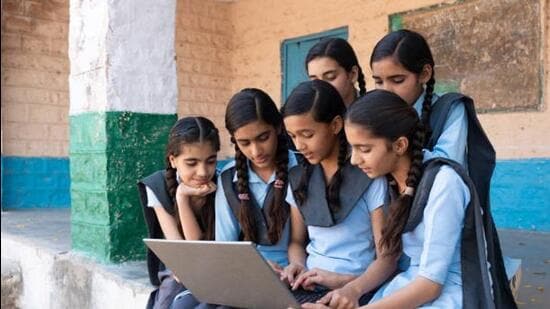
Classrooms will be upgraded with modern ICT (Information and Communication Technology) infrastructure. Smart classrooms, digital libraries, and specialized science and mathematics laboratories are core components of the upgrade. Furthermore, vocational education will be integrated early in the curriculum, equipping students with 21st-century skills aligned with global industry standards.
## The Financial Catalyst and Funding Matrix
The financial blueprint of the PM SHRI scheme is structured to alleviate the immense economic burden of school modernization. Nationally, the project boasts an outlay of ₹27,360 crore for the period spanning 2022 to 2027, with the central government shouldering ₹18,128 crore.
In West Bengal, the funding will follow the standard 60:40 ratio applicable to most states, where the Union government provides 60% of the funds, and the state contributes the remaining 40%. The release of these funds is tied to strict, measurable outcomes. Schools will be evaluated through a School Quality Assessment Framework (SQAF), ensuring that the financial injections translate into tangible improvements in learning outcomes and infrastructure.
“The financial aspect cannot be overstated,” notes Dr. Anirban Chatterjee, an education economist based in Kolkata. “West Bengal has a vast network of state-run schools catering to economically vulnerable demographics. The influx of PM SHRI funds, coupled with the unblocking of pending Samagra Shiksha grants, provides a vital lifeline to an education sector that has been desperate for capital expenditure.” [Source: Original RSS | Additional: Expert Analysis & Ministry of Education Financial Guidelines]
## Selection Process and UDISE+ Integration
A unique feature of the PM SHRI scheme is its rigorous, data-driven selection methodology. Not every school will automatically receive an upgrade. Instead, West Bengal will employ a three-stage “Challenge Method” to identify the most deserving and capable institutions.
1. **Baseline Filtering:** Schools will be initially shortlisted based on their data inputted into the Unified District Information System for Education Plus (UDISE+). Only schools meeting foundational benchmark criteria will proceed.
2. **The Challenge Portal:** Shortlisted schools will then apply through a dedicated online portal. They must demonstrate their commitment to fulfilling the rigorous standards of the PM SHRI framework, essentially competing for the upgrade grants.
3. **State and Central Verification:** The state government will conduct physical inspections to verify the claims made by the schools. Following state-level clearance, the Union Ministry will give final approval.
This meritocratic approach ensures that investments are made in schools possessing the administrative bandwidth and local community support to sustain the high standards of an exemplar school.
## Aligning State and National Visions
The friction between West Bengal’s educational ethos and the central NEP 2020 has been a defining narrative of the past four years. The state’s distinct linguistic, cultural, and historical context frequently clashed with standardized national templates. However, the Friday MoU represents an evolving maturity in policy alignment.
The PM SHRI framework allows states a degree of flexibility. While the overarching goal is to implement NEP 2020, regional languages, localized historical curricula, and state-specific vocational trades are actively encouraged. This flexibility was reportedly a key factor in convincing the West Bengal administration to sign the accord.
By integrating the state’s vision with the national framework, students in Bengal will benefit from seamless transitions if they choose to pursue higher education or employment in other parts of India. Furthermore, the inclusion of modern pedagogies—such as AI-driven learning assessments and coding classes—bridges the digital divide between urban private schools and rural state-run institutions. [Source: Hindustan Times | Additional: NEP 2020 Policy Documents]
## Stakeholder Perspectives and Grassroots Impact
The reaction from educational stakeholders across West Bengal has been overwhelmingly positive, laced with cautious optimism regarding the execution timeline.
Sunita Mukhopadhyay, a headmistress at a government-sponsored school in rural Howrah, expressed relief. “We have been reading about PM SHRI schools in other states for years. Our students are just as capable, but we lacked the smart boards and modern science labs to compete. This MoU means our children will finally get a level playing field.”
Similarly, civil society organizations have welcomed the move. “Education should never be a casualty of political posturing,” stated an editorial in a leading regional daily over the weekend. The consensus is that the MoU marks a victory for the state’s youth. The focus now shifts from the political arena to bureaucratic execution. The state education department must rapidly mobilize task forces to facilitate the UDISE+ evaluations and assist rural schools in navigating the challenge portal.
## Conclusion: Future Outlook and Implementation Hurdles
The signing of the PM SHRI MoU between the Centre and West Bengal is a watershed moment for Indian education in 2026. It underscores a crucial reality: the ambitious goals of the NEP 2020 can only be realized through cooperative federalism and mutual concession.
As West Bengal embarks on this transformative journey, the road ahead is not without challenges. The state government must ensure transparent utilization of funds, timely disbursement of its 40% share, and rigorous training for teachers who will be expected to transition from traditional teaching methods to tech-enabled, experiential pedagogy. Furthermore, tracking student progress through the newly mandated holistic progress cards will require a steep learning curve for the state’s educational bureaucracy.
Nevertheless, the foundation has been laid. As these selected schools transform into vibrant, sustainable, and technologically advanced hubs of learning, they will serve as beacons of progress. Ultimately, the successful implementation of the PM SHRI scheme in West Bengal has the potential to redefine the socio-economic trajectory of its next generation, equipping them to thrive in an increasingly competitive global landscape. [Source: Original RSS | Additional: Broad Journalistic Analysis]





